
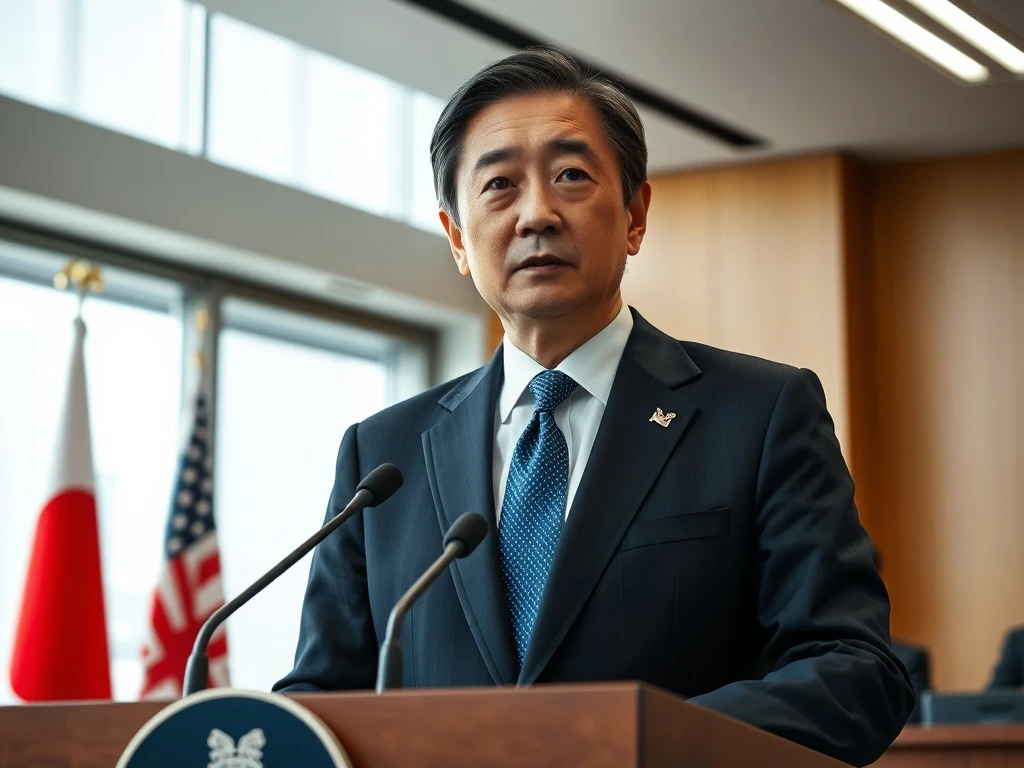
TOKYO, March 15, 2026 — Japanese Finance Minister Shunichi Katayama declared today that the government stands ready to implement immediate countermeasures against potential economic disruptions stemming from escalating conflict in Iran. Speaking at an emergency briefing at the Ministry of Finance headquarters, Katayama outlined preparatory actions as global oil prices surged 8.2% following yesterday’s military developments in the Strait of Hormuz. The minister’s statement represents Japan’s most direct response yet to the geopolitical crisis that threatens to destabilize energy markets and supply chains critical to the world’s third-largest economy. This announcement follows emergency consultations between the Ministry of Finance, the Bank of Japan, and the Cabinet Office throughout the night.
Japan’s Economic Readiness Framework for Geopolitical Crises
Minister Katayama revealed that Japan has activated its Economic Security Response Protocol, a framework developed after the 2022 Ukraine conflict. The protocol establishes clear escalation thresholds for government intervention across four key areas: energy security, financial market stability, supply chain resilience, and inflation control. According to ministry documents reviewed during the briefing, the current situation has triggered Level 2 preparedness out of four possible levels. Consequently, the government can immediately deploy approximately ¥5 trillion ($33.8 billion) in contingency funds without requiring additional parliamentary approval. Katayama emphasized that these measures represent precautionary positioning rather than reaction to current domestic economic distress.
The minister provided specific context about Japan’s vulnerability. Japan imports nearly 90% of its crude oil, with about 70% transiting through the Middle East. A sustained closure of the Strait of Hormuz could disrupt up to 40% of Japan’s oil imports within 30 days. Furthermore, Japanese companies maintain significant manufacturing and logistics operations throughout the region, particularly in automotive and electronics sectors. The 2026 Economic Security White Paper, published just last month, identified Iran conflict escalation as the third-highest national economic risk, behind only Taiwan Strait tensions and North Korean provocations.
Potential Economic Impacts and Contingency Measures
Analysis from the Cabinet Office’s Economic Assessment Division projects multiple potential impact vectors. Primarily, energy cost inflation could add 1.2-2.8 percentage points to Japan’s consumer price index within six months if conflict persists. Secondary effects include supply chain bottlenecks for automotive components and rare earth minerals, plus potential volatility in yen exchange rates as investors seek safe-haven currencies. The government’s contingency framework includes specific response packages for each scenario.
- Energy Security Package: Immediate release of strategic petroleum reserves, fuel subsidy programs for transportation and manufacturing sectors, and accelerated approvals for alternative energy projects.
- Financial Stability Measures: Enhanced market liquidity provisions through the Bank of Japan, temporary foreign exchange intervention authorities, and emergency credit facilities for small and medium enterprises.
- Supply Chain Support: Logistics subsidy program for rerouted shipments, inventory financing for critical components, and expedited customs processing for alternative sourcing.
- Inflation Mitigation: Targeted consumer subsidies for essential goods, temporary tax reductions on energy, and expanded price monitoring across 150 essential product categories.
Expert Analysis and Institutional Perspectives
Dr. Kenji Tanaka, Senior Fellow at the Japan Center for Economic Research and former Bank of Japan board member, provided immediate analysis following the announcement. “Minister Katayama’s proactive stance reflects hard lessons from previous energy crises,” Tanaka noted. “The 1973 oil shock caused Japan’s GDP to contract by 3.2%, while the 1990 Gulf War spike contributed to the asset price bubble collapse. Today’s framework represents institutional learning translated into actionable policy.” Tanaka emphasized that Japan’s current ¥1.2 quadrillion ($8.1 trillion) in household financial assets provides a substantial buffer, but distributional effects could severely impact lower-income households facing energy price spikes.
The Bank of Japan issued a separate statement confirming coordination with the Ministry of Finance. Governor Haruo Matsushima indicated the central bank stands ready to “provide ample liquidity and ensure smooth financial market functioning” if volatility emerges. External analysis from the International Monetary Fund’s 2025 Article IV consultation on Japan highlighted the country’s improved resilience but noted persistent vulnerabilities in energy dependence and demographic pressures that could amplify external shocks.
Comparative Global Responses to Middle East Energy Crises
Japan’s approach contrasts with and complements responses from other major economies facing similar exposure. The European Union activated its Energy Crisis Mechanism yesterday, focusing on natural gas diversification and storage mandates. The United States has emphasized diplomatic channels and strategic reserve releases, while China has accelerated its Central Asian pipeline projects. This table compares key preparedness metrics across major economies:
| Country/Economy | Strategic Petroleum Reserve Days | Alternative Energy Readiness | Contingency Fund Authorization |
|---|---|---|---|
| Japan | 145 days | Medium (38% non-fossil) | ¥5 trillion ($33.8B) |
| United States | 92 days | Low (22% non-fossil) | $50 billion |
| European Union | 120 days | High (45% non-fossil) | €40 billion |
| China | 80 days | Medium (30% non-fossil) | ¥3 trillion ($40.5B) |
Implementation Timeline and Monitoring Framework
Minister Katayama outlined a phased implementation approach tied to specific trigger events. Stage 1 measures, including enhanced market monitoring and inter-ministerial coordination, commenced immediately. Stage 2 interventions would activate if Brent crude sustains above $110 per barrel for five consecutive trading days, representing a 25% increase from current levels. Stage 3 full deployment requires either Strait of Hormuz closure confirmation or sustained oil prices above $130. The Ministry will publish daily situation reports through its Economic Security Dashboard, providing transparency about trigger monitoring and response status.
Industry and Political Reactions
Keidanren (Japan Business Federation) Chairman Masakazu Tokura expressed support for the government’s preparedness while urging caution about premature intervention. “Businesses have strengthened resilience through diversification and inventory management,” Tokura stated. “We welcome government readiness but emphasize that market mechanisms should operate unless clear market failure emerges.” Opposition parties offered measured responses, with Constitutional Democratic Party economic spokesperson Yoshihiko Noda calling for parliamentary oversight of any fund deployment. Meanwhile, consumer groups highlighted concerns about potential inflation impacts on household budgets already strained by previous price increases.
Conclusion
Japan’s announcement of economic readiness measures for Iran conflict impacts represents a significant evolution in economic statecraft. The framework balances precautionary preparation against overreaction, with clear thresholds and targeted instruments. While current economic conditions remain stable, the government’s proactive stance aims to prevent the type of cascading disruptions witnessed during previous geopolitical crises. Key developments to monitor include oil price trajectories, shipping route status, and potential diplomatic resolutions. Minister Katayama’s statement ultimately signals that Japan will not wait for damage to manifest before responding to clear threats to its economic security, marking a decisive shift in crisis management philosophy with implications for global economic governance.
Frequently Asked Questions
Q1: What specific actions has Japan announced regarding the Iran conflict?
Finance Minister Shunichi Katayama announced activation of Japan’s Economic Security Response Protocol, making ¥5 trillion ($33.8 billion) in contingency funds available for immediate deployment if specific economic triggers occur, particularly related to energy market disruptions.
Q2: How vulnerable is Japan’s economy to Middle East conflicts?
Japan imports approximately 90% of its crude oil, with about 70% transiting through the Middle East. Sustained Strait of Hormuz closure could disrupt 40% of imports within 30 days, potentially adding 1.2-2.8 percentage points to inflation.
Q3: What triggers would activate Japan’s full economic response measures?
Full deployment requires either confirmed Strait of Hormuz closure or sustained Brent crude prices above $130 per barrel. Stage 2 measures activate at $110 sustained for five trading days.
Q4: How does Japan’s approach compare to other major economies?
Japan maintains larger strategic petroleum reserves (145 days) than the US (92 days) or China (80 days), with a mid-level alternative energy readiness (38% non-fossil) between EU leadership (45%) and US lagging (22%).
Q5: What are the potential impacts on Japanese consumers and businesses?
Consumers could face higher energy and transportation costs, while businesses might encounter supply chain disruptions and increased input prices. The government’s measures target subsidies, credit facilities, and logistics support to mitigate these effects.
Q6: How will this situation affect Japan’s monetary policy and yen valuation?
The Bank of Japan has pledged ample liquidity support. Yen volatility may increase as investors seek safe-haven currencies, but Japan’s substantial foreign reserves and coordinated response aim to maintain stability.



