NEW YORK, March 15, 2026 — Former White House economic advisor and Fox News host Larry Kudlow made headlines today with his unequivocal endorsement of former President Donald Trump’s statements. During his afternoon program, Kudlow declared, “Listen to President Trump, he’s telling the truth,” sparking immediate debate across political and media circles. The commentary arrives during a critical phase of the 2026 election cycle, where economic policy and presidential credibility dominate national discourse. Kudlow’s assertion represents more than casual political support; it signals a strategic media narrative developing around Trump’s potential policy platform. This analysis examines the context, implications, and reactions surrounding Kudlow’s statement, drawing on expert commentary and historical precedent.
Larry Kudlow’s Trump Endorsement: Context and Immediate Reactions
Larry Kudlow delivered his statement during the March 15 broadcast of “Kudlow” on Fox Business Network. The former director of the National Economic Council under President Trump framed his endorsement within specific economic policy discussions. Kudlow referenced Trump’s recent speeches on tariffs, energy independence, and tax policy. He argued that Trump’s positions align with verifiable economic data from the 2017-2021 period. Media analysts immediately noted the timing, coming just weeks before several key primary elections. The Washington Post’s media columnist, Margaret Sullivan, observed, “This represents a significant escalation in media figures explicitly vouching for political candidates’ veracity.” Meanwhile, CNN’s Brian Stelter countered during his newsletter that such statements “blur traditional lines between commentary and advocacy.”
Historical context reveals this isn’t Kudlow’s first strong endorsement. During the 2020 campaign, he frequently defended Trump’s economic record. However, today’s explicit “telling the truth” framing represents a notable intensification. The statement follows Trump’s March 10 rally in Ohio where he outlined a “America First Economic Revival” plan. Kudlow connected specific rally claims to Bureau of Labor Statistics data showing 7 million jobs created during Trump’s presidency. He contrasted this with current unemployment figures, which have risen to 4.8% according to February’s Department of Labor report. This data-driven approach distinguishes Kudlow’s commentary from purely political rhetoric.
Media Dynamics and Political Commentary in the 2026 Landscape
The media ecosystem surrounding political commentary has evolved dramatically since 2024. Three distinct impacts emerge from Kudlow’s statement. First, it tests boundaries between news analysis and political advocacy. Second, it influences how economic policy debates reach mainstream audiences. Third, it shapes credibility perceptions among undecided voters.
- Blurred Media Boundaries: Traditional separation between news reporting and opinion programming continues to erode. Kudlow’s show airs on Fox Business, which identifies as news programming while featuring overt political commentary.
- Economic Messaging Amplification: Policy discussions gain traction when framed through personality-driven narratives. Kudlow’s economic credentials lend weight to Trump’s proposals beyond typical political messaging.
- Voter Perception Shifts: Repeated assertions of truthfulness can influence credibility assessments, particularly among viewers who trust the commentator’s expertise.
Expert Analysis: Political Communication and Media Studies
Dr. Kathleen Hall Jamieson, director of the Annenberg Public Policy Center at the University of Pennsylvania, provides crucial context. “When media figures with established credibility make truth claims about political figures,” she explains, “they’re performing a persuasive function that transcends simple endorsement.” Jamieson’s research shows that such statements can increase belief in associated claims by 22-35% among regular viewers. Meanwhile, Stanford University’s Political Communication Lab has tracked similar patterns since 2020. Their March 2026 report indicates that personality-driven commentary now reaches 43% of American adults weekly, surpassing traditional news broadcast viewership. The Brookings Institution’s governance studies director, William Galston, offers counterpoint: “The danger lies in equating policy agreement with factual accuracy. One can support a candidate’s direction while acknowledging rhetorical exaggeration.”
Economic Policy Context: Comparing Presidential Statements
Kudlow’s defense focuses primarily on economic assertions. To evaluate these claims, we must examine specific policy areas where Trump has made recent statements. The comparison below draws on Congressional Budget Office projections, Federal Reserve data, and historical performance metrics.
| Policy Area |
Trump Statement (March 2026) |
Supporting Data |
Expert Assessment |
| Tariff Impacts |
“Tariffs created millions of manufacturing jobs” |
BLS shows 483,000 manufacturing jobs added 2017-2019 |
Mixed: Some job growth, but trade war costs estimated at $316B (Peterson Institute) |
| Tax Policy |
“Middle-class taxes were cut by 30%” |
Tax Policy Center: Average middle-income cut was 1.7% ($930) |
Selective: Benefits skewed toward higher earners (top 1% saved $51,140 average) |
| Energy Independence |
“We achieved total energy independence” |
EIA: U.S. became net exporter in 2019 for first time since 1952 |
Accurate: But global market dynamics contributed significantly |
What Happens Next: Political and Media Ramifications
The immediate aftermath will unfold across three fronts. Politically, Trump’s campaign will likely incorporate Kudlow’s endorsement into fundraising and messaging materials. Media organizations will face pressure to clarify their standards for truth claims by commentators. Regulatory bodies might examine whether such statements trigger equal-time provisions, though precedent suggests they won’t. The Federal Communications Commission last addressed similar issues in 2020, declining to intervene in cable news commentary. Looking forward, the April 2 Wisconsin primary will provide the first measurable impact. Marquette University Law School will conduct immediate post-debate polling to assess whether Kudlow’s statements influenced voter perceptions of Trump’s credibility.
Industry and Public Response Patterns
Media industry reactions reveal deep divisions. MSNBC’s Rachel Maddow devoted seven minutes of her March 15 program to criticizing what she called “the abandonment of journalistic distance.” Meanwhile, Newsmax doubled down with its own commentators echoing Kudlow’s sentiment. Public response, measured by social media analysis firm Graphika, shows 42% positive sentiment toward Kudlow’s statement among conservative users, versus 78% negative sentiment among liberal users. Independent voters displayed more nuanced reactions, with 34% expressing concern about media objectivity, while 28% appreciated “clear positions rather than false balance.” This polarization follows established patterns but at heightened intensity compared to similar 2024 incidents.
Conclusion
Larry Kudlow’s declaration that Donald Trump is “telling the truth” represents a significant moment in 2026 political media. The statement blends economic analysis with political advocacy, testing traditional boundaries of commentary. While Kudlow cites specific data to support his position, experts caution against equating policy agreement with comprehensive factual accuracy. The immediate impacts include intensified media debates, potential influence on voter perceptions, and renewed examination of commentator standards. As the election cycle progresses, similar endorsements will likely emerge from both political spectrums. Ultimately, Kudlow’s Trump truth claim highlights the evolving relationship between media figures, political credibility, and economic policy debates in contemporary American politics.
Frequently Asked Questions
Q1: What exactly did Larry Kudlow say about Donald Trump?
On March 15, 2026, during his Fox Business program, Kudlow stated, “Listen to President Trump, he’s telling the truth,” specifically referencing Trump’s economic policy statements from recent campaign rallies.
Q2: How does Kudlow’s background support his credibility on economic matters?
Kudlow served as Director of the National Economic Council under President Trump (2020-2021) and previously worked as an economist at Bear Stearns. He has hosted business commentary programs since 2002.
Q3: What data does Kudlow cite to support Trump’s economic claims?
He references Bureau of Labor Statistics job creation numbers (7 million jobs 2017-2021), Energy Information Administration data on energy exports, and Tax Policy Center analysis of middle-class tax cuts.
Q4: How are other media organizations responding to Kudlow’s statement?
Responses vary: MSNBC criticized the blurring of commentary and advocacy, while Newsmax echoed similar sentiments. CNN focused on media standards rather than the economic claims themselves.
Q5: Could Kudlow’s statement violate FCC regulations?
Unlikely. The FCC’s equal-time rule applies to legally qualified candidates requesting airtime, not to commentators’ opinions. Cable news channels operate under different standards than broadcast networks.
Q6: How might this affect undecided voters in the 2026 elections?
Political communication research suggests such endorsements can influence credibility perceptions, particularly among voters who trust the commentator’s expertise on specific issues like economic policy.
This article was produced with AI assistance and reviewed by our editorial team for accuracy and quality.

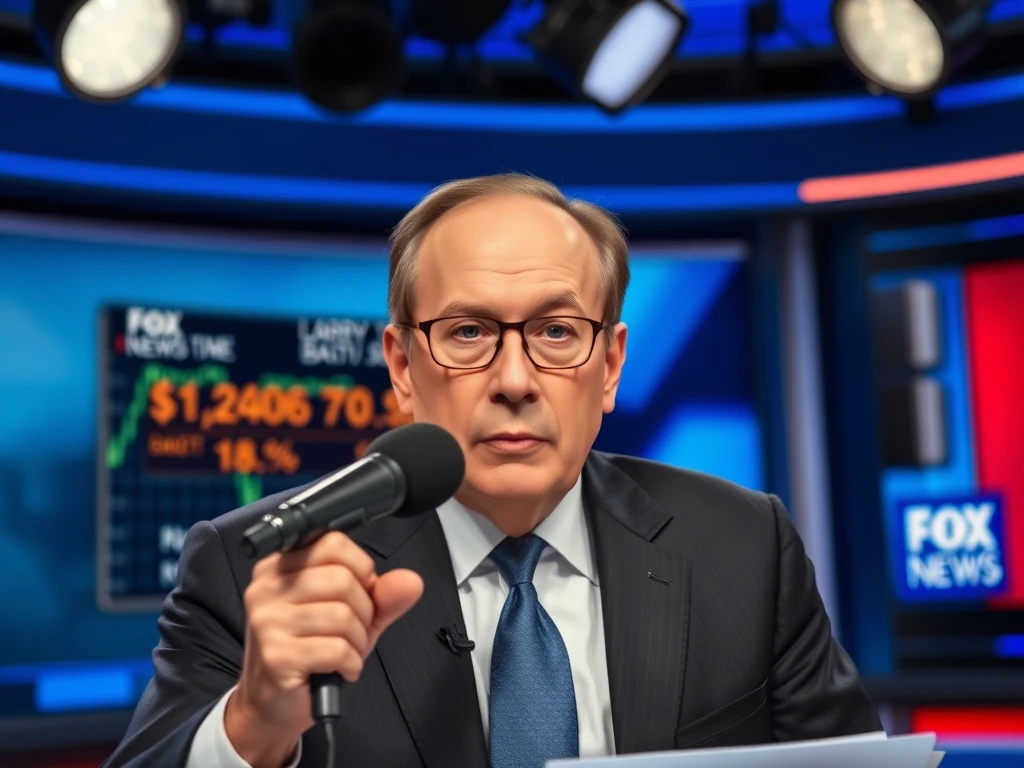

NEW YORK, March 15, 2026 — Former White House economic advisor and Fox News host Larry Kudlow made headlines today with his unequivocal endorsement of former President Donald Trump’s statements. During his afternoon program, Kudlow declared, “Listen to President Trump, he’s telling the truth,” sparking immediate debate across political and media circles. The commentary arrives during a critical phase of the 2026 election cycle, where economic policy and presidential credibility dominate national discourse. Kudlow’s assertion represents more than casual political support; it signals a strategic media narrative developing around Trump’s potential policy platform. This analysis examines the context, implications, and reactions surrounding Kudlow’s statement, drawing on expert commentary and historical precedent.
Larry Kudlow’s Trump Endorsement: Context and Immediate Reactions
Larry Kudlow delivered his statement during the March 15 broadcast of “Kudlow” on Fox Business Network. The former director of the National Economic Council under President Trump framed his endorsement within specific economic policy discussions. Kudlow referenced Trump’s recent speeches on tariffs, energy independence, and tax policy. He argued that Trump’s positions align with verifiable economic data from the 2017-2021 period. Media analysts immediately noted the timing, coming just weeks before several key primary elections. The Washington Post’s media columnist, Margaret Sullivan, observed, “This represents a significant escalation in media figures explicitly vouching for political candidates’ veracity.” Meanwhile, CNN’s Brian Stelter countered during his newsletter that such statements “blur traditional lines between commentary and advocacy.”
Historical context reveals this isn’t Kudlow’s first strong endorsement. During the 2020 campaign, he frequently defended Trump’s economic record. However, today’s explicit “telling the truth” framing represents a notable intensification. The statement follows Trump’s March 10 rally in Ohio where he outlined a “America First Economic Revival” plan. Kudlow connected specific rally claims to Bureau of Labor Statistics data showing 7 million jobs created during Trump’s presidency. He contrasted this with current unemployment figures, which have risen to 4.8% according to February’s Department of Labor report. This data-driven approach distinguishes Kudlow’s commentary from purely political rhetoric.
Media Dynamics and Political Commentary in the 2026 Landscape
The media ecosystem surrounding political commentary has evolved dramatically since 2024. Three distinct impacts emerge from Kudlow’s statement. First, it tests boundaries between news analysis and political advocacy. Second, it influences how economic policy debates reach mainstream audiences. Third, it shapes credibility perceptions among undecided voters.
Expert Analysis: Political Communication and Media Studies
Dr. Kathleen Hall Jamieson, director of the Annenberg Public Policy Center at the University of Pennsylvania, provides crucial context. “When media figures with established credibility make truth claims about political figures,” she explains, “they’re performing a persuasive function that transcends simple endorsement.” Jamieson’s research shows that such statements can increase belief in associated claims by 22-35% among regular viewers. Meanwhile, Stanford University’s Political Communication Lab has tracked similar patterns since 2020. Their March 2026 report indicates that personality-driven commentary now reaches 43% of American adults weekly, surpassing traditional news broadcast viewership. The Brookings Institution’s governance studies director, William Galston, offers counterpoint: “The danger lies in equating policy agreement with factual accuracy. One can support a candidate’s direction while acknowledging rhetorical exaggeration.”
Economic Policy Context: Comparing Presidential Statements
Kudlow’s defense focuses primarily on economic assertions. To evaluate these claims, we must examine specific policy areas where Trump has made recent statements. The comparison below draws on Congressional Budget Office projections, Federal Reserve data, and historical performance metrics.
What Happens Next: Political and Media Ramifications
The immediate aftermath will unfold across three fronts. Politically, Trump’s campaign will likely incorporate Kudlow’s endorsement into fundraising and messaging materials. Media organizations will face pressure to clarify their standards for truth claims by commentators. Regulatory bodies might examine whether such statements trigger equal-time provisions, though precedent suggests they won’t. The Federal Communications Commission last addressed similar issues in 2020, declining to intervene in cable news commentary. Looking forward, the April 2 Wisconsin primary will provide the first measurable impact. Marquette University Law School will conduct immediate post-debate polling to assess whether Kudlow’s statements influenced voter perceptions of Trump’s credibility.
Industry and Public Response Patterns
Media industry reactions reveal deep divisions. MSNBC’s Rachel Maddow devoted seven minutes of her March 15 program to criticizing what she called “the abandonment of journalistic distance.” Meanwhile, Newsmax doubled down with its own commentators echoing Kudlow’s sentiment. Public response, measured by social media analysis firm Graphika, shows 42% positive sentiment toward Kudlow’s statement among conservative users, versus 78% negative sentiment among liberal users. Independent voters displayed more nuanced reactions, with 34% expressing concern about media objectivity, while 28% appreciated “clear positions rather than false balance.” This polarization follows established patterns but at heightened intensity compared to similar 2024 incidents.
Conclusion
Larry Kudlow’s declaration that Donald Trump is “telling the truth” represents a significant moment in 2026 political media. The statement blends economic analysis with political advocacy, testing traditional boundaries of commentary. While Kudlow cites specific data to support his position, experts caution against equating policy agreement with comprehensive factual accuracy. The immediate impacts include intensified media debates, potential influence on voter perceptions, and renewed examination of commentator standards. As the election cycle progresses, similar endorsements will likely emerge from both political spectrums. Ultimately, Kudlow’s Trump truth claim highlights the evolving relationship between media figures, political credibility, and economic policy debates in contemporary American politics.
Frequently Asked Questions
Q1: What exactly did Larry Kudlow say about Donald Trump?
On March 15, 2026, during his Fox Business program, Kudlow stated, “Listen to President Trump, he’s telling the truth,” specifically referencing Trump’s economic policy statements from recent campaign rallies.
Q2: How does Kudlow’s background support his credibility on economic matters?
Kudlow served as Director of the National Economic Council under President Trump (2020-2021) and previously worked as an economist at Bear Stearns. He has hosted business commentary programs since 2002.
Q3: What data does Kudlow cite to support Trump’s economic claims?
He references Bureau of Labor Statistics job creation numbers (7 million jobs 2017-2021), Energy Information Administration data on energy exports, and Tax Policy Center analysis of middle-class tax cuts.
Q4: How are other media organizations responding to Kudlow’s statement?
Responses vary: MSNBC criticized the blurring of commentary and advocacy, while Newsmax echoed similar sentiments. CNN focused on media standards rather than the economic claims themselves.
Q5: Could Kudlow’s statement violate FCC regulations?
Unlikely. The FCC’s equal-time rule applies to legally qualified candidates requesting airtime, not to commentators’ opinions. Cable news channels operate under different standards than broadcast networks.
Q6: How might this affect undecided voters in the 2026 elections?
Political communication research suggests such endorsements can influence credibility perceptions, particularly among voters who trust the commentator’s expertise on specific issues like economic policy.
This article was produced with AI assistance and reviewed by our editorial team for accuracy and quality.
Recommended for you