
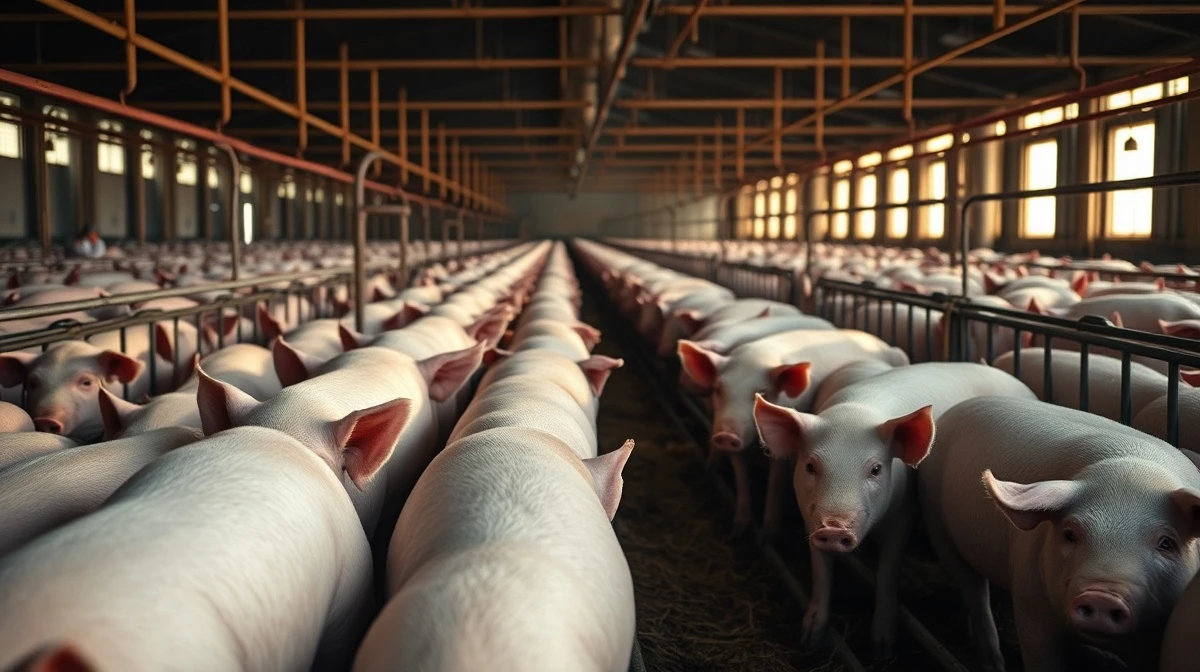
Lean hog futures posted modest losses in Monday’s trading session, with market participants analyzing fresh government data ahead of anticipated activity. Contracts across the board settled lower, reflecting cautious sentiment in the livestock complex.
Market Session Details
Futures contracts declined between 7 and 47 cents during the March 24 session. The April 2026 contract closed at $90.80, down 47.5 cents. May 2026 hogs settled at $95.65, a loss of 7.5 cents, while the June 2026 contract finished at $104.40, also down 7.5 cents.
Open interest, a measure of outstanding contracts, fell by 4,193 contracts according to session data. This reduction suggests some traders were closing positions ahead of new market information.
USDA Price Reports Show Divergence
The U.S. Department of Agriculture reported a national base hog price of $91.93 on Monday afternoon. This figure represented a gain of $1.58 from the previous day’s report.
Conversely, the CME Lean Hog Index declined. The most recent calculation, dated March 19, stood at $91.95, a decrease of 9 cents from the prior reading.
USDA’s afternoon pork carcass cutout value rose 40 cents to $99.60 per hundredweight. The agency noted that only the butt and ham primal cuts were reported lower in the Monday afternoon update.
Slaughter Figures and Market Context
Federally inspected hog slaughter for March 24 was estimated at 492,000 head. This volume is 99,000 head below last week’s Monday figure but exceeds the same Monday from last year by 20,985 head.
Market analysts often monitor slaughter rates as an indicator of immediate supply and packing plant demand. The year-over-year increase suggests slightly higher production compared to the same period in 2025.
Traders typically assess a combination of futures prices, cash market reports, and slaughter data to gauge market direction. The mixed signals from Monday’s reports—a higher cash price but lower futures and index—contributed to the session’s tentative tone.
What Comes Next for Hog Traders
Attention now turns to subsequent trading sessions and ongoing USDA reports for clearer direction. Key factors include continued cash market price discovery, export demand signals, and broader commodity market trends. The livestock futures complex remains sensitive to feed cost fluctuations and consumer meat demand, both domestically and internationally.
Market data is sourced from the CME Group and the U.S. Department of Agriculture. Trading involves risk, and past performance is not indicative of future results.
This article was produced with AI assistance and reviewed by our editorial team for accuracy and quality.



