
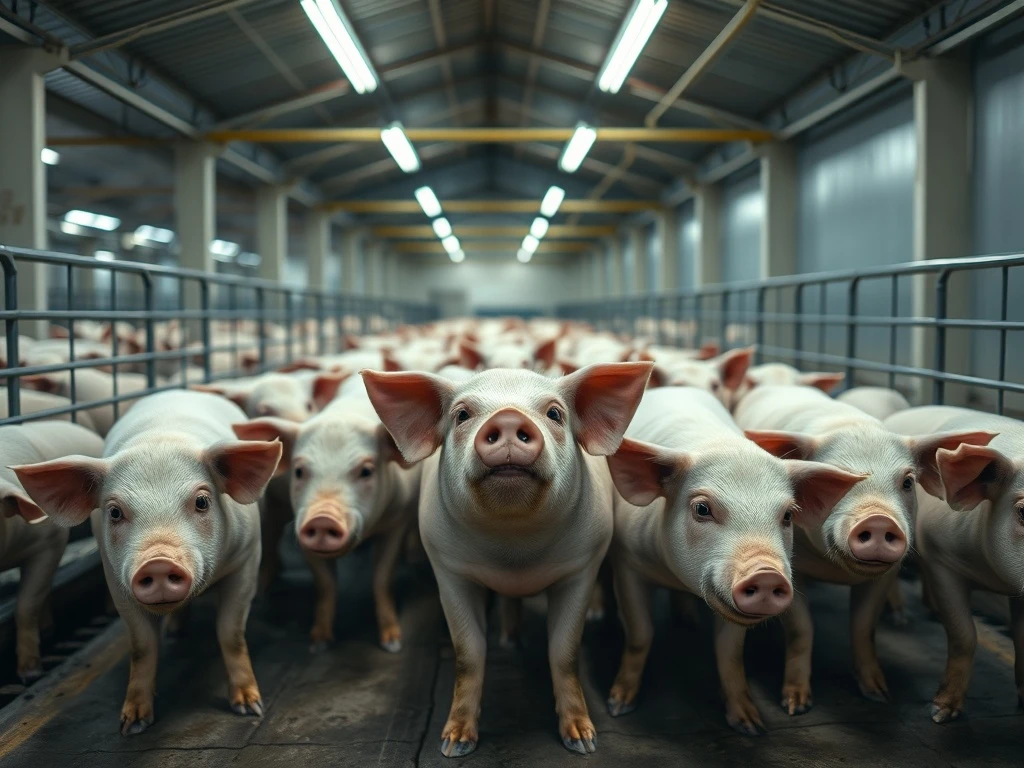
Lean hog futures closed sharply lower on Wednesday, March 12, 2026, in Chicago, marking a significant downturn for the agricultural commodity. The session saw losses ranging from 87 cents to $1.40 across key contract months, pressured by a complex mix of supply data and cash market movements reported by the U.S. Department of Agriculture. This decline interrupts a recent period of technical strength and places renewed focus on slaughter rates and pork cutout values as traders assess the path forward for protein markets amid evolving economic conditions.
Wednesday’s Market Breakdown and Key USDA Data
The Chicago Mercantile Exchange reported substantial losses across the lean hog complex at Wednesday’s close. The March 2026 contract settled at $95.200, down $0.875. Meanwhile, the May contract fell $1.300 to $100.050, and the June contract experienced the largest drop, closing at $109.250 after a $1.400 decline. These moves contrasted with a modestly higher cash market. Specifically, the USDA’s national base hog price edged up 12 cents Wednesday afternoon to $92.89. Furthermore, the CME Lean Hog Index for March 5 registered a ten-cent increase to $90.97. This divergence between futures and some cash indicators created a nuanced trading environment that analysts are still parsing.
Concurrently, the USDA’s Pork Carcass Cutout Value, a critical benchmark for wholesale pork prices, declined 69 cents to $98.41 per hundredweight in its Wednesday afternoon report. The ham primal was the only component to show strength. More significantly, the agency’s estimate for federally inspected hog slaughter reached 496,000 head for the day. This figure brought the weekly total to 1.476 million head, which stands 23,000 head above last week’s pace and 13,613 head above the same week last year. These elevated slaughter numbers suggest robust supply, a fundamental factor often weighing on futures prices.
Immediate Impacts on Producers and the Supply Chain
The sudden weakness in lean hog futures carries direct consequences for various stakeholders in the pork pipeline. For independent producers and integrated operations, forward pricing strategies may require immediate reassessment. Packers, who operate on often-thin margins, face a shifting dynamic between procurement costs and product values. The drop in the cutout value, despite higher slaughter, indicates potential pressure on wholesale demand or specific product mix challenges. Several key impacts are now in focus.
- Producer Hedging Pressure: Producers who had not locked in prices for spring and summer deliveries may face increased urgency to hedge, potentially adding further selling pressure to the futures board in the near term.
- Packers’ Margin Squeeze: The combination of a slightly higher cash price and a lower cutout value can compress packer margins, possibly influencing their bidding aggressiveness for live animals in the days ahead.
- Feed Cost Context: The hog market moves independently but remains indirectly linked to grain complex volatility. Stable or lower feed costs could partially offset price declines for producers, a factor not immediately reflected in Wednesday’s futures action.
Expert Analysis from Agricultural Economists
Dr. Sarah Jenkins, a livestock economist with the University of Illinois’ Farmdoc team, contextualizes the data. “Wednesday’s sell-off appears driven by the bearish combination of rising slaughter volumes and a softening cutout,” Jenkins notes. “The market is efficiently processing information that points to ample near-term supply. However, the resilience in the base price and the Lean Hog Index suggests the cash market foundation isn’t collapsing.” She points to export demand schedules and domestic cold storage levels as the next critical data points to watch. Separately, analysts at Barchart, the source of the initial report, emphasize technical levels breached by the decline, which may trigger further algorithmic selling unless buyers step in forcefully.
Broader Context: Hog Markets Within the Agricultural Complex
The lean hog market does not operate in a vacuum. Its performance is often compared to other livestock futures and influenced by macroeconomic trends. For instance, live cattle futures have recently faced their own challenges, often moving on separate fundamentals but watched by the same pool of commodity funds. The relative value of pork versus beef and poultry at the retail level ultimately filters back to producer profitability. The following table compares key metrics from Wednesday’s session with recent averages and year-ago levels, highlighting the current market position.
| Metric | March 12, 2026 | 4-Week Average | Year-Ago (March 2025) |
|---|---|---|---|
| April Hog Futures Close | $95.200 | $96.850 | $91.400 |
| USDA Base Hog Price | $92.89 | $91.75 | $88.10 |
| Pork Cutout Value | $98.41/cwt | $99.80/cwt | $102.30/cwt |
| Daily Slaughter Estimate | 496,000 head | 487,000 head | 482,000 head |
What Comes Next: Key Dates and Market Catalysts
Market participants are now looking ahead to several scheduled reports and events that will dictate the short-term trend. The USDA’s weekly Export Sales report, released each Thursday, will be scrutinized for international demand signals, particularly from key trading partners like Mexico and Japan. The monthly Cold Storage report, due next week, will reveal pork inventory levels, indicating whether current production is being absorbed. Additionally, the quarterly Hogs and Pigs report, while further out, will set the tone for longer-term supply expectations. Traders will also monitor corn and soybean meal futures closely, as any sustained rally in feed costs could alter production economics and future supply projections.
Industry and Trader Reactions to the Sell-Off
Initial reactions from the trading floor indicated surprise at the session’s depth. “The magnitude of the drop, especially in the deferred months, seemed to outpace the fundamental data shift,” commented a futures broker with the Chicago-based firm Price Group, who spoke on background. Meanwhile, producer groups have emphasized underlying strength in consumer demand for pork, pointing to consistent grocery sales data. The National Pork Producers Council (NPPC) regularly highlights pork’s value proposition, a factor they argue provides a demand floor even during periods of price volatility in the futures pits.
Conclusion
Wednesday’s significant decline in lean hog futures underscores the market’s acute sensitivity to weekly supply data and wholesale price signals. While the cash market showed tentative strength, the futures complex reacted decisively to higher slaughter rates and a lower cutout value. The path forward hinges on the balance between continued robust production and the strength of domestic and export demand. For market watchers, the immediate focus shifts to weekly export data and packer behavior. The coming sessions will test whether Wednesday’s move was a one-day correction or the beginning of a broader trend change in the hog complex, making vigilant monitoring of USDA reports essential for all market participants.
Frequently Asked Questions
Q1: What caused lean hog futures to drop on March 12, 2026?
The primary drivers were a higher-than-expected daily hog slaughter estimate (496,000 head) and a decline in the wholesale Pork Carcass Cutout Value. This combination signaled ample immediate supply and potential softness in wholesale demand, leading to selling pressure in the futures market.
Q2: How does this affect pork prices at the grocery store?
Futures market moves do not immediately translate to retail prices. There is typically a lag of several weeks to months. However, sustained weakness in wholesale and futures markets can eventually lead to lower prices for certain pork cuts, depending on retailer pricing strategies and promotional activity.
Q3: What should hog producers do in response to this price drop?
Producers should consult with their risk management advisors. Actions may include reviewing existing hedge positions, evaluating cost of production, and analyzing forward pricing opportunities for upcoming production cycles based on their individual financial situation and market outlook.
Q4: Is the cash market for hogs also falling?
Not necessarily. On Wednesday, the USDA’s national base hog price actually increased by 12 cents to $92.89. The futures market often reacts to anticipated changes in supply and demand, while the cash market reflects immediate, physical transactions, which can sometimes move differently.
Q5: How does this compare to the cattle market?
Cattle and hog markets have different fundamentals. While both are livestock, they are influenced by separate herd cycles, feed ratios, and consumer demand patterns. Cattle futures have faced their own challenges recently, but the two markets do not always move in sync.
Q6: Where can I find the official data moving these markets?
The U.S. Department of Agriculture (USDA) publishes the critical data, including the National Base Hog Price, Pork Cutout Value, and Slaughter reports. The Chicago Mercantile Exchange (CME) publishes the Lean Hog Index and futures prices. These are considered the authoritative sources for market participants.



