
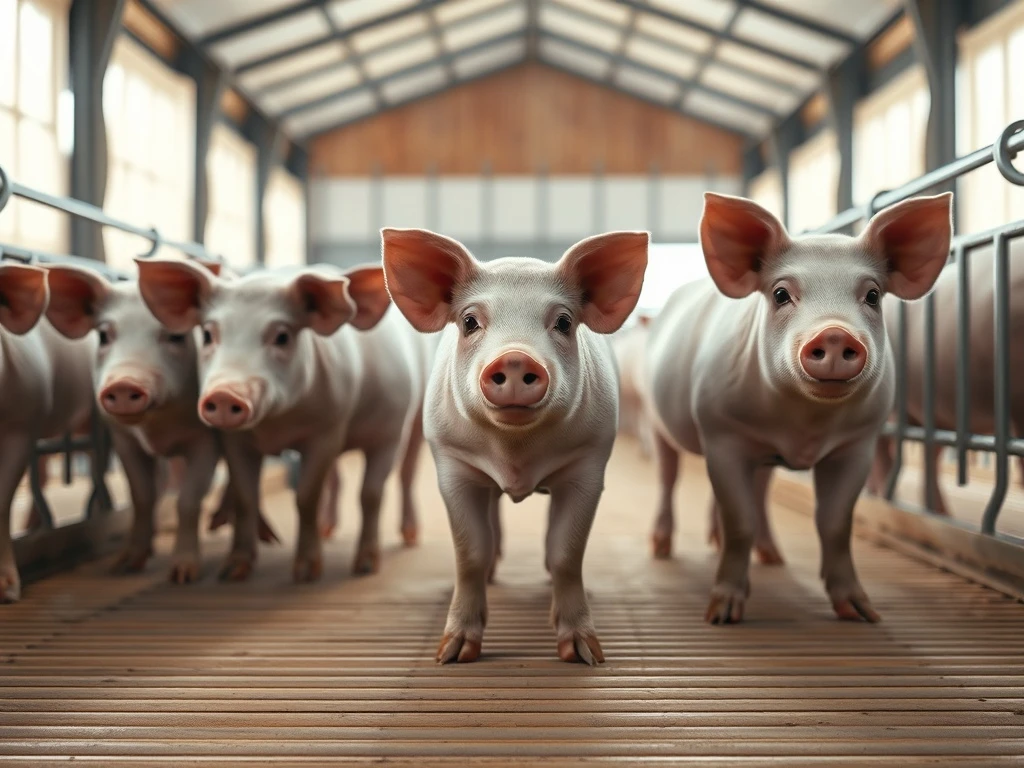
CHICAGO, March 8, 2026 — Lean hog futures demonstrated unexpected resilience in Friday’s trading session, posting modest gains across front-month contracts. The market absorbed a complex set of data from the U.S. Department of Agriculture (USDA), including a steady national base price and a significant year-over-year decline in weekly slaughter. Traders on the Chicago Mercantile Exchange (CME) pushed April 2026 contracts to $95.800, a gain of $0.125, while May contracts edged up $0.025 to $100.550. This firming trend arrives amid broader commodity market volatility and provides a critical snapshot of protein supply dynamics as the second quarter approaches.
USDA Data Reveals a Tightening Hog Supply Picture
The USDA’s National Daily Hog Report, released Friday morning, pegged the national base price at $90.33. Meanwhile, the CME’s Lean Hog Index, a crucial benchmark for cash-settled futures, climbed 37 cents to $90.55 for March 4. This incremental rise in the index often signals underlying strength in physical markets. However, the agency’s Pork Carcass Cutout Value, a measure of wholesale pork value, dipped 44 cents to $98.78 per hundredweight in its Friday morning report. Significantly, the report noted higher prices for specific primal cuts like bellies, ribs, and picnics, indicating robust demand for certain pork products even as the aggregate value softened.
Perhaps the most telling data point came from slaughter figures. The USDA estimated Thursday’s federally inspected hog slaughter at 491,000 head. Consequently, the weekly total reached 1.944 million head, marking a decrease of 7,000 head from the prior week and a substantial 132,550-head drop compared to the same week in 2025. This year-over-year contraction directly points to a tighter available supply of market-ready hogs, a fundamental factor supporting futures prices. “The slaughter numbers are the story here,” noted a veteran livestock analyst with Barchart, who spoke on background. “When you’re down over 130,000 head year-on-year, it creates a floor. The market is pricing in that reality, even with a softer cutout.”
Market Impacts and Trader Sentiment
The immediate impact of Friday’s data was a cautiously optimistic futures market. The gains, though small, were broad-based. June 2026 hog futures also joined the uptrend, rising $0.075 to $109.975. This activity suggests traders are looking beyond the daily cutout value and focusing on the forward supply narrative. The convergence of a higher lean hog index and lower slaughter creates a classic supply-driven support scenario. Furthermore, the strength in specific primal cuts like ribs and bellies hints at resilient foodservice and retail demand for key pork items.
- Supply Constraint: The 6.8% year-over-year decline in weekly slaughter is a powerful bullish signal, directly limiting the volume of pork entering the system.
- Cash Market Support: The rising Lean Hog Index confirms firmness in the physical, cash-settled market that underpins futures contracts.
- Selective Demand: Strength in bellies (bacon) and ribs shows consumer and restaurant demand remains targeted, supporting packer margins for specific products.
Expert Analysis from the Trading Floor
Market observers point to several converging factors. Dr. Sarah Jensen, an agricultural economist at the University of Illinois’ Farmdoc team, highlighted the role of production costs. “Feed ratios have been favorable, but producers have been disciplined in their expansion plans over the last 18 months,” Jensen explained. “We’re seeing the effects of that moderation now in the slaughter numbers. The industry isn’t flooding the market.” This perspective is echoed in USDA inventory reports, which have shown modest herd growth. Additionally, analysts monitor export demand, particularly to key markets like Mexico and Japan, which has held steady and absorbs a significant portion of U.S. pork production, including offal and variety meats that contribute to overall packer profitability.
Broader Context in the Livestock Complex
Friday’s hog market activity stands in contrast to other segments of the livestock complex. While lean hogs firmed, live cattle futures faced pressure earlier in the week amid concerns over beef demand. This divergence underscores the independent fundamentals driving each protein market. The hog complex is largely a story of managed supply and consistent, diversified demand. For context, the table below shows key price points and changes for the front-month contracts as of Friday’s close.
| Contract Month | Price (USD/cwt) | Daily Change |
|---|---|---|
| April 2026 Hogs | $95.800 | +$0.125 |
| May 2026 Hogs | $100.550 | +$0.025 |
| June 2026 Hogs | $109.975 | +$0.075 |
Historically, spring often brings seasonal strength to hog markets as grilling season anticipation begins. However, the current firmness appears more rooted in supply fundamentals than seasonal speculation. Compared to the price volatility seen in 2024 during widespread disease challenges, the 2026 market exhibits a more stable, supply-constrained profile.
What to Watch Next in Hog Markets
Market participants will closely monitor the USDA’s next Cold Storage report and weekly export sales data. Pork inventory levels in cold storage will indicate whether current production is meeting demand or building a buffer. Additionally, any shifts in feed grain prices, particularly corn and soybean meal, will influence producer profitability and long-term herd decisions. The upcoming Quarterly Hogs and Pigs report, scheduled for late March, will provide the most authoritative snapshot of breeding inventory and farrowing intentions, setting the tone for supply expectations into late 2026 and early 2027.
Industry and Analyst Reactions
Reaction from producer groups has been cautiously optimistic. The higher futures prices for summer and fall contracts provide improved hedging opportunities for operations locking in production costs. Meanwhile, meatpackers are navigating the margin between rising live hog costs and a mixed wholesale product market. “It’s a balancing act,” shared a procurement manager for a major packing plant, who requested anonymity. “The cutout was off today, but the belly and rib markets are strong. If those items hold, we can manage the cost side. The bigger concern is if slaughter runs stay this tight.” This sentiment captures the nuanced reality of the market—strength in some areas offsetting weakness in others.
Conclusion
Friday’s firming in lean hog futures underscores a market responding to clear supply signals. The significant year-over-year drop in slaughter is the dominant factor, providing a fundamental floor for prices despite a dip in the overall pork cutout value. Strength in key primal cuts and a rising lean hog index further bolster the case for near-term stability. Looking ahead, the focus shifts to upcoming USDA reports on storage and inventories, which will test whether this supply-driven strength can persist. For now, the hog market has sent a clear message: available supply is tightening, and futures prices are adjusting accordingly.
Frequently Asked Questions
Q1: What caused lean hog futures to rise on Friday, March 8, 2026?
The primary driver was a USDA-estimated weekly hog slaughter of 1.944 million head, which was 132,550 head lower than the same week last year. This significant supply reduction supported futures prices despite a slight decline in the overall pork cutout value.
Q2: What is the difference between the USDA base price and the CME Lean Hog Index?
The USDA national base price is an average of prices paid for hogs in major cash markets. The CME Lean Hog Index is a weighted average of cash hog prices across the U.S., used specifically to settle expiring CME lean hog futures contracts. Both are key cash market benchmarks.
Q3: What does a higher price for pork bellies and ribs mean for the market?
Bellies (bacon) and ribs are high-value, demand-sensitive cuts. Strength in these primals indicates solid consumer and foodservice demand for those specific products, which helps maintain packer profitability even when the aggregate cutout value is soft.
Q4: How do hog futures prices affect grocery store pork prices?
Futures prices reflect expectations for future costs. Sustained higher futures can eventually translate to higher wholesale costs for retailers, potentially affecting retail pork prices with a lag of several weeks to months, depending on purchasing contracts.
Q5: What is the next major report that will influence hog markets?
The USDA’s Quarterly Hogs and Pigs report, due in late March, is the most critical. It provides official estimates of the breeding herd, farrowings, and pig crop, offering the clearest view of future pork supply for the next 9-12 months.
Q6: How might this impact hog farmers’ decisions?
Stronger deferred futures prices (like June at $109.975) provide better opportunities for producers to hedge or lock in a price for hogs they will market later in the year, improving financial planning and risk management for their operations.



