
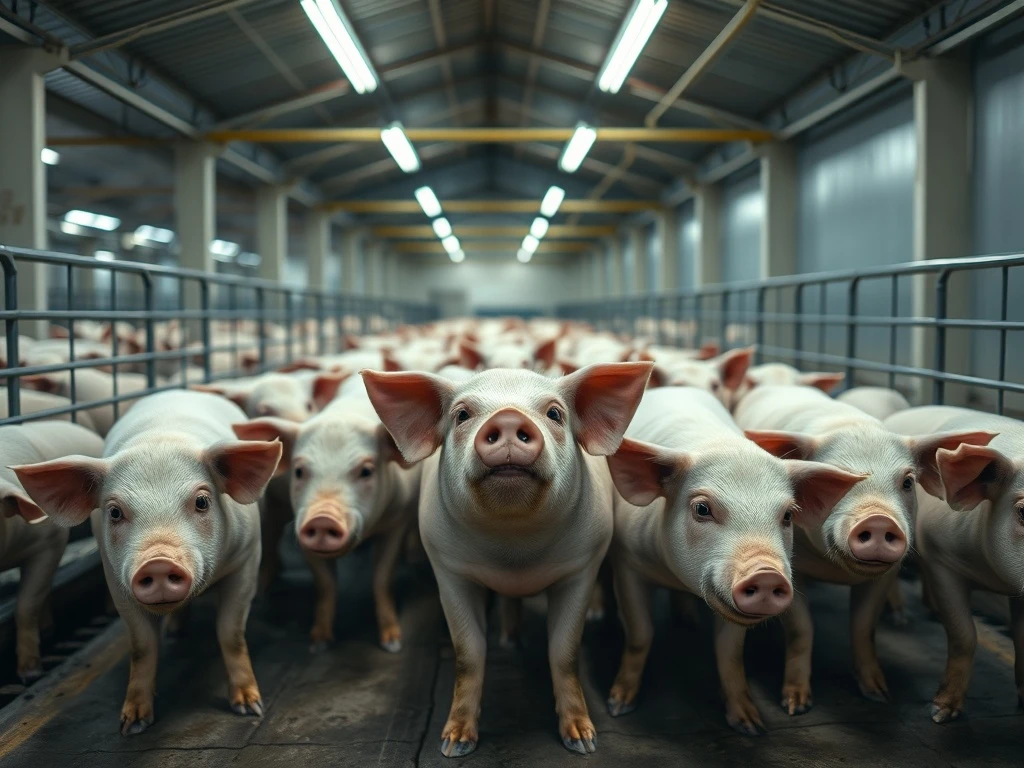
CHICAGO, March 11, 2026 — Lean hog futures sold off sharply in Wednesday’s trading session, posting significant losses as updated government data revealed a notable increase in weekly slaughter. The April 2026 contract closed at $95.200, down 87 cents, while the May contract fell $1.30 to settle at $100.050. The June contract led the declines, dropping $1.40 to close at $109.250 on the Chicago Mercantile Exchange. This downward pressure coincided with a U.S. Department of Agriculture report estimating Wednesday’s federally inspected hog slaughter at 496,000 head, pushing the weekly total to 1.476 million. Consequently, market analysts are scrutinizing the balance between supply and demand signals in the pork complex.
USDA Data Reveals Mixed Signals for Hog Market
The USDA’s afternoon report provided a complex picture for traders. The national base hog price showed modest strength, rising 12 cents to $92.89. Similarly, the CME Lean Hog Index for March 5 increased by ten cents to $90.97. However, the pork carcass cutout value—a critical measure of wholesale pork product value—declined 69 cents to $98.41 per hundredweight in the Wednesday PM report. Within that cutout, the ham primal was the only component reported higher, indicating specific weakness in other cuts like loins and bellies. This disconnect between live animal prices and product values often signals margin pressure for packers, which can eventually flow back to producers. The slaughter pace is a primary concern; the current week’s total of 1.476 million head is 23,000 head above last week and 13,613 head above the same week last year, suggesting ample and growing supply.
Market veterans note that March often presents a transitional period for hog markets. Winter weather disruptions fade, and production flows normalize, leading to seasonal increases in slaughter numbers. The current data aligns with that pattern, but the magnitude of the futures reaction suggests traders see the supply increase outpacing current demand. “The market is digesting a clear supply-side story,” noted a senior analyst from a Midwest commodity firm, speaking on background. “The question now is whether domestic and export demand can absorb this volume without further price erosion.”
Immediate Impacts on Producers and the Supply Chain
The sudden drop in lean hog futures creates immediate financial implications. For producers who hedged their spring production at higher prices, the decline represents protected revenue. Conversely, those exposed to the spot market face thinner margins. The rising slaughter numbers, while bearish for price, indicate strong packer demand and efficient chain speeds, which can benefit producers through steady marketings. However, the declining cutout value pressures packer profitability, potentially leading to narrower bids for live animals in the coming days. The impacts cascade through the agricultural economy.
- Producer Margins: Input costs for feed, primarily corn and soybean meal, have remained elevated. A simultaneous drop in output price squeezes profitability, potentially influencing future production decisions.
- Packer Operations: With the cutout value falling faster than the live price, packer margins compress. This dynamic often leads to more aggressive procurement strategies or operational adjustments to maintain throughput efficiency.
- Retail and Consumer Prices: There is typically a lag, but sustained weakness in wholesale pork values usually translates to lower retail prices for products like chops, ribs, and ground pork, affecting grocery inflation metrics.
Expert Analysis from Agricultural Economists
Dr. Sarah Jensen, an agricultural economist at the University of Illinois specializing in livestock markets, provided context. “Wednesday’s data isn’t an outlier,” Jensen stated. “It continues a trend of robust production meeting a demand environment that is good, but not great. Export demand to key markets like Mexico and Japan has been steady, but not enough to draw down the growing domestic supply reflected in these slaughter numbers.” She pointed to the USDA’s latest Livestock, Dairy, and Poultry Outlook report, which forecasts 2026 commercial pork production to be 2-3% above 2025 levels. This fundamental outlook underpins the futures market’s sensitivity to weekly slaughter reports. Another perspective comes from the American Farm Bureau Federation, which monitors cash flow pressures on family farms. Their analysis suggests that while current prices remain above the five-year average, the direction of travel is critical for operational planning.
Broader Context: Livestock Markets and Historical Comparisons
The lean hog weakness did not occur in a vacuum. Nearby live cattle futures experienced volatility earlier in the week following a USDA Cattle on Feed report. This interconnectedness is vital; protein markets often influence each other as consumers and buyers substitute between beef, pork, and poultry. Comparing current hog prices to recent years reveals a market still in a relatively strong position historically, yet off its recent peaks. The table below shows key benchmark prices for context.
| Contract/Index | Price (March 11, 2026) | Change from Prior Week |
|---|---|---|
| CME Lean Hog Index (March 5) | $90.97 | +$0.10 |
| USDA National Base Hog Price | $92.89 | +$0.12 |
| Pork Carcass Cutout Value | $98.41/cwt | -$0.69 |
| April 2026 Lean Hog Futures | $95.200 | – $0.875 (Wed. only) |
This activity follows a period of technical strength in lean hogs through late February, driven by optimism around export sales and colder weather slowing marketings. The current reversal highlights the market’s focus on verifiable, high-frequency data like slaughter numbers over forward-looking expectations.
What Happens Next: Key Dates and Market Catalysts
Traders and producers will immediately turn to Thursday’s USDA morning pork report for an update on the cutout value and slaughter estimates. The weekly export sales report, released Thursday morning, will be scrutinized for demand signals. Looking further ahead, the USDA’s quarterly Hogs and Pigs report, scheduled for release on March 28, will provide the most comprehensive snapshot of breeding inventory and farrowing intentions, setting the tone for summer and fall supply expectations. Market technicians are also watching key chart support levels for the April contract around the $94.50 area; a breach could signal further downward momentum. Fundamentally, the direction of grain markets will play a role, as lower feed costs could partially offset lower hog prices for producers, influencing their decisions to maintain or expand herds.
Industry and Analyst Reactions to the Sell-Off
Reactions from the industry have been measured. Producer groups emphasize the cyclical nature of the business and point to still-positive margins for many operations. “A single day’s move doesn’t change a quarterly budget,” said a representative from the National Pork Producers Council. “The focus remains on long-term competitiveness and market access.” Trading desks at major financial institutions described the move as a “healthy correction” following an overbought condition, noting that speculative long positions had grown elevated in recent weeks. This suggests some of Wednesday’s selling was likely technical and fund-driven, not solely based on fundamental news.
Conclusion
Wednesday’s significant decline in lean hog futures underscores the market’s acute sensitivity to supply data. The combination of rising weekly slaughter totals and a softening pork cutout value created a bearish catalyst that overwhelmed a slightly stronger cash market. While the fundamental outlook for pork production in 2026 remains large, demand strength—particularly from the export sector—will be the decisive factor in determining price floors. For now, the market action on March 11, 2026, serves as a reminder of the volatility inherent in agricultural commodities and the importance of risk management. Stakeholders should monitor the upcoming USDA Hogs and Pigs report closely, as it will provide critical data for the second half of the year.
Frequently Asked Questions
Q1: Why did lean hog futures drop so sharply on March 11, 2026?
The primary driver was a USDA report showing a high weekly hog slaughter estimate of 1.476 million head, significantly above both the previous week and the same week last year. This indicated larger-than-expected supply entering the market.
Q2: What is the difference between the CME Lean Hog Index and the USDA base price?
The CME Lean Hog Index is a two-day weighted average of cash hog prices, used to settle expiring futures contracts. The USDA National Base Hog Price is a daily estimated price for negotiated cash trades. Both are key cash market benchmarks.
Q3: What key reports should traders watch next?
The USDA’s weekly export sales report (Thursdays) and the morning pork report (daily) are critical for short-term direction. The major upcoming catalyst is the quarterly Hogs and Pigs report on March 28, which details inventory and farrowing intentions.
Q4: How does this affect pork prices at the grocery store?
There is a lag, but sustained declines in wholesale pork cutout values typically lead to lower retail prices for products like pork chops, ribs, and ground pork over several weeks.
Q5: Are other livestock markets, like cattle, experiencing similar weakness?
Markets are interconnected but distinct. Live cattle futures faced pressure earlier in the week from a separate USDA report but can move independently based on their own supply and demand fundamentals.
Q6: What does this mean for a hog farmer’s profitability?
It depends on their risk management. A farmer who hedged (sold futures) earlier has protected their revenue. A farmer selling on the spot cash market will see lower prices, squeezing margins if feed costs remain high.
This article was produced with AI assistance and reviewed by our editorial team for accuracy and quality.



