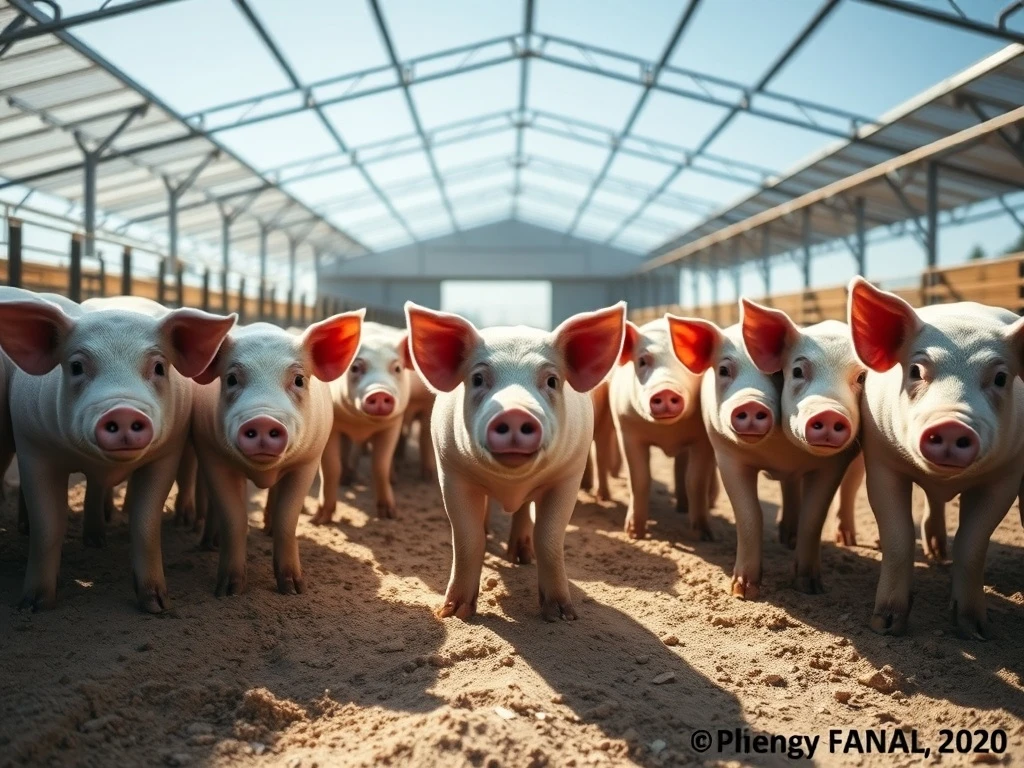
CHICAGO, October 8, 2024 — Lean hog futures defied a drop in wholesale pork values to post solid gains during Tuesday’s midday trading session. Contracts across the board advanced by 12 to 32 cents, signaling trader optimism despite bearish fundamental data from the U.S. Department of Agriculture. The midday rally, observed at the Chicago Mercantile Exchange (CME), comes as the market digests conflicting signals from pork production and slaughter rates. This price action highlights the complex dynamics between immediate supply data and forward-looking expectations for the hog market as the industry moves deeper into the fourth quarter.
Lean Hog Futures Post Broad-Based Gains
The CME’s most actively traded contracts all moved higher by Tuesday afternoon. Specifically, the October 2024 contract rose to $84.150, a gain of $0.175. Meanwhile, the December 2024 contract climbed $0.325 to $77.150. Furthermore, the February 2025 contract increased by $0.125, reaching $80.725. This upward movement occurred even as the benchmark CME Lean Hog Index registered a decline. The index, a rolling weighted average of cash market prices, was reported at $84.26 for October 4. This figure represented a 57-cent drop from the previous day’s calculation. Consequently, the futures market’s strength suggests traders are looking beyond near-term cash weakness.
Market analysts often view such divergence as a bet on tightening supplies ahead. “The futures market is fundamentally a forecasting mechanism,” explains Dr. James Corbin, an agricultural economist at the University of Illinois. “A rally in the face of soft cash prices can indicate that traders see current supply pressures as temporary. They are potentially anticipating stronger demand or reduced production in the coming months, which the deferred contracts are beginning to price in.” This expert perspective underscores the forward-looking nature of commodity futures trading.
USDA Data Reveals Mixed Fundamental Picture
Supporting the near-term bearish case, the USDA’s daily National Pork Cutout Value fell in its Tuesday morning report. The cutout, representing the estimated value of a carcass, dropped $1.24 to $94.81 per hundredweight (cwt). Several primal cuts led the decline. Notably, the loin, picnic, and belly cuts were all reported lower. This drop in wholesale value typically pressures the cash prices paid to producers, which the Lean Hog Index reflects. However, slaughter data told a different story. The USDA estimated federally inspected hog slaughter for Monday, October 7, at 488,000 head. This number was 3,000 head above the previous Monday and a significant 6,606 head above the same Monday in 2023.
- Increased Slaughter Volume: Higher year-over-year slaughter suggests robust, perhaps burdensome, supplies are currently moving to market.
- Falling Cutout Value: Weakness in key product values indicates demand may not be keeping pace with this increased supply.
- Futures Market Reaction: The midday rally implies traders believe this supply-demand imbalance will correct sooner rather than later.
Expert Analysis on Market Divergence
According to a market commentary from the Livestock Marketing Information Center (LMIC), a non-profit research group funded by USDA and land-grant universities, such divergences are not uncommon. “Cash and futures markets can decouple based on time horizon,” their weekly outlook noted. “Futures incorporate expectations for export demand, feed cost changes, and herd health trends that may not be apparent in today’s slaughter sheet.” The LMIC points to factors like potential strength in international sales or forecasts for higher feed grain costs, which could constrain future production. This institutional analysis provides crucial context for the day’s price action, moving beyond the raw numbers.
Broader Context for the Hog Complex
Tuesday’s trading occurs within a volatile year for animal protein markets. For instance, cattle futures have experienced historic volatility, and poultry markets have contended with avian influenza. The hog sector, meanwhile, has navigated shifting consumer demand, persistent operational costs, and variable export fortunes. Comparing recent lean hog index values illustrates the market’s trajectory. The index has retreated from highs above $90 earlier in the year but remains above levels seen in the fall of 2023. This positioning suggests the market is finding a new equilibrium after a period of strength.
| Contract Month | Last Price (10/8 Midday) | Net Change |
|---|---|---|
| Oct 2024 Hogs | $84.150 | + $0.175 |
| Dec 2024 Hogs | $77.150 | + $0.325 |
| Feb 2025 Hogs | $80.725 | + $0.125 |
What Happens Next for Hog Prices?
Market participants will immediately turn to the USDA’s weekly Cold Storage report, scheduled for release later this week. This report will show pork inventory levels, a key indicator of whether current production is being absorbed or building up in freezers. Additionally, weekly export sales data will provide a critical gauge of international demand, a major price driver for the hog complex. Finally, traders will monitor corn and soybean meal prices closely. Since feed constitutes over 60% of the cost of raising a hog, any sustained rally in grain markets could force producers to liquidate herds sooner, tightening future supplies and supporting futures prices.
Reactions from Industry Stakeholders
Initial reactions from the producer community were cautiously optimistic. A representative from the National Pork Producers Council (NPPC) stated, “Any strength in the futures market provides a valuable hedging opportunity for producers facing high input costs. It allows them to lock in a price for future production, managing their risk in an uncertain environment.” On the other hand, packers and processors may view rising futures with concern, as it signals higher expected costs for live animals down the road, potentially squeezing their margins. This tension between different segments of the supply chain is a constant feature of agricultural commodity markets.
Conclusion
Tuesday’s midday rally in lean hog futures demonstrates the market’s capacity to look past immediate, bearish data points toward future fundamentals. While the USDA reported a lower pork cutout and a high slaughter rate, traders bid up contracts, likely anticipating a shift in the supply-demand balance. Key factors to watch include export demand signals, feed grain price trends, and weekly cold storage data. For producers, the rally offers critical risk management opportunities. For consumers and the broader hog market, these price movements are the first indicator of where bacon and pork chop prices may be headed in the months to come. The market’s next major test will be whether this futures strength can eventually pull the cash market higher.
Frequently Asked Questions
Q1: What are lean hog futures?
Lean hog futures are standardized contracts traded on the Chicago Mercantile Exchange (CME) for the delivery of market-weight hogs at a future date. They are a critical tool for pork producers, processors, and speculators to manage price risk and bet on the future direction of the market.
Q2: Why did hog futures go up if pork prices are down?
Futures markets are forward-looking. The rally suggests traders believe current weaknesses in pork cutout values and high slaughter rates are temporary. They may be anticipating stronger demand, lower future supply due to high feed costs, or other factors that would support prices later.
Q3: What is the USDA’s FOB Pork Cutout Value?
The FOB Pork Cutout Value is an estimated composite price for a hog carcass, calculated daily by the USDA based on the wholesale prices of its various parts (like hams, loins, and bellies). It is a key benchmark for the value of pork at the processor level.
Q4: How does hog slaughter data affect prices?
Higher slaughter numbers, like the 488,000 head reported for October 7, indicate increased immediate supply of pork. All else being equal, more supply tends to push prices down. However, if demand is strong enough to absorb that supply, the price impact can be muted.
Q5: What does this mean for grocery store pork prices?
There is a lag between live hog prices and retail prices. A sustained rally in futures markets suggests wholesale costs for packers may rise in the future. This often, but not always, translates to higher prices for consumers at the meat counter several weeks or months later.
Q6: Who is most affected by movements in lean hog futures?
Pork producers are directly affected, as futures provide price signals for their future production and hedging opportunities. Meatpacking companies are also heavily impacted, as live animal costs are their primary input. Finally, investors and speculators in commodity markets trade these contracts for financial gain.