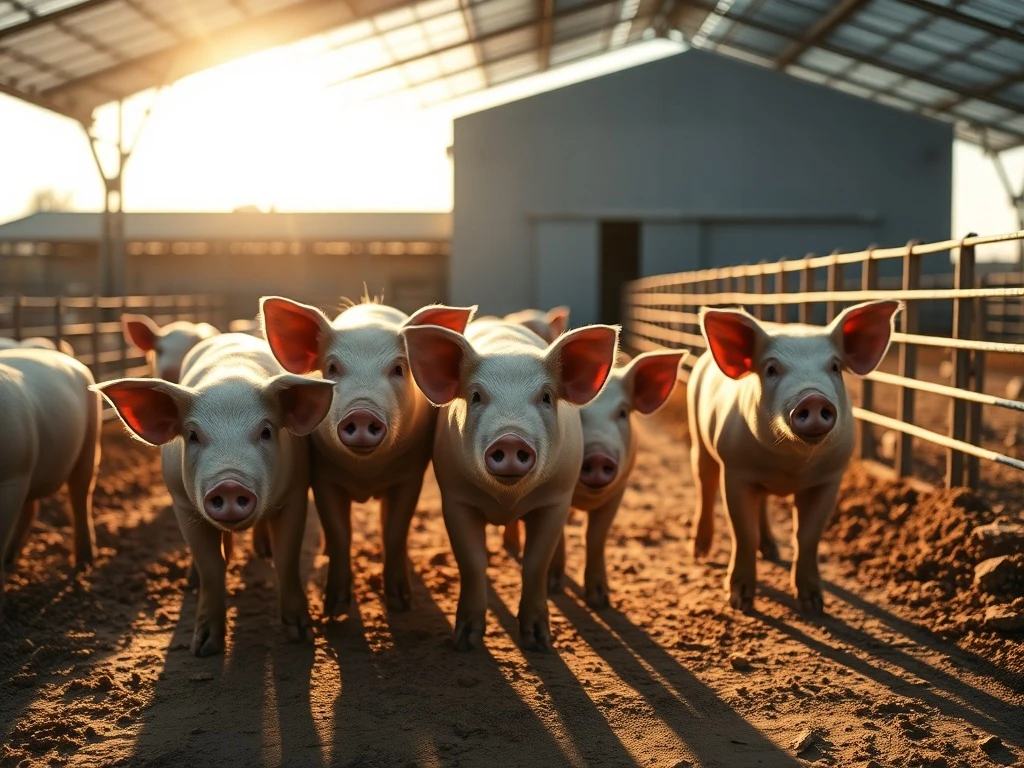
Lean hog futures demonstrated notable strength in Friday’s trading session, closing March 7, 2026, with most contracts posting gains despite mixed weekly performance. The market movement follows the latest USDA data showing a $1.95 increase in the national base hog price to $91.69. According to Commitment of Traders reports analyzed by Barchart, managed money significantly increased their net long positions in lean hog futures and options by 7,053 contracts this week, bringing their total bullish bet to 124,036 contracts. This activity in Chicago’s financial district signals strong institutional confidence in the pork complex as slaughter estimates run above last year’s levels.
Lean Hog Futures Show Friday Strength Amid Mixed Weekly Performance
The CME Group lean hog market presented a complex picture on Friday. While the front-month April 2026 contract slipped five cents to settle at $95.625, deferred contracts posted solid gains. The May contract added 32.5 cents to reach $100.850. Furthermore, the June contract led the rally with a 67.5-cent advance to $110.575. This price action created a steeply upward-sloping forward curve, indicating market expectations for tighter supplies and stronger demand as the year progresses. The CME Lean Hog Index, a key benchmark for cash market settlements, confirmed the underlying strength with a 37-cent increase to $90.55 for March 4.
Market analysts point to several converging factors. The USDA’s estimated federally inspected hog slaughter for the week reached 2.497 million head. This figure sits 19,000 head below the previous week but represents a significant 95,953-head increase compared to the same week in 2025. This year-over-year expansion in supply is being absorbed by the market without major price deterioration, suggesting robust underlying demand. The trading activity occurred against a backdrop of relative stability in broader equity markets, with major indices like those tracking AAPL, TSLA, AMZN, META, AMD, and NVDA showing muted movement, directing speculative capital toward agricultural commodities.
USDA Data Reveals Divergence Between Cash and Cutout Values
The USDA’s afternoon reports highlighted a critical divergence shaping trader decisions. The national negotiated base hog price climbed to $91.69, providing direct support to producers. Conversely, the pork carcass cutout value—the estimated value of a hog based on its cut-up parts—declined 95 cents to $98.27 per hundredweight in the Friday PM report. This drop in cutout value primarily resulted from weakness in the loin, butt, and ham primals. However, strength in the belly, rib, and picnic primals helped cushion the overall decline.
- Producer Price Support: The rising base price improves margins for hog producers, encouraging maintained production levels.
- Processor Margin Pressure: The lower cutout value relative to live costs may squeeze packer profitability, potentially affecting their bidding aggressiveness.
- Consumer Demand Signals: The strength in bacon (belly) and rib primals indicates sustained retail and foodservice demand for these popular items.
Expert Analysis from the Trading Floor
According to Dr. Lee Schulz, an Extension Livestock Economist at Iowa State University, the current market dynamics reflect a balancing act. “The data shows us a market processing larger supplies than last year, yet still finding price footing,” Schulz noted in a recent market commentary. “The managed money inflow is a key signal. These are sophisticated players reacting to macro conditions, including feed cost trends and export potential, not just weekly slaughter numbers.” This perspective is echoed by analysts at the Livestock Marketing Information Center (LMIC), which provides context on the role of export demand. The LMIC’s latest reports, accessible through their official publications, suggest that sustained shipments to key trading partners are providing a crucial demand floor for the pork complex.
Broader Context: Hog Markets Within the Agricultural Complex
The lean hog rally occurs within a specific segment of the agricultural futures landscape. Unlike row crops such as corn and soybeans, which are heavily influenced by weather and planting reports, livestock markets respond more directly to animal cycles, feed costs, and consumer protein demand. The current strength also contrasts with recent performance in other meat complexes, highlighting the unique supply fundamentals in pork.
| Commodity | Friday Price Action | Key Driver This Week |
|---|---|---|
| Lean Hogs (Jun ’26) | +$0.675 | Managed Money Buying, Strong Base Price |
| Live Cattle | Mixed | Placement Reports, Boxed Beef Values |
| Feeder Cattle | Softer | Higher Corn Prices Pressuring Input Costs |
| Corn (May ’26) | Lower | Favorable South American Harvest Outlook |
What Happens Next: Key Dates and Market Catalysts
Market participants will immediately turn their attention to the next USDA Cold Storage report, scheduled for release on March 21. This report will provide critical data on pork inventories in freezers, indicating whether current production is flowing to consumers or building in storage. Additionally, weekly export sales data from the USDA’s Foreign Agricultural Service, released every Thursday, will be scrutinized for signs of international demand strength, particularly from markets like Mexico, Japan, and South Korea. The April lean hog contract will soon enter its delivery period, which often increases volatility as traders with paper positions either exit or prepare to take physical delivery.
Producer and Packer Reactions to the Rally
Initial feedback from industry stakeholders reveals cautious optimism. A representative from the National Pork Producers Council (NPPC) stated that improving prices provide welcome relief after a period of narrow margins, but emphasized that profitability remains sensitive to feed costs. On the packer side, procurement managers indicate they are monitoring the cutout value closely. If the spread between live costs and product values continues to narrow, it could lead to more conservative bidding at cash auctions, potentially capping the upside for the base hog price in the very near term.
Conclusion
The Friday strength in lean hog futures underscores a market responding to firm cash fundamentals and significant speculative interest. The dual forces of a higher national base price and substantial managed money buying created a bullish tone for deferred contracts. However, the decline in the pork carcass cutout value serves as a reminder of the ongoing tension between producer returns and processor margins. The key takeaway for observers is that the hog market is successfully absorbing larger year-over-year supplies, supported by both domestic and export demand channels. Moving forward, traders will watch inventory data and export metrics to determine if this rally has a sustainable foundation or represents a shorter-term positioning shift.
Frequently Asked Questions
Q1: What caused lean hog futures to rise on Friday, March 7, 2026?
The rally was driven by a $1.95 increase in the USDA’s national base hog price to $91.69 and a significant weekly increase in net long positions held by managed money traders, who added 7,053 contracts to their bullish bets.
Q2: How does the hog slaughter estimate compare to last year?
USDA estimated this week’s federally inspected hog slaughter at 2.497 million head. This is 95,953 head higher than the same week in 2025, indicating the market is absorbing larger supplies without major price collapse.
Q3: What is the difference between the hog base price and the cutout value?
The base price is what producers receive for live hogs. The cutout value is the estimated worth of a hog based on the wholesale prices of its individual parts (loin, ham, belly, etc.). On Friday, the base price rose while the cutout value fell slightly.
Q4: What does it mean that managed money increased their net long position?
It means large institutional traders and hedge funds, categorized as “managed money,” increased their bets that lean hog futures prices will rise in the future. This is often interpreted as a vote of confidence in the market’s fundamentals.
Q5: What are the key reports to watch for future hog price direction?
The two most critical reports are the USDA’s weekly Export Sales data (released Thursdays) and the monthly Cold Storage report (released around the 22nd of each month), which shows meat inventory levels.
Q6: How does this price action affect consumers at the grocery store?
There is often a lag between wholesale futures prices and retail prices. Strength in specific primals like bellies (bacon) and ribs may influence promotions and pricing for those specific cuts more quickly than for overall pork products.