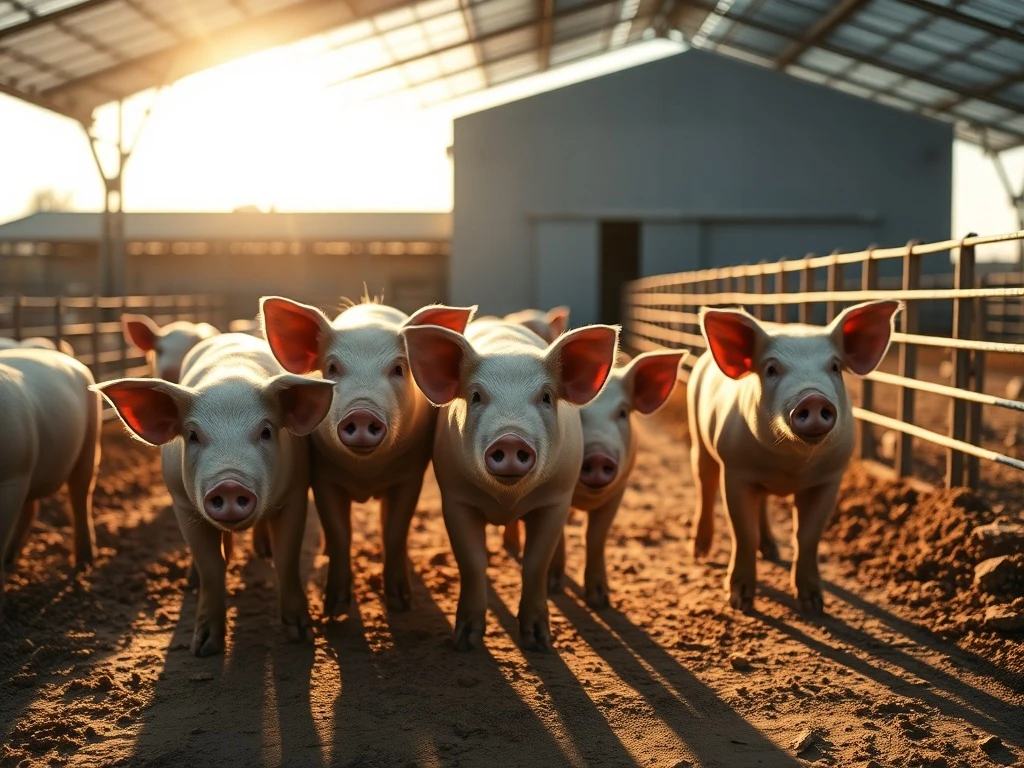
Lean hog futures displayed a split performance on Friday, March 7, 2026, with nearby contracts easing while deferred months posted solid gains. The mixed session in Chicago followed the release of key USDA data showing a stronger national base price and a significant increase in speculative bullish positioning. April futures settled at $95.625, down a modest $0.050, while the May through June contracts climbed between $0.325 and $0.675. This price action underscores a market grappling with near-term supply pressures against longer-term demand optimism, a dynamic closely watched by pork producers, processors, and commodity traders globally.
Lean Hog Futures Market Analysis for March 7
The trading session on the Chicago Mercantile Exchange revealed a clear divergence in trader sentiment across the lean hog futures curve. According to settlement data from Barchart, the April contract’s weekly loss of ten cents contrasted with the strength in later months. This pattern often signals that traders see current pressures—like ample slaughter numbers—as temporary. Meanwhile, the USDA’s National Daily Hog Report, released Friday afternoon, provided a fundamental boost. It showed the national base price climbing $1.95 to $91.69. Furthermore, the CME Lean Hog Index, a key benchmark for cash-settled contracts, increased 37 cents to $90.55 as of March 4. This firming in cash markets provided underlying support for the futures complex despite the mixed finish.
Commitments of Traders (COT) data revealed a crucial shift in market participation. Managed money traders, a category including hedge funds and commodity trading advisors, increased their net-long position in lean hog futures and options by 7,053 contracts in the week ending Tuesday, March 4. This brought their total net-long stance to 124,036 contracts. Dr. Scott Brown, an agricultural economist at the University of Missouri, notes this is a significant signal. “When large speculators add to net-long positions in this magnitude, it often reflects a belief that fundamental supply-demand balances are tightening,” Brown explained. “Their activity provides liquidity but also increases volatility, making the USDA’s weekly slaughter and price data even more critical for price discovery.”
Impact on Pork Producers and the Supply Chain
The week’s market movements have direct consequences for different segments of the pork industry. For independent producers selling on the cash market, the rising base price offers improved margins, especially if feed costs remain stable. However, the mixed futures board complicates hedging decisions. Packers, facing a slight dip in the pork cutout value, must navigate procurement costs against consumer demand. The USDA’s Friday afternoon pork carcass cutout value fell 95 cents to $98.27 per hundredweight (cwt), with primal values showing a mixed picture: bellies, ribs, and picnics were higher, while loins, butts, and hams declined.
- Producer Margin Pressure: While cash prices rose, the lower April futures limit forward-selling opportunities for spring marketings, potentially squeezing margins if feed costs increase.
- Packager Profitability: The declining cutout value, if sustained, could pressure packer profits despite the higher cash hog costs, leading to more aggressive procurement strategies.
- Consumer Price Outlook: Retail pork prices often lag wholesale movements. The strength in bellies and ribs suggests certain popular products may see firmer retail tags in the coming weeks.
Expert Perspective from the Livestock Marketing Information Center
Katelyn McCullock, Lead Economist at the Livestock Marketing Information Center (LMIC), provided context on the slaughter data. “This week’s federally inspected hog slaughter estimate of 2.497 million head is interesting,” McCullock stated. “It’s down 19,000 from last week but remains nearly 96,000 head above the same week last year. This confirms that overall supplies are still substantial historically, which tempers the bullish enthusiasm from the cash price increase. The market is effectively balancing strong current production against expectations for tighter supplies later in 2026.” The LMIC, a cooperative of USDA, universities, and industry groups, is a primary source for unbiased livestock market analysis.
Broader Context in Agricultural Commodities
The hog market does not operate in a vacuum. Its performance is often compared to and influenced by other key agricultural futures. The recent rally in live cattle futures, for instance, can create a supportive psychological environment for the entire livestock complex. Furthermore, input costs like corn and soybean meal, the primary components of hog feed, remain a dominant factor in long-term production economics. The following table compares key metrics across major livestock and grain futures for the same week, highlighting the unique position of lean hogs.
| Commodity | Front-Month Price (3/7/26) | Weekly Change | Key Market Driver |
|---|---|---|---|
| Lean Hogs (Apr) | $95.625/cwt | -$0.10 | High slaughter, rising cash, strong spec longs |
| Live Cattle (Apr) | $185.50/cwt | +$3.25 | Tightening supply, strong beef demand |
| Corn (May) | $4.85/bu | +$0.12 | Planting intentions, export sales |
| Soybean Meal (May) | $385/ton | +$5.50 | Crush pace, South American weather |
What Happens Next for Hog Prices?
Market participants will immediately turn their attention to the next set of USDA reports, including the weekly Export Sales report and the monthly World Agricultural Supply and Demand Estimates (WASDE). Export demand, particularly to key markets like Mexico and Japan, will be a critical swing factor for sustaining price strength. Domestically, the progression of the spring grilling season will test consumer demand for pork ribs and loins. Analysts will also monitor the weekly slaughter pace closely; a sustained drop below 2.5 million head could signal the supply tightening that the deferred futures contracts are anticipating. The significant net-long position held by managed money means price moves could be amplified, requiring producers and hedgers to stay exceptionally vigilant.
Industry and Analyst Reactions
Initial reactions from the industry have been cautiously optimistic. The National Pork Producers Council (NPPC) highlighted the importance of stable markets for producer planning. Meanwhile, trading desks at major financial institutions noted the COT data as a key technical bullish signal, likely triggering algorithmic buying programs if prices break above certain resistance levels. However, some independent analysts urge caution, pointing to the still-large year-over-year slaughter numbers as a cap on runaway price rallies. This diversity of opinion is typical of a market at an inflection point, where every data point is scrutinized for clues about the next major trend.
Conclusion
The lean hog futures market on March 7, 2026, presented a classic tale of two timeframes. Nearby weakness reflected tangible, high weekly slaughter volumes, while deferred strength bet on a future supply correction and steady demand. The $1.95 jump in the national base price and the massive build in managed money net-long positions are the week’s most significant bullish takeaways. For market observers, the path forward hinges on the verification of tightening supplies through slaughter data and the resilience of both domestic and export pork demand. The coming weeks will determine whether the strength in deferred futures contracts was prescient or premature, making this a critical period for decision-making across the pork supply chain.
Frequently Asked Questions
Q1: What caused lean hog futures to be mixed on Friday?
The mixed performance stemmed from conflicting signals: strong cash prices and bullish speculative buying supported prices, but high weekly slaughter volumes and a drop in the pork cutout value pressured the nearby April contract, creating a split board.
Q2: How does the managed money position affect the market?
Managed money increasing its net-long position to 124,036 contracts adds significant buying pressure and liquidity. It often indicates a bullish outlook but also increases market volatility, as these traders can exit positions quickly based on technical signals.
Q3: What should pork producers watch next?
Producers should monitor the weekly USDA slaughter reports for signs of a sustained decline, the monthly WASDE for feed cost projections, and export sales data to gauge international demand strength, which is crucial for overall prices.
Q4: What is the CME Lean Hog Index?
The CME Lean Hog Index is a daily calculated benchmark reflecting the cash market value of hogs. It is derived from USDA data on sales of market-ready hogs and is used as the final settlement price for CME lean hog futures contracts.
Q5: How does the hog market compare to the cattle market right now?
Currently, live cattle futures are showing stronger upward momentum based on tighter animal supplies. Hog markets face larger immediate supplies but are seeing similar bullish speculative interest betting on a future supply reduction.
Q6: What does a higher pork cutout value for bellies mean for consumers?
Since pork bellies are used to make bacon, a higher primal value for bellies at the wholesale level typically translates to firmer or rising retail bacon prices in supermarkets several weeks later.