
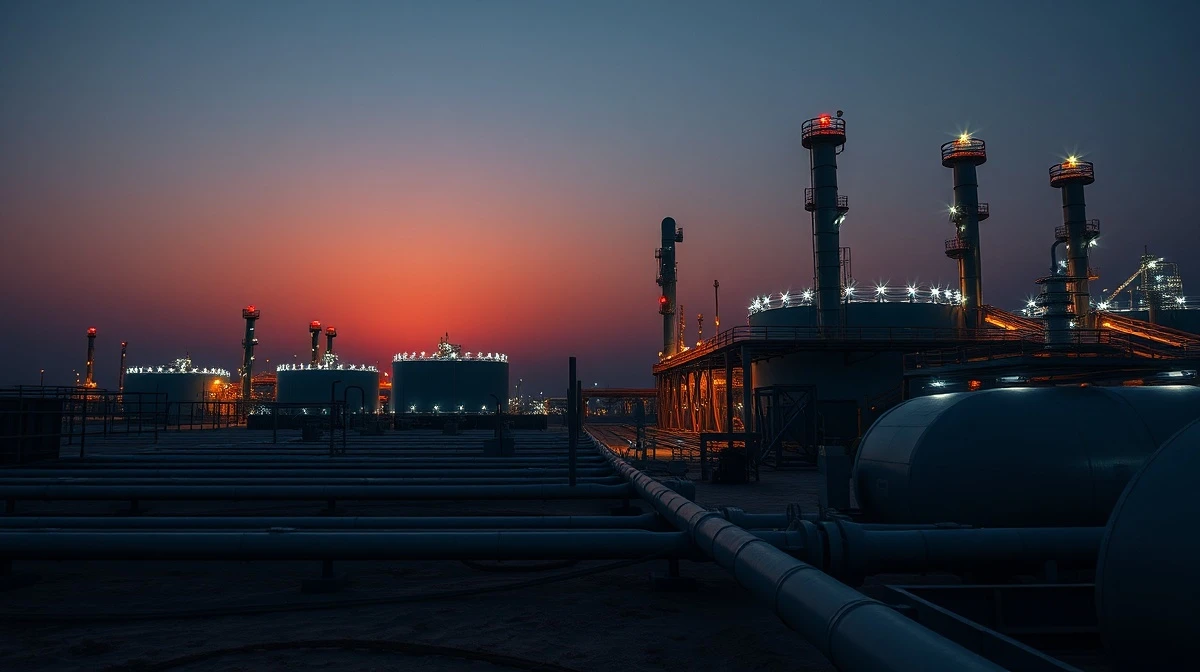
March 17, 2026 — Natural gas prices edged higher Tuesday, finding support from supply disruptions in the Middle East after Iranian drone strikes targeted critical energy infrastructure in the United Arab Emirates and Qatar.
Attacks Disrupt Key Gas Fields
April Nymex natural gas futures closed up slightly. The gain followed a rally in European gas prices after operations were suspended at the Shah gas field in the UAE. An Iranian drone strike forced the shutdown, raising immediate concerns over regional supply stability.
This incident follows a major attack earlier in March. On March 2, Qatar shut its Ras Laffan plant, the world’s largest liquefied natural gas export facility, after it was also targeted. Market analysts note the Ras Laffan facility accounts for approximately 20% of global LNG supply. Its closure has tightened the global market and could increase demand for US gas exports.
Market Pressures and US Data
Prices pared most of their early advance Tuesday due to warmer US weather forecasts. The Commodity Weather Group reported a shift toward above-average temperatures across the western United States through March 26, which could curb short-term heating demand.
Recent US supply and demand data presents a mixed picture. According to BloombergNEF, US dry gas production on Tuesday was 112.1 billion cubic feet per day. Lower-48 state gas demand was reported at 103.7 bcf/day. Estimated net flows to US LNG export terminals were 20.0 bcf/day.
“The conflict has effectively removed a significant portion of global LNG supply,” market observers noted, referencing the dual attacks on Qatari and Emirati facilities. The closure of the Strait of Hormuz due to hostilities has further curtailed gas shipments to Europe and Asia.
Inventory and Production Outlook
The US Energy Information Administration’s latest weekly report showed a smaller-than-expected drawdown in inventories. For the week ended March 6, natural gas stockpiles fell by 38 billion cubic feet. This was less than the market consensus forecast of a 41 bcf draw and below the five-year average draw of 64 bcf.
As of March 6, total inventories were 8.8% higher year-over-year and just 0.9% below the five-year seasonal average, indicating relatively balanced supplies. In Europe, gas storage was 29% full as of March 15, notably lower than the five-year seasonal average of 42% for this time of year.
US production remains robust. The EIA, in its February 17 forecast, raised its 2026 estimate for US dry natural gas production to 109.97 bcf/day. Active US natural gas rigs reached a two-and-a-half-year high last week, according to data from Baker Hughes.
What Happens Next
The market now balances geopolitical risk against strong domestic output. Further attacks on energy infrastructure in the Persian Gulf would likely propel prices higher by exacerbating global supply concerns. Conversely, a sustained period of warm weather in key US consuming regions or a rapid resolution to the regional conflict could apply downward pressure. Traders will monitor weekly EIA storage reports and any developments regarding the reopening of the Ras Laffan facility for near-term direction.
For official energy data and reports, visit the U.S. Energy Information Administration’s natural gas page. Information on global LNG trade can be found through the International Energy Agency.
This article was produced with AI assistance and reviewed by our editorial team for accuracy and quality.



