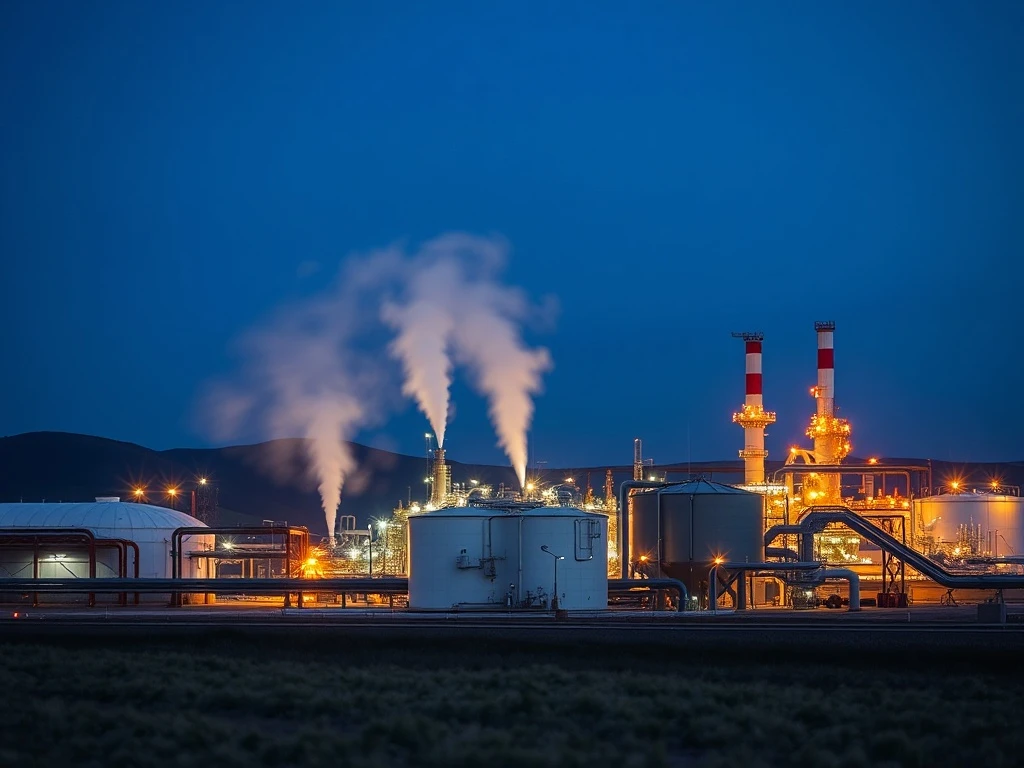
NEW YORK, March 8, 2026 — April Nymex natural gas futures surged sharply higher today, closing up 6.09% at a one-month peak as escalating Middle East conflict triggered immediate concerns about global liquefied natural gas (LNG) supply chains. The NGJ26 contract gained $0.183 to settle at $3.192 per million British thermal units (MMBtu) by 11:30 am EDT, marking the most significant single-day percentage increase since January. This dramatic price movement follows Monday’s Iranian drone attack on Qatar’s Ras Laffan facility, the world’s largest LNG export plant, which handles approximately 20% of global supply. Meanwhile, active U.S. natural gas drilling rigs reached a 2.5-year high last week, creating a complex market dynamic where geopolitical risks collide with robust domestic production.
Middle East Conflict Triggers Immediate Supply Concerns
The ongoing war in Iran has now directly impacted global energy infrastructure, creating what analysts describe as a “supply shock scenario” for natural gas markets. On Monday, QatarEnergy confirmed the precautionary shutdown of its Ras Laffan plant after Iranian drones targeted the facility’s perimeter. This closure represents the single largest disruption to global LNG flows since the 2022 Russia-Ukraine conflict began reshaping energy markets. Consequently, European natural gas prices climbed to a three-year high on Tuesday, with the Dutch TTF benchmark reaching €45 per megawatt-hour.
Market participants immediately focused on the Strait of Hormuz, the critical maritime chokepoint through which approximately 20% of global LNG shipments pass. The U.S. Department of Energy’s Office of Intelligence and Analysis issued a situation report Wednesday noting “increased naval activity and monitoring” in the region. Meanwhile, shipping data from MarineTraffic shows at least twelve LNG carriers have altered course or reduced speed in the Arabian Gulf since Monday’s attack. This disruption comes during what is typically a seasonal transition period for gas markets, as winter heating demand declines but before summer cooling needs emerge.
Dual Market Dynamics: Geopolitical Risk vs. U.S. Production Strength
Today’s price surge reveals a market grappling with contradictory signals. On one side, geopolitical risks threaten global supply. Conversely, U.S. production data shows remarkable strength that would typically pressure prices downward. According to BloombergNEF (BNEF), U.S. lower-48 dry gas production reached 113.6 billion cubic feet per day (bcf/d) on Friday, representing a 6.4% year-over-year increase. This production level approaches the all-time record of 114.2 bcf/d set in December 2025.
- Supply Disruption Premium: The Ras Laffan closure creates an immediate 20 million metric tons per annum (mtpa) supply gap that other producers cannot quickly fill, adding a risk premium estimated at $0.30-$0.50 per MMBtu.
- U.S. Export Opportunity: U.S. LNG export terminals received 19.5 bcf/d on Friday, with Cheniere Energy’s Sabine Pass facility operating at 98% capacity. Analysts project this could increase to 21 bcf/d by month’s end as Asian and European buyers seek alternatives.
- Weather Offsetting Demand: The Commodity Weather Group forecasts well-above-average temperatures across the eastern two-thirds of the U.S. through March 10, potentially reducing residential heating demand by 8-12 bcf/d compared to seasonal norms.
Expert Analysis: Institutional Perspectives on Market Volatility
Energy market specialists emphasize the unprecedented nature of current conditions. “We’re witnessing a perfect storm of geopolitical risk and fundamental market tightness,” stated Dr. Elena Rodriguez, Senior Commodities Analyst at the Center for Strategic Energy Studies. “The Ras Laffan disruption would be significant under any circumstances, but occurring during the seasonal inventory rebuild period creates exceptional vulnerability.” Rodriguez’s research, published in February’s Energy Economics Review, specifically examined Middle East supply chain resilience, noting that “Qatar’s export infrastructure represents a single point of failure for global LNG balances.”
Meanwhile, the U.S. Energy Information Administration (EIA) has revised its 2026 production forecast upward for the third consecutive month. In its February 17 Short-Term Energy Outlook, the EIA increased its projection for U.S. dry natural gas production to 109.97 bcf/day from 108.82 bcf/day. This revision reflects both technological advancements in shale extraction and increased drilling activity, with Baker Hughes reporting 132 active U.S. natural gas rigs this week, up significantly from the September 2024 low of 94 rigs.
Inventory Analysis and Storage Implications
The weekly EIA storage report released Thursday revealed a larger-than-expected inventory draw, adding bullish pressure to an already tense market. Natural gas in storage decreased by 132 billion cubic feet (bcf) for the week ending February 27, exceeding both the market consensus of 124 bcf and the five-year average draw of 96 bcf. This brings total working gas in storage to 2,187 bcf, which is 7.2% higher than last year but 2.2% below the five-year average for this period.
| Region | Storage Level (bcf) | % vs. 5-Year Average |
|---|---|---|
| South Central | 875 | -3.1% |
| Midwest | 612 | -4.2% |
| East | 478 | +1.8% |
| Mountain | 222 | -5.6% |
The storage situation appears more critical in Europe, where gas inventories stand at just 30% of capacity as of March 4, compared to the five-year seasonal average of 44% for this time of year. This European storage deficit increases the continent’s vulnerability to supply disruptions and amplifies the global competition for available LNG cargoes. German energy regulator Bundesnetzagentur issued a market alert Wednesday noting “elevated concern” about storage refill rates ahead of next winter.
Forward Market Implications and Price Trajectory
The natural gas forward curve has steepened dramatically since Monday’s attack, with winter 2026-2027 contracts now trading at a $1.25 premium to summer 2026 deliveries. This structure, known as contango, indicates market expectations for continued tightness through next winter. Several factors will determine the price trajectory in coming weeks, including the duration of the Ras Laffan shutdown, weather patterns across major consuming regions, and potential diplomatic developments in the Middle East conflict.
Industry Response and Operational Adjustments
Major energy companies have begun adjusting their operations in response to the developing situation. Cheniere Energy has reportedly increased utilization at its Corpus Christi LNG terminal to 102% of nameplate capacity, utilizing debottlenecking improvements completed last quarter. Meanwhile, European utilities have activated contingency plans, with Italy’s Eni securing additional pipeline volumes from Algeria and Norway. The Edison Electric Institute reported Wednesday that U.S. electricity output in the week ending February 28 rose 7.84% year-over-year to 82,888 gigawatt-hours, indicating strong industrial demand that could support gas prices despite warmer weather.
Conclusion
Today’s 6% surge in natural gas prices represents a market responding to genuine supply risk rather than speculative frenzy. The simultaneous occurrence of Middle East infrastructure attacks and robust U.S. production creates a complex pricing environment where geopolitical premiums temporarily override fundamental bearish factors. Market participants should monitor three critical developments: the operational status of Qatari LNG facilities, inventory builds in both U.S. and European storage, and weather patterns affecting both heating demand and renewable generation. While U.S. production strength provides a buffer, the global nature of LNG markets means domestic prices cannot fully decouple from international supply disruptions. The coming weeks will test the resilience of global energy supply chains and determine whether today’s price spike represents a temporary disruption or the beginning of a more sustained period of volatility.
Frequently Asked Questions
Q1: Why did natural gas prices surge 6% on March 8, 2026?
Prices surged due to supply concerns after Qatar shut its Ras Laffan LNG facility following an Iranian drone attack. This plant supplies 20% of global LNG, creating immediate fears of prolonged supply disruption in already tight markets.
Q2: How does the Iran war affect U.S. natural gas markets?
While U.S. production remains unaffected, global LNG supply disruptions increase demand for U.S. exports. European buyers seeking alternatives to Middle Eastern gas are competing for U.S. cargoes, driving prices higher despite strong domestic production.
Q3: What is the timeline for resolving the supply disruption?
QatarEnergy has not provided a restart date for Ras Laffan. Security assessments typically take 7-14 days before operations can resume, assuming no physical damage. Markets will monitor official statements from Qatari authorities and security updates from the region.
Q4: How do warmer weather forecasts affect natural gas demand?
Above-average temperatures reduce residential and commercial heating demand. The Commodity Weather Group projects this could lower U.S. gas consumption by 8-12 bcf/d through mid-March, partially offsetting the geopolitical price premium.
Q5: What broader economic impacts could result from sustained high gas prices?
Persistently high prices increase electricity costs for consumers and manufacturing expenses for industries like chemicals and fertilizers. European industries are particularly vulnerable given lower storage levels and greater reliance on imported LNG.
Q6: How does this affect renewable energy development?
Volatile fossil fuel prices typically accelerate investment in renewable alternatives. However, in the short term, some regions may increase coal generation if gas remains expensive, potentially increasing emissions despite clean energy goals.