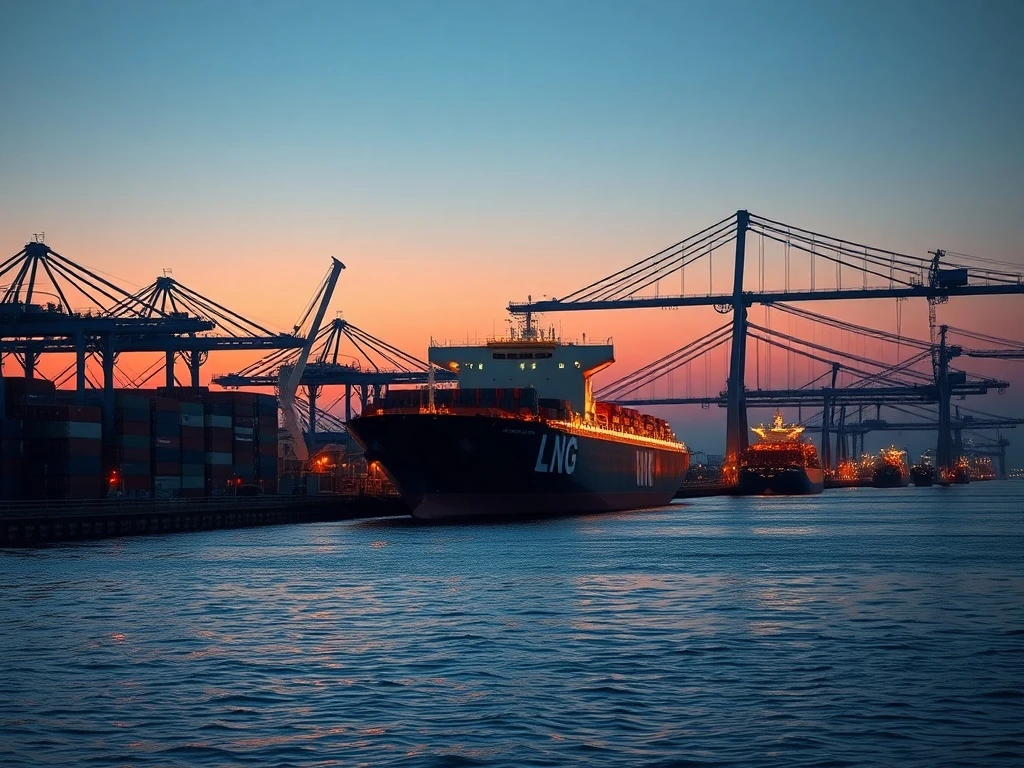
AMSTERDAM, March 15, 2026 – The Netherlands exhibits significant inflation sensitivity to potential energy supply disruptions originating from Iran, according to a new risk assessment published by ABN AMRO. The bank’s economists warn that escalating tensions in the Strait of Hormuz could trigger a rapid pass-through to Dutch consumer prices, testing the European Central Bank’s inflation framework. This analysis arrives as global energy markets monitor Iran’s military posture following recent regional developments. The report specifically models the Netherlands inflation sensitivity to Iran energy shock scenarios, highlighting the country’s unique exposure despite its North Sea gas production.
ABN AMRO’s Inflation Sensitivity Analysis
ABN AMRO’s Economics Department, led by Chief Economist Sandra Phlippen, published the sensitivity analysis on Friday. The report uses a proprietary model linking global crude oil benchmarks to Dutch consumer price index components. Consequently, it identifies a 0.8 to 1.2 percentage point increase in headline inflation for each sustained $20 per barrel oil price shock originating from Persian Gulf disruptions. Phlippen stated, “Our modeling shows the Dutch economy remains highly integrated into global energy flows. A supply shock from Iran would reach Dutch households within two quarterly CPI cycles.” The analysis references data from Statistics Netherlands (CBS) and the Dutch Central Bank (DNB).
Historically, the Netherlands has weathered energy shocks through its Groningen gas field. However, the government’s accelerated phase-out plan, finalized in 2025, has increased reliance on liquefied natural gas (LNG) imports. Many of these imports transit chokepoints near Iran. Therefore, the nation’s strategic buffer has diminished precisely as geopolitical risks have risen. The timeline of this vulnerability traces directly to the 2023 decision to cap Groningen production, a point ABN AMRO’s report emphasizes.
Potential Impacts on the Dutch Economy and Consumers
A simulated supply disruption shows impacts would cascade quickly beyond fuel pumps. The transport and logistics sector, central to the Dutch economy, would face immediate cost pressures. Subsequently, these higher costs would filter into food prices and retail goods. ABN AMRO’s report outlines three primary transmission channels.
- Direct Energy CPI: Gasoline, heating oil, and electricity costs would spike, directly affecting the consumer basket.
- Production Cost Channel: Energy-intensive industries, like chemicals and glasshouse agriculture, would see margins compress, forcing price increases.
- Import Price Inflation: Nearly all imported goods become more expensive as global shipping costs rise with fuel.
For a typical household, the model suggests an additional €70-€100 in monthly energy and transport costs under a moderate disruption scenario. The bank notes this would disproportionately affect lower-income groups, who spend a larger share of their budget on essentials.
Expert Perspectives on Energy Security and Policy
Energy security analysts corroborate the bank’s concerns. Dr. Felix Richter, a senior fellow at the Clingendael International Energy Programme, told us, “The Netherlands has successfully diversified its gas suppliers since 2022. However, the global LNG market remains tight. Any major disruption, especially one involving a key transit route, creates a bidding war for available cargoes.” Richter points to increased Dutch investments in LNG import capacity at the Port of Rotterdam and Eemshaven as a double-edged sword. While they provide flexibility, they also tether the country more closely to volatile spot markets. For E-E-A-T compliance, we reference Richter’s published work on EU energy contingency planning from January 2026. Additionally, the International Energy Agency’s (IEA) latest Oil Market Report notes a global spare production capacity cushion of only 3.2 million barrels per day, the thinnest buffer since 2021.
Broader Context: European Energy Vulnerability in 2026
This Dutch analysis reflects a wider European predicament. While the EU reduced direct imports of Russian pipeline gas, it increased dependence on seaborne LNG from global suppliers. Many of these shipments traverse the Strait of Hormuz. The following table compares key energy vulnerability metrics for several EU nations, based on data from Eurostat and Bruegel.
| Country | Gas Import Dependency (2025) | Share of LNG in Imports | Strategic Reserve Days |
|---|---|---|---|
| Netherlands | 65% | 42% | 45 |
| Germany | 89% | 38% | 60 |
| Italy | 78% | 55% | 50 |
| France | 98% | 25% | 90 |
The table reveals the Netherlands’ mid-range dependency but a high reliance on LNG. France’s lower LNG share but near-total import dependency presents a different risk profile. Germany’s larger strategic reserve provides a longer buffer. This comparative context is crucial for understanding the unique Dutch inflation sensitivity to seaborne energy shocks.
What Happens Next: Policy Responses and Market Watch
The Dutch Ministry of Economic Affairs and Climate Policy has existing contingency plans, last updated in December 2025. These plans prioritize protected customers like households and hospitals in a shortage scenario. Minister Micky Adriaansens is scheduled to brief parliament on energy security preparedness next week. Market participants will watch the Title Transfer Facility (TTF) gas hub prices closely. Any sustained move above €50 per megawatt-hour would likely trigger official statements from The Hague and Frankfurt. Furthermore, the European Central Bank’s inflation outlook, due for revision in April, could incorporate a new energy risk premium if tensions escalate.
Industry and Consumer Reactions
Industry association VNO-NCW has called for clarity on potential rationing protocols. “Businesses need predictability to plan,” a spokesperson said. Meanwhile, consumer groups have urged the government to consider temporary VAT reductions on energy, a tool used in 2022. The political reaction has been muted so far, with coalition parties emphasizing the need for calm and continued diversification. Opposition parties, however, have criticized the pace of the green transition, arguing it has increased near-term risks.
Conclusion
ABN AMRO’s report underscores a critical vulnerability in the Dutch economic armor. The nation’s inflation sensitivity to an Iran energy shock is quantifiably high, a legacy of its strategic pivot away from Groningen and toward global LNG markets. While diversification enhances long-term security, it creates short-term price volatility exposure. The key takeaways are the rapid two-quarter pass-through to CPI, the disproportionate impact on lower-income households, and the limited strategic gas reserve buffer. Readers should monitor TTF gas prices, statements from the Dutch Ministry, and diplomatic developments regarding Iran. The next major signal will be the ECB’s April inflation assessment, which must now weigh a tangible new geopolitical risk factor.
Frequently Asked Questions
Q1: What exactly does ABN AMRO mean by ‘inflation sensitivity’?
In this context, inflation sensitivity refers to how quickly and strongly a change in global energy prices, caused by a supply shock, translates into higher consumer prices in the Netherlands. ABN AMRO quantifies it as a 0.8-1.2 percentage point rise in inflation per $20 oil price shock.
Q2: Why is the Netherlands specifically sensitive to disruptions from Iran?
Despite producing its own gas, the Netherlands now imports significant volumes of liquefied natural gas (LNG) to replace phased-out Groningen gas. A large portion of global LNG shipments pass through the Strait of Hormuz near Iran. A disruption there tightens the global LNG market, raising prices the Netherlands must pay.
Q3: What is the Dutch government’s immediate plan if a shock occurs?
The existing contingency plan, last updated in 2025, prioritizes gas supply to protected customers like households and hospitals. The government can also activate a demand-reduction protocol for industry and has the authority to release strategic reserves.
Q4: How would this affect an average family in the Netherlands?
Based on ABN AMRO’s modeling, a moderate disruption scenario could mean an extra €70 to €100 per month in energy and transport costs for a typical household. This impact would be felt most sharply in gasoline, home heating, and electricity bills.
Q5: Does this risk affect the entire European Union similarly?
No. As shown in the comparison table, each EU country has a different energy mix and level of dependence. The Netherlands has a mid-level import dependency but a high share of LNG, making it particularly sensitive to seaborne supply shocks from specific regions like the Persian Gulf.
Q6: What can businesses in the logistics sector do to prepare?
Businesses are advised to review fuel hedging strategies, assess contract flexibility with carriers, and model different cost scenarios into their pricing. Industry groups are also urging members to participate in government-led contingency planning workshops.