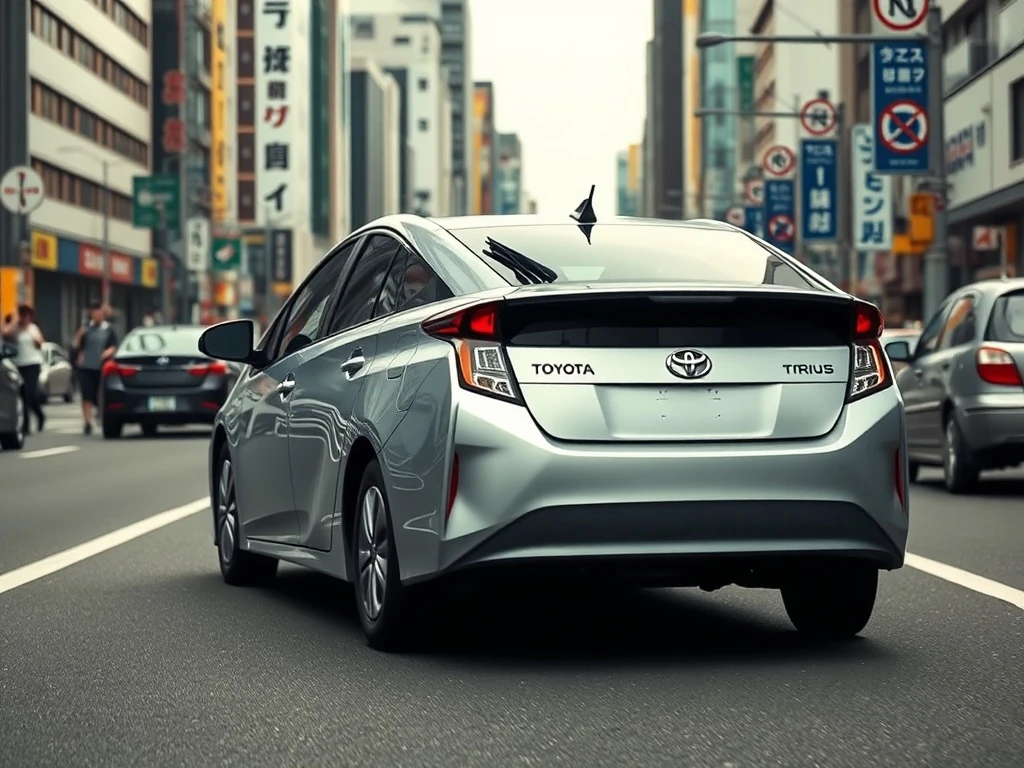
TOKYO, JAPAN — June 9, 2026: In a significant move for the global autonomous vehicle industry, Silicon Valley startup Nuro has initiated public road testing of its self-driving technology in Tokyo. This deployment marks the company’s first overseas expansion and represents a critical real-world validation of its AI-powered approach. The tests, which began last month, involve Toyota Prius vehicles equipped with Nuro’s software and human safety operators. This strategic entry into the Japanese market introduces unique challenges, including left-side driving and dense urban traffic, providing a formidable proving ground for the company’s foundational AI model.
Nuro’s Autonomous Vehicle Technology Hits Tokyo Streets
Nuro’s testing in Japan follows the company’s strategic pivot in 2024 from manufacturing its own low-speed delivery robots to licensing its autonomy software to automakers and mobility providers. The current Tokyo fleet, though undisclosed in size, consists of modified Toyota Prius models. These vehicles navigate public roads with Nuro’s software actively controlling the vehicle, while a human safety operator remains behind the wheel as a regulatory and safety backup. The company established a Tokyo office in August 2025 to facilitate this expansion, laying the groundwork for local operations and regulatory navigation.
According to a blog post from the company, the Tokyo environment presents a suite of new variables. Road signs, lane markings, and driving etiquette differ significantly from U.S. roads. Furthermore, Tokyo’s famously dense and complex traffic patterns, combined with the requirement to drive on the left, create a rigorous test environment. Nuro suggests this is just the beginning, stating, “Our autonomous operations in Tokyo are the beginning of the compounding benefits of global deployment.” The company has not provided a timeline for removing the human safety operator, a milestone that will depend on regulatory approval and demonstrated safety performance.
The AI Foundation Model Behind the Wheel
Central to Nuro’s strategy is its proprietary end-to-end AI foundation model, which the company calls “zero-shot autonomous driving.” This system is designed to learn from driving data in a generalized way, theoretically allowing it to adapt to new environments without location-specific training. Nuro claims this model enabled its software to begin navigating Tokyo’s roads without prior training on Japanese driving data. The approach mirrors that of U.K.-based startup Wayve, which recently secured a massive $1.2 billion funding round, highlighting investor confidence in this AI methodology.
However, Nuro emphasizes that this generalized capability does not come at the expense of safety. The company employs a multi-layered validation process. Each new software release undergoes closed-course testing. Subsequently, the company uses massive simulation environments to evaluate performance and test edge cases. Once on public roads, vehicles initially operate in “shadow mode,” where the AI model generates driving commands that are not executed, allowing engineers to compare its decisions against human driver actions. This data determines when the system is ready for active control.
Expert Analysis on the AI-Driven Approach
Dr. Akiko Tanaka, a professor of robotics at the University of Tokyo and advisor to Japan’s Ministry of Land, Infrastructure, Transport and Tourism, notes the significance of this test. “International deployment is the next major hurdle for AV companies. A model that can generalize across continents reduces the immense cost and time of retraining for every new city,” Tanaka explained in a recent industry panel. “The true test in Tokyo won’t just be navigation, but understanding subtle cultural driving behaviors and unpredictable urban elements.” This external expert perspective underscores the technical ambition of Nuro’s move.
From Delivery Bots to Global Software: Nuro’s Pivot
Nuro’s journey to Tokyo represents a dramatic evolution from its original 2016 founding by former Google self-driving project engineers Dave Ferguson and Jiajun Zhu. The company initially captured attention and nearly $1 billion from the SoftBank Vision Fund in 2019 for its custom-built, low-speed delivery robots. However, the capital-intensive nature of hardware development and a wave of industry consolidation forced a strategic reassessment. In 2024, Nuro abandoned its proprietary vehicle program, cut staff, and shifted to a capital-light software licensing model targeting automakers and fleet operators.
This pivot has regained investor confidence. Last year, Nuro raised $203 million in a Series E round from investors including Baillie Gifford and Nvidia, a key partner providing chip architecture for AI processing. Notably, Uber also participated, aligning with its broader partnership with electric vehicle maker Lucid. The following table contrasts Nuro’s old and new business models, highlighting the strategic shift:
| Business Dimension | Original Model (Pre-2024) | Current Model (Post-2024) |
|---|---|---|
| Core Product | Custom low-speed delivery robots | Licensed autonomy software stack |
| Capital Intensity | Extremely High (hardware manufacturing) | Moderate (software R&D) |
| Target Market | Last-mile goods delivery | Automakers, ride-hail, delivery fleets |
| Expansion Path | Fleet deployment city-by-city | Global software scaling via partners |
| Key Challenge | Unit economics & manufacturing scale | Software generalization & safety validation |
What’s Next for Nuro and the AV Industry in Japan
The Tokyo tests are a precursor to potential commercial partnerships in the Asia-Pacific region. Success in Japan could serve as a powerful reference case for Nuro’s software, especially for automakers like Toyota looking to integrate advanced autonomy. The next 12-18 months will focus on data collection, system refinement, and engagement with Japanese regulators. Industry observers will watch for key indicators: the accumulation of disengagement-free miles, expansion of the test area within Tokyo, and any announcements of Japanese automotive or logistics partners.
Regulatory and Competitive Landscape in Japan
Japan’s government has actively promoted autonomous vehicle development through strategic initiatives like the “SIP-adus” program, creating a relatively supportive regulatory environment for testing. However, full commercialization requires navigating a meticulous safety certification process. Nuro enters a market where domestic players like Toyota’s Woven Planet and tech giant Sony have also advanced their AV projects. Nuro’s differentiator remains its pure-play AI software approach, avoiding the hardware conflicts that might concern potential automotive partners.
Conclusion
Nuro’s launch of autonomous vehicle testing in Tokyo is more than a geographic expansion; it is a live stress test of a foundational AI model and a validation of the company’s strategic pivot to software. The challenges of Tokyo’s streets will provide invaluable data on the system’s ability to generalize. For the broader industry, this move signals a continued shift toward AI-centric development and the growing importance of international scalability. The success or failure of this Japanese foray will significantly influence Nuro’s ability to secure the global partnerships necessary for its licensed software model to thrive. All eyes are now on Tokyo’s roads, where the future of one path to autonomy is being driven.
Frequently Asked Questions
Q1: What is Nuro testing in Tokyo?
Nuro is testing its autonomous driving software on public roads in Tokyo using modified Toyota Prius vehicles. A human safety operator is present as a backup during this initial testing phase.
Q2: Why is testing in Japan significant for Nuro?
This marks Nuro’s first international expansion, testing its AI software in a completely new regulatory and driving environment (left-side driving, dense traffic, different road rules) without prior location-specific training.
Q3: What is “zero-shot autonomous driving”?
It’s Nuro’s term for its end-to-end AI foundation model, designed to learn general driving principles so it can operate in new environments, like Tokyo, without needing to be retrained on local data first.
Q4: Who are Nuro’s main investors?
Nuro is backed by major technology investors including SoftBank Vision Fund, Nvidia, Uber, and Baillie Gifford. It raised $940 million in 2019 and an additional $203 million in 2025.
Q5: How does Nuro’s current business model differ from its original plan?
Nuro originally built its own low-speed delivery robots. In 2024, it pivoted to licensing its self-driving software to other companies, like automakers and delivery fleets, abandoning in-house vehicle manufacturing.
Q6: When will Nuro’s vehicles operate without a human safety driver in Tokyo?
The company has not announced a timeline. Removing the safety operator depends on demonstrating consistent safety to Japanese regulators, a process that will take months or years of successful testing.
This article was produced with AI assistance and reviewed by our editorial team for accuracy and quality.