
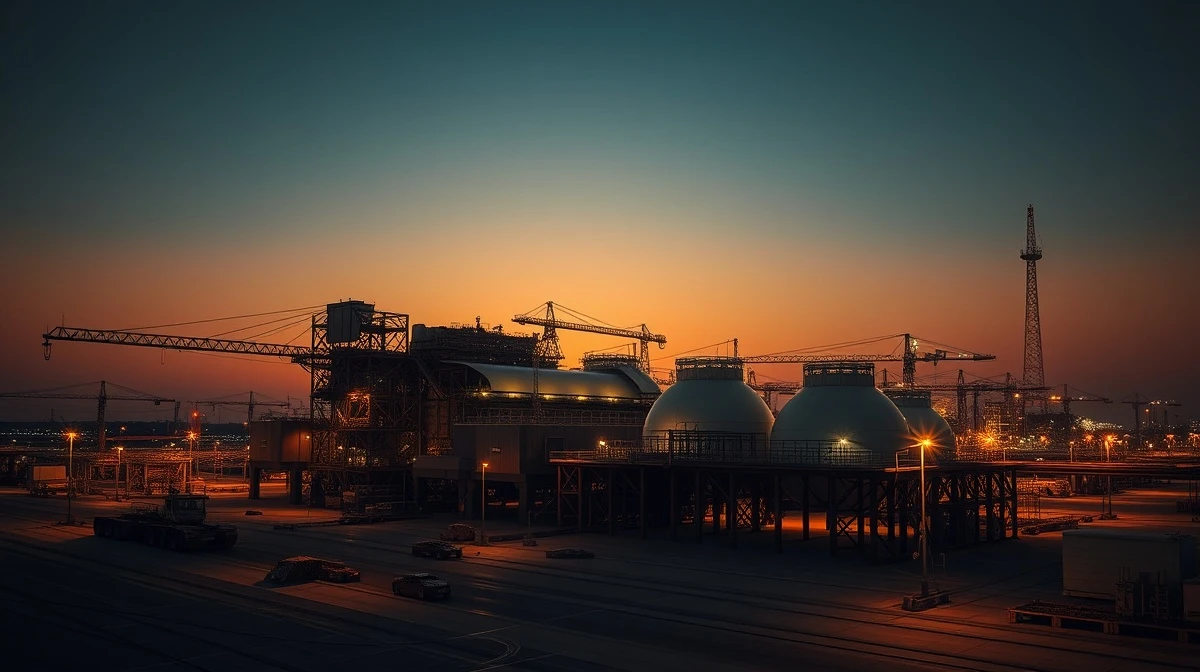
March 19, 2026 — Global crude oil and gasoline prices climbed sharply after Iran escalated attacks on energy infrastructure across the Middle East, causing significant damage to a major natural gas export facility and refineries.
Infrastructure Attacks Drive Market Volatility
April WTI crude oil futures rose more than 1%, while RBOB gasoline futures surged to a three-and-a-half-year high. The price spike followed reports of “extensive damage” at the Ras Laffan Industrial City in Qatar, the world’s largest liquefied natural gas (LNG) export plant. According to a Reuters report, Iranian strikes damaged 17% of the facility’s LNG export capacity, with repairs estimated to take three to five years.
Additional attacks targeted refineries in Kuwait and briefly halted oil loadings on Saudi Arabia’s west coast. The semi-official Iranian Students’ News Agency (ISNA) stated Iran’s response to attacks on its own infrastructure “is underway and not yet complete.”
Strait of Hormuz Closure Amplifies Supply Fears
The vital Strait of Hormuz remains effectively closed, forcing Persian Gulf oil producers to cut output by roughly 6% as local storage reaches capacity. The strait normally handles about one-fifth of global oil shipments. Analysts at Goldman Sachs have warned that crude prices could challenge the 2008 record high near $150 per barrel if flows through the chokepoint remain depressed through March.
Market data showed the crude crack spread, a measure of refining profitability, jumped to a three-and-three-quarter-year high. This encourages refiners to process more crude into fuels like gasoline, providing underlying price support.
Political Pressure and Conflicting Market Signals
Prices retreated from their intraday peaks after former President Donald Trump called for a de-escalation of attacks on Middle East energy sites. He stated the U.S. was not involved in a recent attack on the South Pars gas field and indicated Israel would refrain from further strikes there.
Conflicting supply dynamics are influencing the market. While OPEC+ had announced a planned output increase for April, analysts now consider that hike unlikely due to the forced production cuts from regional conflict. OPEC’s own crude production in February had risen to a three-and-a-quarter-year high.
Global Storage and Sanctions Add Complexity
Mounting crude supplies in floating storage present a bearish counterweight. Data from analytics firm Vortexa indicates about 290 million barrels of Russian and Iranian crude are currently on tankers in floating storage, a figure over 40% higher than a year ago due to sanctions and blockades.
The ongoing Russia-Ukraine war continues to restrict global supplies. Ukrainian drone attacks have targeted at least 28 Russian refineries over the past seven months, limiting export capabilities. New U.S. and European Union sanctions on Russian oil infrastructure have further curbed shipments.
U.S. Market Data and Production Outlook
The U.S. Energy Information Administration’s (EIA) weekly report showed domestic crude oil inventories as of March 13 were 1.4% below the five-year seasonal average. U.S. crude production for that week was slightly down from a record high set in November.
In a longer-term forecast, the EIA raised its 2026 U.S. crude production estimate marginally. Separately, the International Energy Agency (IEA) last month trimmed its forecast for the 2026 global crude surplus.
The immediate market direction hinges on geopolitical developments in the Middle East. Any further escalation targeting energy exports or a prolonged closure of the Strait of Hormuz could trigger another sharp price increase. Conversely, successful diplomatic pressure to reopen the waterway or halt attacks would likely ease the current supply fears.
This article was produced with AI assistance and reviewed by our editorial team for accuracy and quality.



