
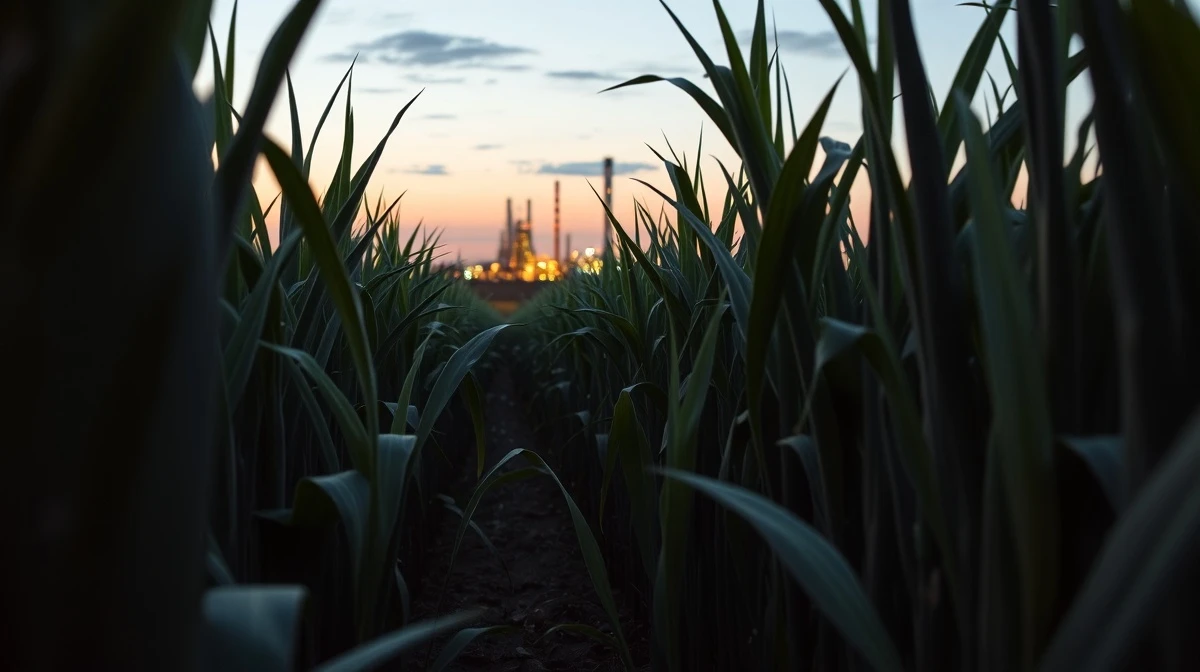
March 17, 2026 — Sugar futures climbed in New York and London trading, supported by a rally in crude oil prices that could prompt mills to divert more cane toward biofuel production. The move comes despite a backdrop of projected global sugar surpluses and increased output from major producers like India.
Energy Markets Drive Agricultural Decisions
May NY world sugar #11 (SBK26) closed up 1.83%, while May London ICE white sugar #5 (SWK26) gained nearly 3%, reaching a one-week high. Analysts linked the gains directly to a more than 2% rise in WTI crude oil futures. Higher oil prices typically boost ethanol values, making biofuel production more attractive for sugar mills.
This economic incentive can lead processors to allocate more crushed cane to ethanol output rather than sugar, potentially tightening sugar supplies. The relationship between energy and soft commodity markets remains a key price driver.
Surplus Forecasts Create Downward Pressure
Earlier in March, sugar prices had touched 5.25-year lows. The decline reflected persistent concerns over ample global supplies. Multiple industry forecasts point to continued surpluses.
Sugar trader Czarnikow projected a global surplus of 3.4 million metric tons (MMT) for the 2026/27 crop year, following an 8.3 MMT surplus in 2025/26. In late January, Green Pool Commodity Specialists estimated a 2.74 MMT surplus for 2025/26. StoneX, in a February 13 assessment, forecast a 2.9 MMT surplus for the same period.
The International Sugar Organization (ISO), in a February 27 report, forecast a 1.22 MMT surplus for 2025-26. This follows a deficit of 3.46 MMT in the prior year. The ISO attributed the surplus to increased production in India, Thailand, and Pakistan, forecasting a 3.0% year-over-year rise in global output to 181.3 million MMT.
Brazilian and Indian Output in Focus
Data from Brazil, the world’s top producer, showed mixed signals. Industry group Unica reported on February 18 that sugar production in Brazil’s Center-South region during the second half of January fell 36% year-over-year to 5,000 MT. Cumulative output for the 2025-26 season through January, however, was up 0.9%.
In India, the world’s second-largest producer, the Indian Sugar and Bio-energy Manufacturers Association (ISMA) reported output from October 1 to March 15 was 26.2 MMT, a 10.5% annual increase. Last Wednesday, ISMA projected India’s full 2025/26 sugar production at 29.3 MMT, up 12% but below an earlier estimate.
ISMA also reduced its estimate for sugar diverted to ethanol production to 3.4 MMT from a July forecast of 5 MMT. This revision suggests more sugar may be available for export, a bearish factor for global prices.
Export Policies and Global Estimates
On February 13, India’s government approved an additional 500,000 MT of sugar for export this season, adding to a 1.5 MMT quota approved in November. India reinstated export quotas in 2022/23 after poor weather tightened supplies.
The U.S. Department of Agriculture (USDA), in a bi-annual report released December 16, projected global 2025/26 sugar production would rise 4.6% to a record 189.318 MMT. The USDA’s Foreign Agricultural Service (FAS) predicted record output in Brazil (44.7 MMT) and a 25% increase in India to 35.25 MMT, citing favorable monsoons and expanded acreage. Thailand’s production was forecast to rise 2%.
Global human sugar consumption was projected to increase 1.4% to a record 177.921 MMT. The USDA forecast a 2.9% annual decline in global ending stocks to 41.188 MMT.
Market Outlook
Sugar markets are caught between competing forces. Support comes from the energy complex, where oil prices influence ethanol profitability and mill allocation. Pressure stems from robust production forecasts and the potential for increased exports from India.
Traders will monitor weather patterns in key growing regions and monthly crush data from Brazil’s Center-South region, which began its new season in April. Government policy announcements regarding biofuels and export quotas will also be critical for price direction.
For more information on global commodity trade, see data from the International Sugar Organization and the USDA’s Foreign Agricultural Service.
This article was produced with AI assistance and reviewed by our editorial team for accuracy and quality.



