
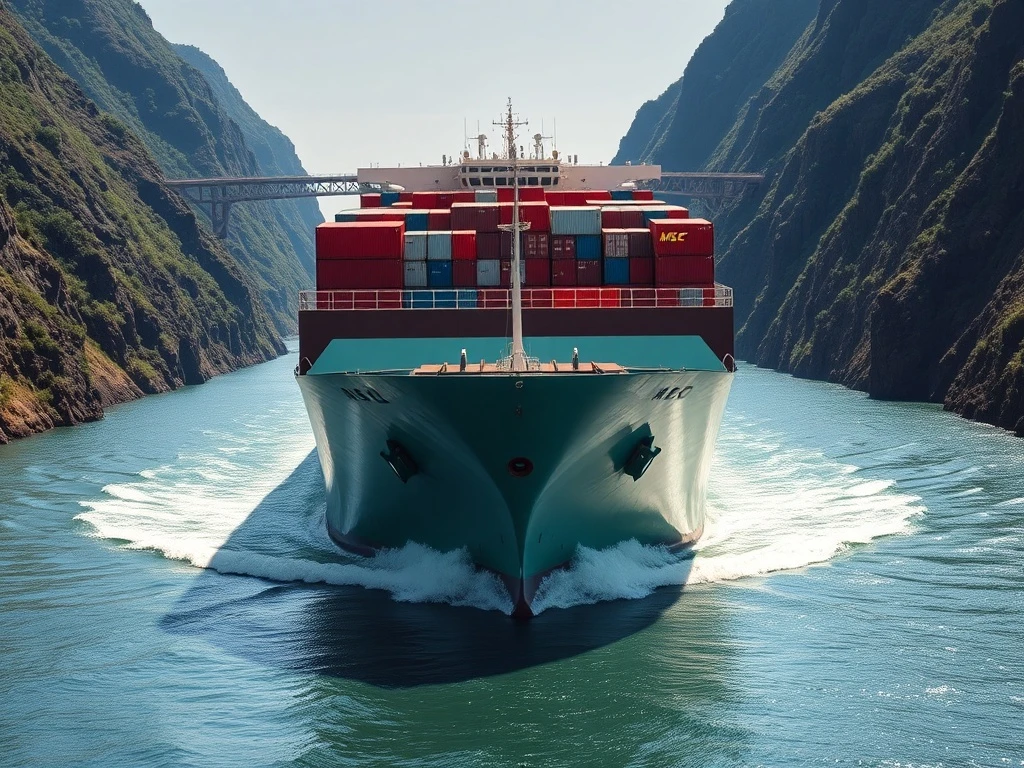
PANAMA CITY, PANAMA — March 15, 2026: The administrator of the Panama Canal Authority, Dr. Ricardo Sánchez, announced today that the critical waterway stands to capture significant new shipping traffic as escalating tensions in the Middle East severely disrupt transit through the Strait of Hormuz. This strategic shift follows Iran’s implementation of new maritime restrictions in the Persian Gulf, creating what shipping analysts describe as the most severe global trade bottleneck since the 2021 Suez Canal obstruction. Consequently, major container lines and energy transporters are actively rerouting vessels around the Cape of Good Hope or seeking alternative passages, with the Panama Canal emerging as a primary beneficiary for Asia-to-US East Coast trade.
Panama Canal Authority Targets Strategic Shipping Gains
Dr. Sánchez outlined the canal’s preparedness during a press conference at the authority’s headquarters in Balboa. “Our operations team has been monitoring the situation in the Strait of Hormuz for weeks,” Sánchez stated, referencing official bulletins from the U.S. Maritime Administration. “We have implemented contingency plans to handle increased demand, particularly for Neopanamax vessels carrying liquefied natural gas (LNG) from the U.S. Gulf Coast to Asia.” The canal’s daily transit capacity, which averaged 34 vessels per day in early 2026, could be optimized further, according to internal projections shared with industry partners. This potential surge follows a 40% reduction in commercial shipping traffic through the Strait of Hormuz reported by Lloyd’s List Intelligence for the first two weeks of March.
Historical context underscores the significance of this disruption. The Strait of Hormuz, a narrow chokepoint between Oman and Iran, typically facilitates about 21 million barrels of oil daily—roughly one-fifth of global seaborne oil trade. Furthermore, it handles over one-quarter of the world’s LNG shipments. The current crisis stems from Iran’s Revolutionary Guard Corps imposing heightened inspection protocols and insurance requirements on vessels following a series of diplomatic incidents. Consequently, shipping companies face extended delays of 7-10 days and soaring war risk insurance premiums, now exceeding 1% of a vessel’s value per transit.
Global Trade Impact and Rerouting Consequences
The ripple effects of this maritime disruption are spreading rapidly across global supply chains. Shipping giant Maersk confirmed the rerouting of 12 Asia-Europe services via the Cape of Good Hope, adding approximately 10-14 days to voyage times and burning an extra 1,000 tons of fuel per vessel. Meanwhile, Mediterranean Shipping Company (MSC) is evaluating increased use of the Panama Canal for services connecting Southeast Asia to the U.S. Eastern Seaboard. “The economic calculus has changed overnight,” explained Dr. Elena Vargas, a maritime economist at the World Maritime University. “When you factor in delay costs, insurance spikes, and security concerns, longer routes with predictable transit times become competitive.”
- Energy Market Volatility: Brent crude futures surged past $95 per barrel for the first time since late 2025, while LNG spot prices in Asia jumped 15% in one week.
- Supply Chain Delays: Retail analysts at S&P Global Market Intelligence warn of potential delays for consumer goods arriving in Europe from Asia in Q2 2026, particularly affecting electronics and automotive parts.
- Environmental Trade-off: Rerouted vessels sailing longer distances could increase global shipping emissions by an estimated 3-5 million tons of CO₂ quarterly, according to preliminary models from the International Maritime Organization.
Expert Analysis on Maritime Route Alternatives
Maritime security expert Captain John Miller (Ret.), former commander of the U.S. Navy’s Fifth Fleet, provided critical context. “The Strait of Hormuz has been a flashpoint for decades, but the current restrictions represent a systematic challenge to freedom of navigation,” Miller noted in an interview. “Unlike temporary blockages, this appears to be a sustained policy shift by Iranian authorities.” He emphasized that while naval escorts might protect some vessels, commercial shippers prioritize predictability—a factor now favoring established routes like the Panama Canal. The Panama Canal Authority has maintained its toll structure despite the increased demand, a decision Sánchez defended as necessary for long-term infrastructure investments outlined in their 2025-2030 master plan.
Comparative Analysis of Global Maritime Chokepoints
This crisis highlights the vulnerability of concentrated global trade routes. The following table compares key metrics for three critical chokepoints, based on 2025 data from the U.N. Conference on Trade and Development (UNCTAD) and updated 2026 crisis figures.
| Chokepoint | Annual Commercial Transits (2025) | Key Commodities | Current Status (March 2026) |
|---|---|---|---|
| Strait of Hormuz | ~30,000 vessels | Crude Oil, LNG, Containers | Severely Disrupted (40% traffic reduction) |
| Panama Canal | ~12,500 vessels | Containers, LNG, Grain | Normal Operations (Capacity available) |
| Suez Canal | ~19,000 vessels | Containers, Oil, Bulk Carriers | Normal Operations (No reported issues) |
The data reveals a significant disparity in redundancy. While the Suez and Panama Canals have established alternatives (Cape of Good Hope and Cape Horn, respectively), the Strait of Hormuz has no viable maritime bypass for Persian Gulf exports. This geographical reality forces a fundamental rerouting of trade flows rather than simple diversion. Consequently, East Asian importers of Middle Eastern oil are now considering longer-term contracts with suppliers from West Africa and the Americas, a structural shift that could outlast the immediate crisis.
Forward-Looking Analysis and Industry Adaptation
The Panama Canal Authority has scheduled a meeting with major shipping alliances for March 22 to discuss slot allocations and potential priority transit systems. “We will ensure fair access while maximizing throughput,” Sánchez confirmed, ruling out an auction system for slots. Meanwhile, the International Chamber of Shipping has called for diplomatic intervention to de-escalate the Hormuz situation, warning of sustained inflationary pressure if disruptions continue into Q2. Shipping analysts at Drewry predict that freight rates on Asia-to-Europe routes could increase by 20-30% in the coming weeks, while Transpacific rates might see a more moderate 10-15% rise as capacity shifts.
Stakeholder Reactions and Economic Implications
Reactions from affected industries have been swift. The National Retail Federation in the U.S. expressed concern about “unpredictable delivery timelines” for back-to-school merchandise. Conversely, ports on the U.S. Gulf and East Coasts, including Houston, Savannah, and New York/New Jersey, report increased inquiries from carriers about available capacity. “This could accelerate a trend we’ve seen since the pandemic—nearshoring and diversification of sourcing,” noted Dr. Vargas. The crisis also renews attention on overland trade corridors, such as the International North–South Transport Corridor linking India to Russia via Iran, though its current capacity remains limited compared to maritime routes.
Conclusion
The Iran crisis choking the Strait of Hormuz shipping route has triggered a significant realignment in global maritime logistics, with the Panama Canal positioned as a clear beneficiary. Dr. Ricardo Sánchez’s announcement reflects strategic preparation to handle diverted traffic, particularly for energy and container shipments. This disruption underscores the fragility of concentrated trade arteries and may accelerate long-term trends toward supply chain diversification and nearshoring. While diplomatic efforts continue to address the root causes in the Persian Gulf, the immediate consequence is a rerouting of global trade flows that highlights the enduring strategic value of the Panama Canal. Stakeholders should monitor canal transit bookings and freight rate indices for signs of how permanent these new routing patterns may become.
Frequently Asked Questions
Q1: What exactly is causing the shipping crisis in the Strait of Hormuz?
Iran’s Revolutionary Guard Corps has imposed stringent new inspection protocols and insurance requirements on commercial vessels transiting the strait, following heightened regional tensions. This has created delays of 7-10 days and dramatically increased insurance costs, forcing many shipping companies to seek alternative routes.
Q2: How will this affect consumer goods prices and availability?
Analysts expect delayed arrivals of electronics, automotive parts, and seasonal goods in European markets in Q2 2026, with potential price increases of 3-7% on affected categories. The impact on U.S. consumers may be less direct but could manifest through higher energy costs and slightly longer delivery times for Asian imports.
Q3: What is the timeline for resolving this disruption?
There is no clear resolution timeline as the situation is geopolitical. Shipping companies are planning for extended rerouting through at least Q2 2026. Diplomatic negotiations are ongoing, but maritime experts advise businesses to develop contingency plans for medium-term disruption.
Q4: Why can’t ships simply use a different route instead of the Strait of Hormuz?
The Strait of Hormuz is the only maritime passage from the Persian Gulf to the open ocean. For oil and gas tankers loading in Kuwait, Saudi Arabia, Qatar, or the UAE, there is no alternative sea route. They must either transit the strait or not export at all.
Q5: How does this compare to the 2021 Suez Canal blockage?
The Suez blockage was a single, acute event lasting six days. The Hormuz disruption is a systemic, policy-driven restriction with no clear end date. While the Suez incident affected a wider variety of goods, the Hormuz crisis has a more concentrated impact on global energy markets.
Q6: What should importers and exporters do right now?
Companies should review their shipping contracts, communicate proactively with logistics providers about rerouting options, and consider diversifying their supplier base or stockpiling critical inventory. Consulting with freight forwarders about Panama Canal transit options for Asia-US East Coast trade is also advisable.


