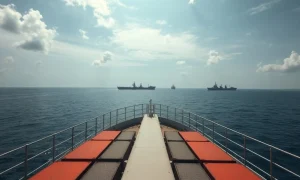
The British pound dropped sharply in early trading on April 13, 2026, as renewed geopolitical tensions in the Middle East sent investors scrambling for safer assets. Reports of a potential blockade of the Strait of Hormuz, a critical oil shipping lane, triggered a broad sell-off in risk-sensitive currencies.
Market Reaction to Geopolitical Shock
Data from Refinitiv shows the pound fell over 1.2% against the US dollar to a two-week low, breaching key technical support levels. The GBP/USD pair traded as low as 1.2350. The euro also gained against sterling, pushing the EUR/GBP pair higher by nearly 0.9%.
Also read: Oil Jumps 8% as US Blocks Strait of Hormuz
This move marks a sudden reversal for the pound, which had been relatively stable in recent sessions. The scale of the drop suggests markets are pricing in a significant risk premium. “When a major oil chokepoint is threatened, the immediate reaction is a flight to the dollar and yen,” noted a senior analyst at a major European bank. “Sterling, lacking traditional safe-haven status, is often a casualty.”
The Trigger: Strait of Hormuz Tensions
The sell-off followed unconfirmed reports from regional maritime security firms of Iranian naval movements near the Strait of Hormuz. The strait is arguably the world’s most important oil transit channel, with about 20% of global oil supply passing through it.
Also read: Yen Slides as Dollar Gains on US-Iran Talks Collapse
Any disruption there directly threatens global energy supplies and inflation expectations. Brent crude futures spiked by more than 4% on the news, adding to the risk-off mood. Higher oil prices act as a tax on growth, particularly for energy-importing economies like the United Kingdom.
Market participants are recalling previous incidents in the waterway. Attacks on tankers and seizures of vessels in recent years have caused similar, though often temporary, market volatility. The current situation appears to have caught traders off guard.
Broader Market Impact and Sterling’s Position
The pound’s decline was part of a wider market shift. The US Dollar Index (DXY), which tracks the dollar against a basket of peers, rose 0.8%. Traditional safe havens like the Japanese yen and Swiss franc also saw bids. UK government bond (gilt) yields fell as prices rose, another sign of capital seeking shelter.
For the Bank of England, this external shock complicates the domestic inflation picture. A weaker pound makes imports more expensive, potentially fueling price pressures. But the resulting hit to economic growth from an oil price spike could argue for a more cautious approach to interest rates. This creates a policy dilemma that markets will watch closely.
What Happens Next for the Pound
The pound’s near-term path is now tied directly to developments in the Middle East. A rapid de-escalation could see a partial recovery as the geopolitical risk premium unwinds. However, prolonged tensions or an actual blockade would likely keep sterling under sustained pressure.
Traders will monitor official statements from the UK Foreign Office and the US Fifth Fleet, which operates in the region. Further confirmation of a military standoff would extend the market’s risk-off posture. The implication for investors is clear: sterling has become a barometer for global risk appetite, and right now, that appetite is fading fast.
For more information on global oil shipping routes, see the U.S. Energy Information Administration’s analysis of world chokepoints. Live foreign exchange data is available from Refinitiv.

This article was produced with AI assistance and reviewed by our editorial team for accuracy and quality.