
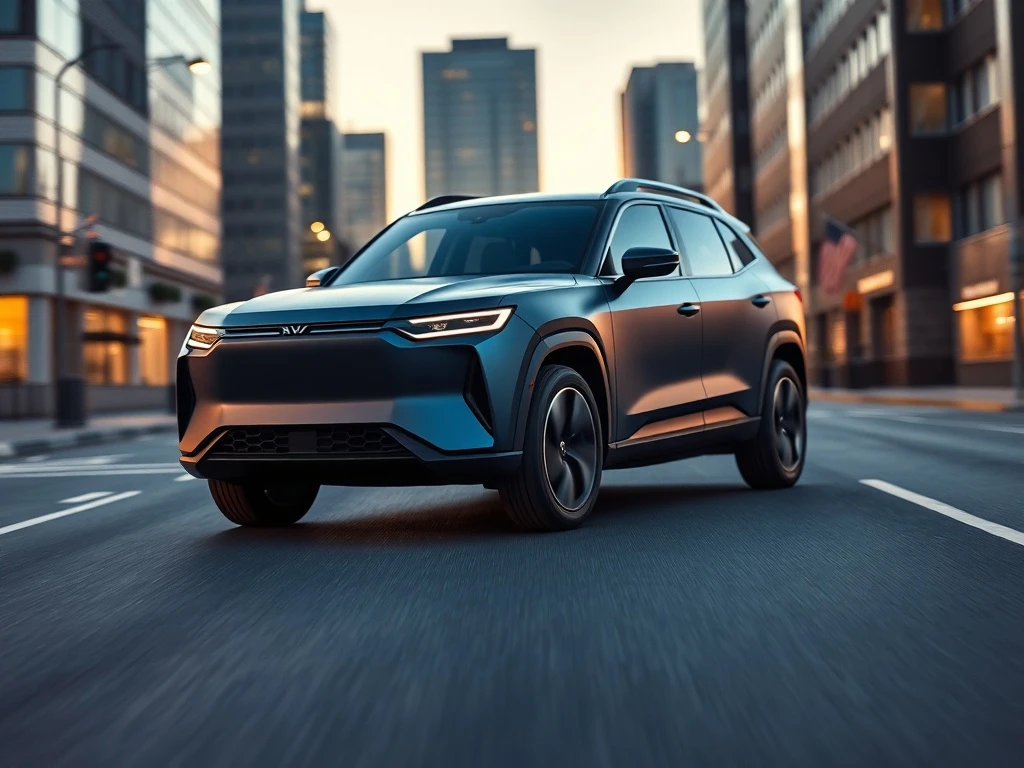
AUSTIN, Texas — March 12, 2024: Electric vehicle startup Rivian Automotive is executing one of the most aggressive product launches in recent automotive history with its R2 SUV, targeting between 20,000 and 25,000 unit sales within just six months of production start. The company plans to begin customer deliveries in June 2024, setting a breakneck pace that will test its manufacturing capabilities and market appeal. This Rivian R2 launch represents a pivotal moment for the automaker as it seeks to transition from a niche luxury brand to a volume competitor in the mainstream electric SUV segment, directly challenging established players. The stakes are exceptionally high, with Rivian’s financial stability and long-term growth trajectory hinging on a successful market introduction.
Rivian’s Ambitious R2 Production and Sales Timeline
Senior reporter Sean O’Kane’s analysis of Rivian’s projections reveals the scale of the challenge. Historically, no electric vehicle in the sub-$60,000 category, aside from the Tesla Model Y, has achieved a sales rate that would match Rivian’s low-end target of 20,000 units in half a year. The company must not only ramp production smoothly but also convert significant consumer interest into firm purchases almost immediately. Industry analysts point to several critical factors: supply chain readiness for the new platform, the scalability of Rivian’s Normal, Illinois plant, and the effectiveness of its direct-to-consumer sales model at higher volumes. Furthermore, the launch window coincides with increased competitive pressure, as several legacy automakers are also debuting new electric crossovers in 2024.
Rivian’s strategy appears to hinge on leveraging the brand equity and lessons learned from its R1S and R1T vehicles. The R2 is expected to feature a simplified design and manufacturing process to achieve its targeted price point, estimated to start around $45,000. Company executives have emphasized that the R2 platform is engineered for scalability from the outset, a deliberate shift from the lower-volume R1 architecture. The timeline is exceptionally compressed; typical automotive launches involve a slower, region-by-region rollout, but Rivian’s plan suggests a nationwide push from day one, requiring flawless logistics and dealer network coordination—though Rivian sells directly to consumers.
Market Impact and Competitive Landscape Analysis
The success or failure of the R2 launch will send ripples through the EV sector. Achieving its sales target would instantly establish Rivian as a formidable volume player, potentially impacting the valuations of other EV startups and forcing legacy automakers to accelerate their own electric plans. Conversely, a stumble could reinforce investor skepticism about the capital intensity and execution risks inherent in automotive manufacturing. The target market—buyers seeking a capable, stylish electric SUV under $60,000—is fiercely contested.
- Direct Competition: The R2 will face the Tesla Model Y, Ford Mustang Mach-E, Hyundai Ioniq 5, and Volkswagen ID.4, all of which have established production, dealer networks, and consumer awareness.
- Brand Perception: Rivian must translate its reputation for adventure-ready, premium vehicles into a compelling value proposition for a more cost-conscious mainstream buyer.
- Economic Headwinds: The launch occurs amid potential economic uncertainty and fluctuating interest rates, which can affect consumer appetite for major purchases like new vehicles.
Expert Perspectives on Rivian’s Strategic Move
Automotive industry analysts highlight the calculated risk in Rivian’s approach. “This is a classic ‘go big or go home’ maneuver,” stated Dr. Elena Rodriguez, a manufacturing specialist at the Center for Automotive Research. “Rivian is betting that a rapid, high-volume launch will create market momentum and economies of scale faster than a cautious rollout. The downside is that any quality or supply chain issue is magnified.” The company’s recent financial performance, showing a path toward reducing losses per vehicle, provides some foundation for this confidence. Additionally, external factors like the evolving federal EV tax credit landscape could play a significant role in the R2’s price competitiveness at the point of sale.
Broader Context: The 2024 EV Product Offensive
The R2 launch is not occurring in a vacuum. 2024 is shaping up to be a landmark year for electric vehicle introductions across the price spectrum. This surge in new models will test overall market demand and consumer willingness to adopt new brands. Rivian’s gambit can be seen as an attempt to capture mindshare and market share before the competitive window closes further.
| Vehicle | Expected Launch | Starting Price (Est.) | Key Challenge |
|---|---|---|---|
| Rivian R2 | June 2024 | $45,000 | Ultra-rapid production & sales ramp |
| Chevrolet Equinox EV | Mid-2024 | $35,000 | Achieving promised price point at scale |
| Next-Gen Tesla Model 3/Y? | Potential 2024 Update | Incumbent Pricing | Refreshing best-sellers to maintain dominance |
| Various Chinese Imports | Ongoing | Aggressively Low | Overcoming brand and regulatory hurdles |
What Happens Next: The Road to June and Beyond
All eyes are now on Rivian’s pre-launch execution. Key milestones between now and June include finalizing regulatory certifications, building dealer-ready demonstration vehicles, and initiating a marketing campaign capable of generating tens of thousands of qualified orders. The company’s presence at events like SXSW, where it is revealing full R2 details, is part of this crucial awareness-building phase. Following the start of deliveries, the focus will shift to monthly sales figures and production reports. Analysts will scrutinize whether Rivian can maintain quality while increasing output, and how quickly it can work through its expected order backlog.
Industry and Investor Reactions
Initial investor reaction to the ambitious target has been mixed, reflecting the high-risk, high-reward nature of the plan. Some shareholders applaud the aggressive vision as necessary for survival in a capital-intensive industry, while others express concern over the potential for missed targets and the associated stock volatility. Within the automotive industry, competitors are monitoring Rivian’s progress closely, as a successful launch could validate new approaches to vehicle development and go-to-market strategies, particularly for direct sales models. The coming months will be a definitive test of Rivian’s operational maturity.
Conclusion
The Rivian R2 launch is more than just another new car debut; it is a strategic gambit that will define the company’s future. By targeting 20,000 to 25,000 sales in the second half of 2024, Rivian is attempting a manufacturing and commercial feat that has eluded most new automakers. Success would solidify its position as a major EV player and demonstrate the scalability of its vision. The challenges are immense, spanning production, competition, and market conditions. As details emerge at events like SXSW and the first vehicles roll off the line in June, the automotive world will be watching to see if Rivian’s bold bet pays off, marking a turning point in the electric vehicle landscape.
Frequently Asked Questions
Q1: When will the Rivian R2 go on sale and how much will it cost?
Rivian plans to begin customer deliveries of the R2 SUV in June 2024. While official pricing will be confirmed at the full reveal, industry estimates suggest a starting price around $45,000, aiming to compete in the mainstream electric SUV market.
Q2: Why is Rivian’s sales target of 20,000-25,000 units considered ambitious?
This target requires Rivian to achieve a sales rate in six months that only the Tesla Model Y has matched in the sub-$60,000 EV segment. It involves a rapid production ramp from zero, effective nationwide distribution, and immediate consumer adoption—a significant challenge for any automaker, especially a relatively new one.
Q3: What are the main competitors for the Rivian R2?
The R2 will directly compete with the Tesla Model Y, Ford Mustang Mach-E, Hyundai Ioniq 5, Volkswagen ID.4, and the upcoming Chevrolet Equinox EV. It must differentiate itself through brand, design, capability, and value.
Q4: How does the R2 launch impact Rivian’s overall business health?
This launch is critical for Rivian’s path to profitability. Successfully selling higher volumes at a lower price point is essential for achieving economies of scale, improving margins, and generating the cash flow needed to fund future growth and technology development.
Q5: What happens if Rivian misses its 2024 sales target for the R2?
Missing the target could lead to negative investor sentiment, stock price pressure, and questions about the company’s long-term scalability. It might force a strategic reassessment, but it would not necessarily be catastrophic if production is still scaling upward and demand remains strong.
Q6: Where will the Rivian R2 be built?
The R2 is planned for production at Rivian’s existing manufacturing plant in Normal, Illinois. The company has retooled and expanded sections of this facility to accommodate the new R2 platform alongside its R1 vehicle production.



