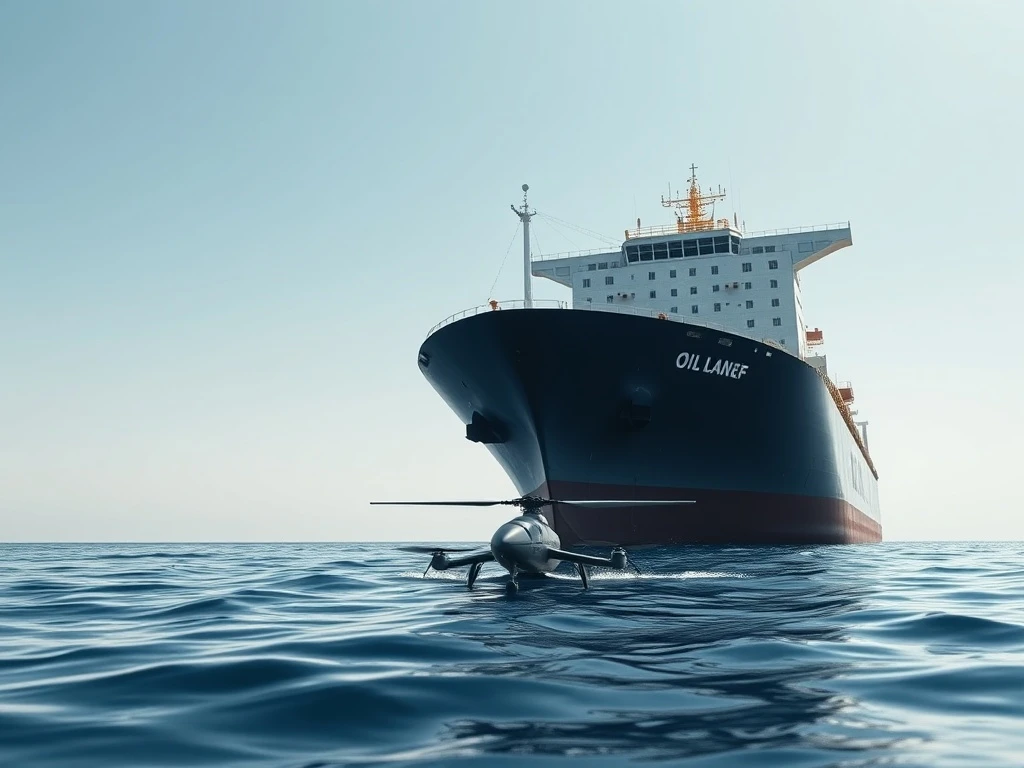
DUBAI, United Arab Emirates — March 15, 2026: Unprecedented attacks using explosive-laden unmanned surface vessels, commonly called sea drones, have targeted multiple commercial oil tankers transiting the Gulf of Oman over the past 48 hours, maritime security agencies confirm. These coordinated strikes represent a significant escalation in regional conflict, directly threatening one of the world’s most critical energy shipping corridors. Initial assessments from the United Kingdom Maritime Trade Operations (UKMTO) and private intelligence firm Ambrey indicate at least three vessels sustained damage, though no casualties have been reported. The incidents have triggered emergency consultations among global energy traders and heightened naval patrols, as analysts warn of a dangerous new phase in maritime hybrid warfare where sea drones target oil tankers with increasing frequency and sophistication.
Sea Drone Attacks: Tactics and Immediate Aftermath
The attacks occurred in international waters off the coast of Fujairah, a major bunkering hub. According to a detailed incident report from the International Maritime Security Construct (IMSC), the drones were small, fast craft, likely carrying 50-100 kilograms of explosives. They approached tankers from multiple vectors, exploiting gaps in traditional naval defense perimeters. Captain Ravi Menon, a veteran master mariner with Eastern Pacific Shipping who reviewed the initial data, stated, “The pattern suggests a coordinated swarm tactic. These aren’t random acts; they’re precise operations designed to cause maximum disruption to commerce and instill fear.” Consequently, insurance premiums for vessels transiting the region, known as war risk premiums, spiked by over 300% within hours of the first confirmed attack.
Satellite imagery and automatic identification system (AIS) data analyzed by maritime analytics firm Windward show a clear disruption to traffic. Following the attacks, at least a dozen very large crude carriers (VLCCs) either altered course away from the Strait of Hormuz or dropped anchor to await security assurances. This immediate reaction underscores the vulnerability of global supply chains to targeted attacks in chokepoints. The timeline of events began with a distress call from the MT Ocean Zenith at 04:30 UTC on March 14, followed by two further incidents involving the chemical tanker Global Voyager and the crude oil tanker Seavanguard later the same day.
Broader Impact on Global Energy Security and Trade
The strategic implications of using sea drones in the Middle East are profound. These attacks move beyond previous mine-laying or missile strikes, introducing a cheaper, more deniable, and highly proliferable weapon system into an already volatile theater. The immediate impact is twofold: a direct threat to crew safety and vessel integrity, and a systemic threat to the free flow of oil. Approximately 20% of the world’s seaborne crude oil passes through the Strait of Hormuz. Even a temporary closure or severe restriction could send shockwaves through the global economy.
- Supply Chain Disruption: Shipowners are now faced with the dilemma of rerouting vessels around the Cape of Good Hope, adding 10-14 days to voyages and millions in extra fuel costs, or accepting unprecedented risk.
- Insurance and Cost Spike: The sudden surge in war risk premiums directly translates to higher costs for every barrel of oil, gasoline, and diesel, potentially fueling inflation in consumer economies.
- Naval Response Strain: The attacks test the limits of international naval coalitions, which must now defend against a diffuse, low-signature threat rather than conventional naval forces.
Expert Analysis: A Shift in Asymmetric Naval Warfare
Dr. Sarah Chen, a senior fellow at the Center for Maritime Strategy and a former naval warfare analyst for the U.S. Department of Defense, provided critical context. “We are witnessing the democratization of naval strike capability,” Chen explained. “A sea drone capable of damaging a multi-billion-dollar tanker can be built for a fraction of the cost of a traditional missile system. This fundamentally alters the risk calculus for non-state actors and smaller states.” Chen pointed to the documented use of similar technology by Houthi forces in the Red Sea since 2024 as a precursor. Her analysis, published in the Journal of Strategic Studies, warned that the tactical playbook developed in one region would inevitably spread, a prediction now bearing out in the Gulf of Oman. This expert perspective is crucial for understanding the technological and strategic shift at play.
Historical Context and Escalating Threat Landscape
The current crisis did not emerge in a vacuum. It follows a decade of escalating maritime tensions in the region, from tanker seizures to missile attacks. However, the introduction of unmanned systems marks a qualitative leap. The table below compares key maritime security incidents in the Middle East over the past five years, highlighting the evolution in tactics and perpetrators.
| Date | Incident Type | Primary Actor | Key Vessel Type |
|---|---|---|---|
| 2022 | Mine Attacks | Attributed to Iran | Oil Tankers |
| 2023 | Missile Strikes | Houthi Forces | Container Ships |
| 2024 | Seizures & Boardings | Iranian Navy | Various |
| 2025-Present | Sea Drone Swarms | Houthi/Iranian Proxies | Oil & Chemical Tankers |
This progression shows a clear trend towards more complex, stand-off attacks that provide plausible deniability. The 2024 Houthi campaign in the Red Sea, which successfully employed sea drones against military and commercial targets, served as a live-fire testing ground. Security analysts now assess that the knowledge and technology have migrated eastward, presenting a persistent threat to the even more critical Strait of Hormuz.
What Happens Next: Diplomatic and Military Pathways
The immediate focus for Western and regional governments is crisis containment. The U.S. Fifth Fleet, headquartered in Bahrain, has put its Task Force 59—a unit specializing in integrating unmanned systems—on high alert. Diplomatic channels are active, with the European Union and United Nations pushing for a coordinated statement condemning the attacks. However, attribution remains a key challenge. While U.S. Central Command intelligence briefings point to Iranian technical support for the drones, no group has formally claimed responsibility, complicating any potential military response. The most likely short-term outcome is a significant bolstering of naval escort operations for commercial traffic, coupled with accelerated deployment of ship-based counter-drone systems, such as directed energy weapons and electronic jammers.
Industry and Market Reactions to the Crisis
Within the shipping and energy industries, the reaction has been one of pragmatic alarm. “Our first duty is to crew safety,” said a statement from the International Association of Independent Tanker Owners (INTERTANKO). The group is urgently revising its best management practices for the region. On trading floors, the price of Brent crude futures jumped 8% in early Asian trading, reflecting market nerves. More tellingly, the freight rate for a VLCC traveling from the Gulf to Singapore surged by 45%, a direct cost of the new risk premium. These market signals will force rapid adjustments across the energy sector, potentially leading to increased strategic petroleum reserve releases by consumer nations to calm prices.
Conclusion
The use of sea drones to target oil tankers in the Middle East marks a dangerous inflection point in maritime security. This event is not an isolated incident but part of a deliberate strategy to wield asymmetric, deniable force against global economic arteries. The immediate consequences—spiking energy costs, rerouted trade, and heightened naval tensions—are already unfolding. Looking ahead, the international community faces a dual challenge: developing effective technical countermeasures against swarming drone threats while pursuing diplomatic off-ramps to prevent a wider regional conflagration. For global markets and security planners, the vulnerability exposed in the Gulf of Oman will necessitate a fundamental rethink of how to protect the sea lanes that fuel the world’s economy. The next 72 hours will be critical in shaping the international response and determining whether this tactic becomes a persistent feature of conflict in the region.
Frequently Asked Questions
Q1: What exactly is a sea drone and how does it work?
A sea drone, or unmanned surface vessel (USV), is a remotely or autonomously operated boat. In these attacks, they are typically small, fast, and packed with explosives, designed to ram a target ship’s hull at the waterline to cause flooding and critical damage.
Q2: Who is most likely behind these attacks on oil tankers?
While no group has claimed responsibility, maritime intelligence agencies and regional experts assess that Iranian-backed Houthi forces from Yemen, using technology and tactics developed in the Red Sea, are the prime suspects. Iran itself maintains plausible deniability.
Q3: How will this affect gasoline prices for consumers?
Disruptions in the Strait of Hormuz typically lead to higher crude oil prices. If the situation persists or worsens, consumers worldwide can expect to see increased prices at the pump within 1-3 weeks, depending on local fuel supply chains and reserves.
Q4: What can ships do to defend against sea drones?
Defensive measures include enhanced visual watches, electronic surveillance to detect control signals, using water cannons or long-range acoustic devices to disable drones, and traveling with naval escorts. New laser-based defense systems are also being tested.
Q5: Has this happened before in the Middle East?
Yes, but not at this scale or coordination against tankers in the Gulf of Oman. Houthi forces have used sea drones against commercial and military ships in the Red Sea since 2024. Iran was also accused of using similar tactics in a 2021 attack on an Israeli-owned vessel.
Q6: What should shipping companies do right now?
The industry advisory is clear: register with the UKMTO, implement all recommended protective measures, consider rerouting if risk is deemed unacceptable, and ensure war risk insurance is active and adequate for the heightened threat level.
This article was produced with AI assistance and reviewed by our editorial team for accuracy and quality.