
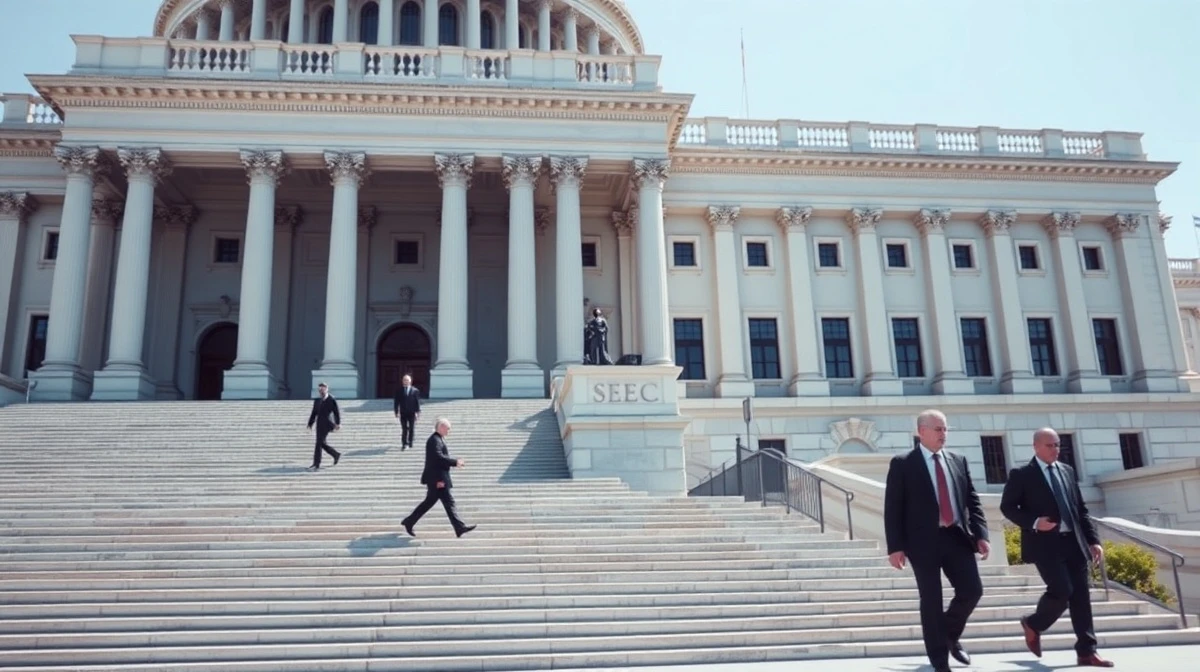
WASHINGTON, D.C. — March 22, 2026 — The Securities and Exchange Commission (SEC) has formally endorsed legislation that would classify Bitcoin and Ethereum as non-securities. SEC Chair Elisa Atkins publicly backed the proposed Digital Asset Market Structure Clarity Act, stating she trusts the bill will reach the desk of President Donald Trump for final approval.
A Landmark Shift in Regulatory Stance
The Clarity Act represents a significant pivot in the U.S. government’s approach to cryptocurrency regulation. For years, the status of major digital assets like Bitcoin and Ethereum has been a subject of intense legal debate and regulatory uncertainty. The bill aims to resolve this by providing a statutory definition that excludes these two largest cryptocurrencies from being treated as securities under federal law.
Chair Atkins’s support is viewed as a critical step toward the bill’s passage. Her endorsement signals a potential alignment between the regulatory agency and legislative efforts to create a clearer framework for the crypto industry. The move could reduce the threat of enforcement actions against companies dealing exclusively in Bitcoin and Ethereum.
Details of the Proposed Legislation
The Clarity Act, which has progressed through congressional committees, establishes specific criteria for determining when a digital asset is a security. According to the legislative text, assets that are decentralized, have a functional purpose beyond investment, and were not initially offered through an investment contract would fall outside the SEC’s securities purview.
Industry analysts note that Bitcoin and Ethereum, due to their decentralized networks and established utility, are the primary beneficiaries of this definition. The bill does not provide a blanket exemption for all cryptocurrencies. Other digital assets would still be subject to the Howey Test, the standard used by courts to determine if an asset is a security.
Market data from CoinGecko showed muted immediate price movement following the announcement, suggesting the news was largely anticipated by traders. The regulatory clarity, however, is expected to influence long-term institutional investment strategies.
Context and Industry Reaction
The SEC’s historical stance on cryptocurrency has been characterized by aggressive enforcement, arguing many tokens constitute unregistered securities. This approach led to high-profile lawsuits against several crypto exchanges and token issuers. The Clarity Act, with the SEC chair’s backing, marks a departure toward a more defined legislative solution.
Official statements from major crypto industry groups have praised the development. They argue that clear rules are necessary for innovation and consumer protection within the United States. Legal experts caution that the bill’s passage would not eliminate all regulatory oversight for Bitcoin and Ethereum, which would still fall under the jurisdiction of the Commodity Futures Trading Commission (CFTC) and other bodies for matters like anti-money laundering.
For more information on the SEC’s regulatory framework, you can review public statements on the SEC’s official website.
What Happens Next
The Clarity Act now awaits a full vote in both chambers of Congress. Chair Atkins’s statement increases the likelihood of bipartisan support. If passed by the House and Senate, the bill would be sent to President Trump, who has signaled a more favorable stance toward digital asset innovation in recent months.
Final approval would establish a foundational U.S. law for cryptocurrency, potentially setting a global precedent. The focus would then shift to how the CFTC and other agencies adapt their rules to govern the spot markets for Bitcoin and Ethereum as defined commodities.
This article was produced with AI assistance and reviewed by our editorial team for accuracy and quality.



