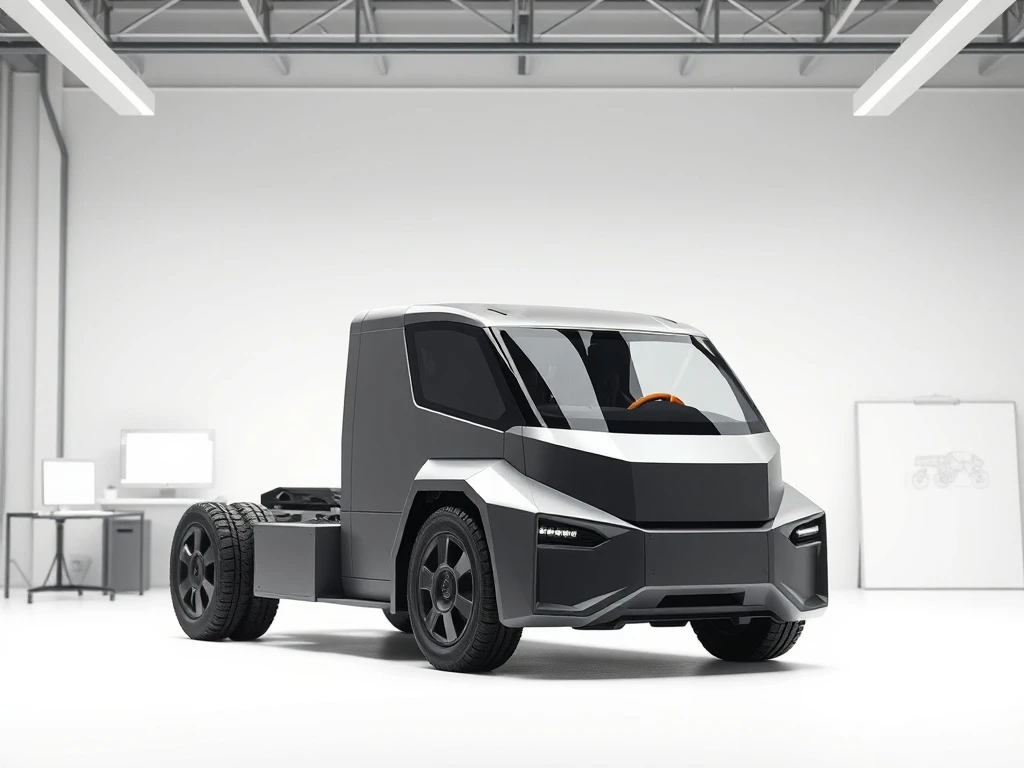
BOSTON, MA — June 9, 2026: In a strategic pivot just months before a crucial product launch, electric vehicle startup Slate Auto has abruptly changed its chief executive. The company, heavily backed by Jeff Bezos and other prominent investors, confirmed today that former Amazon Marketplace vice president Peter Faricy has taken over as CEO, replacing founding CEO Christine Barman. This leadership shuffle comes as Slate Auto prepares to convert its list of 160,000 refundable preorders into firm sales for its highly anticipated affordable electric truck, now targeting a starting price in the mid-$20,000 range after losing a key federal tax credit.
Slate Auto Installs Amazon Veteran as New CEO Ahead of Launch
Slate Auto spokesperson Jeff Jablansky confirmed to TechCrunch that Peter Faricy started his role as CEO on Monday. Faricy, who most recently served as an advisor at McKinsey and Bessemer Venture Partners, left his position at Bessemer to join the automotive startup. Newsweek first reported the executive hire. According to Jablansky, Faricy’s extensive experience in scaling Amazon’s massive third-party marketplace was a critical factor in the decision. “Peter’s experience building Amazon Marketplace was really critical for us,” Jablansky stated, highlighting the operational and e-commerce expertise Faricy brings to the complex task of launching a vehicle and managing a direct-to-consumer sales channel.
Meanwhile, Christine Barman, a longtime Chrysler veteran who was Slate Auto’s first employee and its public face since emerging from stealth mode in April 2025, transitions to the role of President of Vehicles. In this capacity, she will focus on product execution. Jablansky said Barman will do “everything we need” to deliver the company’s electric truck “on time and on budget.” This reorganization signals a clear division of labor: Faricy will steer corporate strategy and scaling, while Barman ensures the vehicle itself meets its production targets.
Timing and Implications of the Leadership Change
The CEO change arrives at a supremely sensitive moment for Slate Auto. The company is on the cusp of transitioning from a pre-revenue startup to a manufacturing entity. According to the company, it is about to begin converting its substantial waitlist of approximately 160,000 potential customers—who have placed refundable deposits—into binding vehicle orders. Furthermore, the company promised a final reveal of its truck’s pricing in June, a key milestone for converting interest into sales.
- Operational Scaling: Faricy’s background is viewed as essential for building the sales, delivery, and customer service infrastructure needed to support tens of thousands of vehicle orders.
- Financial Pressure: Having raised around $700 million, Slate Auto is under investor pressure to begin generating revenue and prove its business model.
- Market Positioning: The shift occurs as the affordable EV segment becomes increasingly competitive, with several established automakers announcing cheaper models.
Expert Analysis on Startup Leadership Transitions
Dr. Evelyn Reed, a professor of entrepreneurship at MIT’s Sloan School of Management, notes that such leadership changes, while jarring, are not uncommon in capital-intensive hardware startups approaching production. “The skills needed to shepherd a prototype to market are often different from those required to scale manufacturing, logistics, and mass-market sales,” Reed explained. “Bringing in an executive with proven scale experience from a company like Amazon is a logical, if dramatic, move to de-risk the next phase.” This perspective aligns with Slate’s stated rationale, emphasizing the need for Faricy’s specific operational pedigree as it moves from development to delivery.
The Amazon Imprint on Slate Auto’s DNA
While the CEO swap may surprise outsiders, the appointment of a former Amazon executive underscores the deep connections between the e-commerce giant and the EV startup. Jeff Bezos provided crucial early funding through his venture arm. Former Amazon executive Diego Piacentini is also a backer, and the head of Bezos’s family office holds a board seat. Slate Auto co-founder Jeff Wilke is the former CEO of Amazon’s worldwide consumer business. Moreover, the heads of Slate’s mobility, user experience, e-commerce, fleet sales, and human resources teams all have Amazon backgrounds.
This creates a distinct corporate culture focused on customer obsession, data-driven decision-making, and logistical precision—attributes Slate likely hopes will give it an edge in the challenging automotive market. The leadership change solidifies this Amazonian influence at the very top of the organization.
| Key Slate Auto Figure | Previous Role | Current Role |
|---|---|---|
| Peter Faricy | VP, Amazon Marketplace | CEO |
| Christine Barman | CEO, Slate Auto | President of Vehicles |
| Jeff Wilke | CEO, Amazon Worldwide Consumer | Co-Founder |
The Road Ahead: Pricing, Production, and Preorders
Faricy’s immediate in-tray is daunting. The company’s original promise of a truck starting “under $20,000” was contingent on the now-expired federal EV tax credit. With that incentive gone, Slate now targets a starting price in the mid-$20,000s. The company plans to offer extensive customization options, including a conversion to an SUV configuration for additional cost, to increase average transaction prices. Successfully communicating this value proposition to its 160,000 pre-order holders will be Faricy’s first major test.
Industry and Consumer Reaction
Initial reaction from industry observers has been mixed. Some analysts see the move as a necessary injection of large-scale commerce expertise. “Slate isn’t just building a truck; it’s building a direct sales and service model,” said Michael Torres, an automotive analyst with Edison Research. “Faricy knows that playbook.” However, others question the timing, noting that Barman had built considerable brand equity and was a rare female CEO in the auto industry. Her visible role in promotional videos had personalized the startup. How the company manages this narrative with consumers and maintains momentum through the transition will be critical.
Conclusion
The executive reshuffle at Slate Auto represents a high-stakes bet that operational scale expertise must now take precedence over pure automotive development prowess. Replacing founder-CEO Christine Barman with Amazon veteran Peter Faricy months before the launch of its affordable electric truck signals the company’s acute focus on the monumental task of fulfillment. With $700 million in funding, 160,000 potential customers, and intense scrutiny from backers like Jeff Bezos, Slate Auto’s new leadership has no room for error. The coming months, culminating in the final price reveal and order conversion process, will determine whether this jarring but calculated leadership change was the right move to steer the promising EV startup from stealth mode to sustainable success.
Frequently Asked Questions
Q1: Why did Slate Auto change its CEO right before launching its truck?
The company stated it needed Peter Faricy’s specific experience in scaling massive e-commerce operations at Amazon to successfully launch, sell, and deliver vehicles to its 160,000 pre-order customers, shifting focus from development to execution.
Q2: What happens to former CEO Christine Barman?
Christine Barman transitioned to the role of President of Vehicles. In this position, she is responsible for ensuring the electric truck is delivered “on time and on budget,” focusing on the product and engineering side of the business.
Q3: How much will Slate Auto’s electric truck cost?
Initially promoted at “under $20,000” with a federal tax credit, the truck’s starting price is now targeted in the mid-$20,000 range. The company plans a final price reveal in June 2026.
Q4: How many people have pre-ordered the Slate Auto truck?
Slate Auto has approximately 160,000 refundable preorders. The company is about to begin the process of converting these deposits into firm vehicle orders.
Q5: What is Jeff Bezos’s connection to Slate Auto?
Jeff Bezos is a major investor in Slate Auto through his venture arm. His family office head holds a board seat, and several other former Amazon executives, including co-founder Jeff Wilke, are deeply involved with the startup.
Q6: How does this change affect potential truck buyers?
For buyers, the immediate impact is the upcoming price confirmation and order conversion process. The leadership change is intended to ensure a smoother customer experience for purchasing, configuring, and receiving the vehicle.