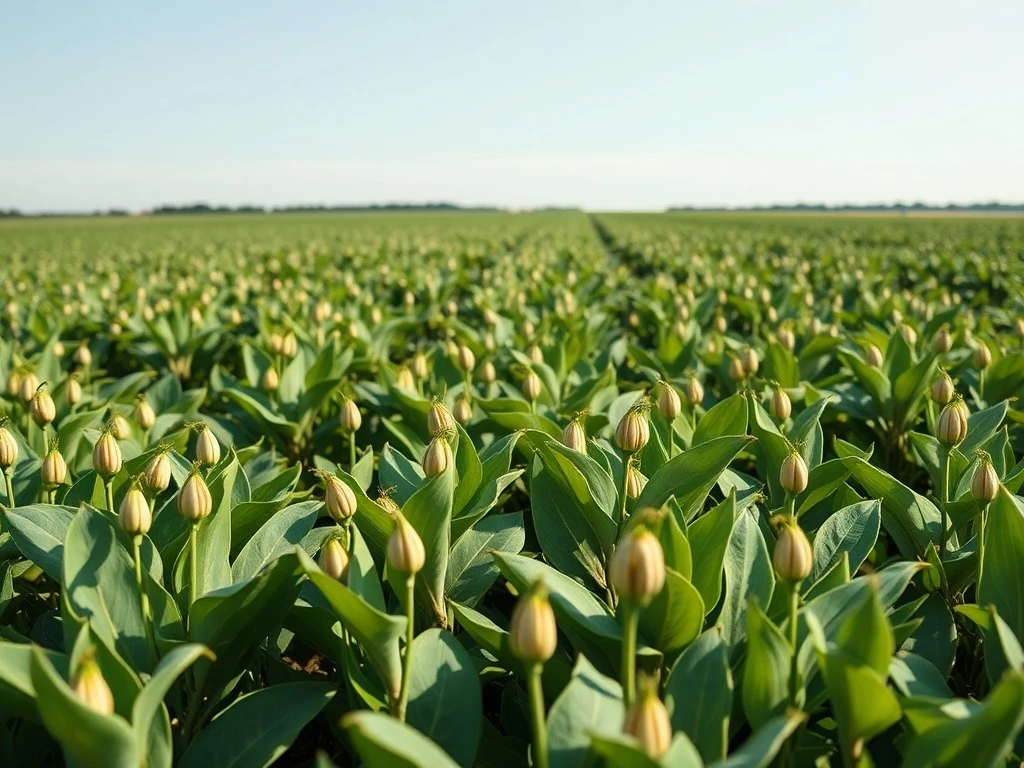
CHICAGO, March 10, 2026 — U.S. soybean futures faced significant selling pressure during Monday’s midday session, erasing overnight gains and highlighting growing concerns over export demand and South American harvest progress. The front-month March 2026 soybean contract traded on the Chicago Board of Trade (CBOT) was down 5 to 7 cents, a sharp reversal that placed prices more than 35 cents below overnight highs. The national average cash price, as tracked by cmdtyView, fell 6 1/4 cents to $11.20 1/2. This midday slump follows a notable increase in open interest of 16,951 contracts reported on Friday, suggesting fresh speculative positioning ahead of key data. Market analysts immediately pointed to weaker-than-expected export figures and accelerating harvest activity in Brazil as primary catalysts for the decline.
Soybean Futures Slide on Dual Pressure from Exports and Harvest
The U.S. Department of Agriculture’s weekly Export Inspections report delivered the first concrete data point driving Monday’s selloff. For the week ending March 5, soybean shipments totaled 879,190 metric tons (32.3 million bushels). This figure represents a concerning 24.3% drop from the previous week, though it remains 2.5% higher than the same week last year. China maintained its position as the top destination, taking 411,462 MT, followed by Egypt (161,746 MT) and Indonesia (118,747 MT). However, the cumulative marketing year total tells a more troubling story: shipments have reached 27.09 MMT (995.3 mbu), which is down 29.6% year-over-year. This persistent deficit continues to weigh on market sentiment, undermining price support. Concurrently, agricultural consultancy AgRural reported that Brazil’s massive soybean crop was 51% harvested as of last Thursday, trailing last year’s pace of 61% but progressing rapidly enough to ensure a steady flow of new supply onto the global market in the coming weeks.
Meanwhile, product markets mirrored the weakness in beans. Soymeal futures were down $3.00 to $3.70 per ton, while soy oil futures fell 17 to 34 points. The crude oil market, often a correlative influence on vegetable oils like soy oil, showed limited supportive strength, up just $3.97 at midday and nearly $25 off its own overnight highs. This created a bearish atmosphere across the entire soybean complex. Traders are now squarely focused on the USDA’s monthly World Agricultural Supply and Demand Estimates (WASDE) report scheduled for release Tuesday. Pre-report analyst surveys, including those from Barchart, suggest U.S. soybean ending stocks for the 2025/26 marketing year could be trimmed by 6 million bushels to 344 million bushels. Any deviation from this expectation will likely trigger the next significant price move.
Analyzing the Impact on Farmers, Traders, and Global Supply
The midday price drop has immediate and tangible consequences for different market participants. For American farmers holding unsold old-crop inventory in bins, the decline directly impacts revenue potential and marketing decisions. For grain traders and hedgers, increased volatility necessitates careful risk management. The expanding harvest in Brazil applies downward pressure on global benchmark prices, affecting competitors worldwide. The market’s reaction can be broken down into three key impact areas.
- Producer Marketing Strategy: The price reversal may prompt farmers to accelerate sales of remaining inventory if they fear further declines post-WASDE, potentially increasing short-term cash market supplies.
- Speculative Positioning Shift: The latest Commitment of Traders (COT) data from the CFTC showed managed money funds added a modest 14,700 contracts to their net long position in the week ending March 3, bringing it to 198,902 contracts. Monday’s selloff could test the conviction of these bullish speculators.
- Global Competitiveness: As Brazil’s harvest advances, its exportable supplies will become more price-competitive, potentially challenging U.S. export sales in key markets beyond China in the second quarter of 2026.
Expert Insight from the Trading Floor and Analyst Community
Market veterans emphasize the role of technical trading in Monday’s move. “The failure to hold overnight highs was a clear technical trigger,” noted a senior grain analyst at a major Chicago brokerage, who spoke on background due to company policy. “When you combine that with the export number, which was at the lower end of expectations, and the constant drumbeat of Brazil’s harvest, it created a perfect recipe for long liquidation.” The analyst further highlighted the product spread activity, where soymeal’s relative weakness undercut the crush margin—a critical profitability metric for processors. Separately, economists at the American Farm Bureau Federation have repeatedly warned in recent briefings that global grain stocks, while tightening, remain susceptible to sentiment shifts driven by Northern and Southern Hemisphere crop progress, a dynamic clearly in play today.
Broader Context: Soybeans in the 2026 Commodity Landscape
Monday’s price action places soybeans within a wider narrative of agricultural commodity volatility in early 2026. Compared to corn and wheat, which have seen rallies fueled by different supply concerns, soybeans have been more directly influenced by the tug-of-war between U.S. demand and Southern Hemisphere supply. The following table compares key metrics for the major grain and oilseed contracts as of Monday’s midday session, illustrating soybean’s relative performance.
| Commodity | Contract | Price Change | Primary Market Driver |
|---|---|---|---|
| Soybeans | Mar 2026 | -5.5¢ to $11.79 1/2 | Export Inspections, Brazil Harvest |
| Corn | Mar 2026 | +2.0¢ (est.) | Planting Intentions Forecasts |
| Chicago Wheat | Mar 2026 | -1.5¢ (est.) | Global Export Competition |
| Soybean Meal | Mar 2026 | -$3.70/ton | Following Bean Lead, Demand |
What Happens Next: WASDE Report and Spring Planting Signals
All eyes now turn to Tuesday’s 12:00 PM EDT release of the USDA WASDE report. The consensus expects a slight tightening of U.S. ending stocks, but the market’s reaction will hinge on adjustments to South American production estimates and global demand projections. A bearish surprise—such as a larger Brazilian crop estimate or a cut to Chinese import forecasts—could extend Monday’s losses. Conversely, a larger-than-expected drawdown in U.S. stocks could spark a short-covering rally. Following the WASDE, market focus will gradually shift to the USDA’s Prospective Plantings report at the end of March, which will provide the first official survey-based estimate of 2026 U.S. soybean acreage. Current futures price ratios between soybeans and corn suggest farmers may favor corn, which could set the stage for a tighter soybean balance sheet next season.
Trader and Analyst Reactions to the Midday Selloff
On trading desks and in analyst notes, the mood was cautious but not panicked. Many viewed the drop as a healthy correction within a broader range, exacerbated by thin pre-report liquidity. “This is typical pre-WASDE positioning,” commented an independent floor trader. “The funds came in long last week, got the weak export data, and are taking some risk off the table before the big report. The real direction will be set tomorrow.” Online agriculture forums and social media channels showed heightened concern from farmers, particularly in the Midwest, who are weighing the decision to sell remaining old-crop beans now or wait for a post-report bounce. This blend of professional calibration and producer anxiety defines the current market psychology.
Conclusion
Monday’s midday decline in soybean futures underscores the market’s acute sensitivity to real-time fundamental data. The combination of a week-over-week export slowdown and the progressing Brazilian harvest provided ample justification for profit-taking and new short sales. The stage is now set for the USDA’s WASDE report to determine whether this move is a brief correction or the beginning of a deeper trend. Key takeaways for market observers include the vulnerability of prices to export pace, the growing influence of South American crop timelines, and the critical role of managed money flows. As planting season approaches in the Northern Hemisphere, the interplay between old-crop ending stocks and new-crop acreage intentions will dominate the soybean narrative for the remainder of the first quarter of 2026.
Frequently Asked Questions
Q1: Why did soybean prices fall sharply on Monday, March 10, 2026?
Soybean futures fell 5 to 7 cents due to a combination of weaker-than-expected U.S. export inspection data, which showed a 24.3% weekly decline, and ongoing pressure from the advancing harvest of a large soybean crop in Brazil, which is increasing near-term global supplies.
Q2: What is the significance of the USDA’s WASDE report for soybean markets?
The WASDE report, released monthly, provides official U.S. and global supply, demand, and ending stock estimates. The March 11, 2026, report is critical as it will update the outlook for the current marketing year, with traders specifically watching for changes to U.S. ending stocks and South American production numbers.
Q3: How does Brazil’s harvest progress affect U.S. soybean prices?
As Brazil harvests its crop, it adds substantial volumes of soybeans to the export pipeline, increasing competition for U.S. beans in the global market. This typically exerts downward pressure on benchmark futures prices until the flow of new Brazilian supply is absorbed.
Q4: What are soybean futures and how are they traded?
Soybean futures are standardized contracts traded on the Chicago Board of Trade (CBOT) for the delivery of a specific quantity of soybeans at a future date. They are used by farmers to lock in prices, by processors to secure supply, and by speculators to bet on price direction.
Q5: What other markets moved alongside soybeans on Monday?
Soybean product markets also fell, with soymeal down $3.00-$3.70/ton and soy oil down 17-34 points. The broader commodity complex was mixed, with crude oil showing only modest gains that failed to support vegetable oils.
Q6: How does this price move impact a typical U.S. soybean farmer?
A lower futures price directly reduces the potential revenue for unsold grain. It may influence a farmer’s decision to sell remaining old-crop inventory now or wait, and could affect calculations for forward pricing a portion of their anticipated 2026 new-crop production.