
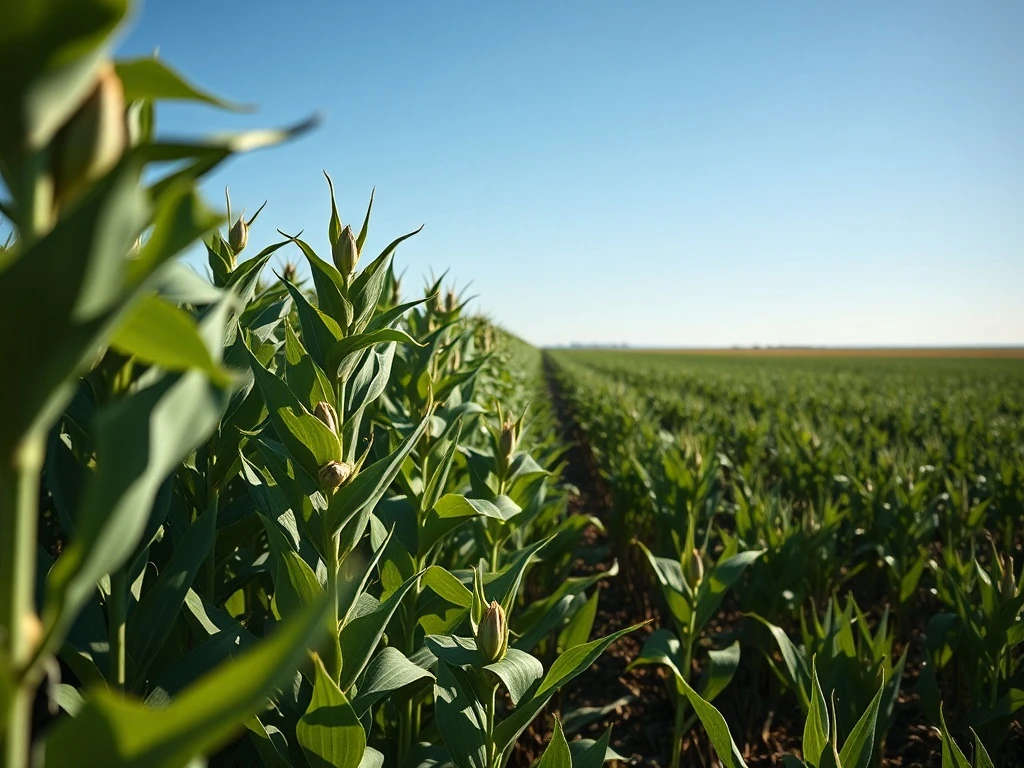
CHICAGO, March 10, 2026 — Soybean futures posted solid gains in Tuesday’s trading session, closing 5 to 7 cents higher across most front-month contracts. The move higher came despite a USDA World Agricultural Supply and Demand Estimates (WASDE) report that showed only minor adjustments to the global balance sheet. The cmdtyView national average cash price settled at $11.27 1/4, up 5 3/4 cents. Market analysts point to a combination of technical positioning, geopolitical tensions affecting crude oil, and cautious optimism ahead of critical US-China diplomatic meetings later this month as primary drivers for the day’s strength.
Soybeans Find Strength in a Static USDA Report
The USDA’s monthly WASDE update, released Tuesday, provided little fresh fundamental news to traders. Consequently, the market’s positive reaction suggests other factors were at play. The report left U.S. ending stocks unchanged at 350 million bushels after a 5 million bushel increase to imports was perfectly offset by an equal rise in the domestic crush estimate, now pegged at 2.575 billion bushels. Globally, adjustments were similarly modest. Brazil’s colossal soybean production forecast was held steady at 180 million metric tons (MMT). Meanwhile, Argentina’s estimate saw a slight trim of 0.5 MMT to 48 MMT. “The report was a non-event from a supply perspective,” noted a senior grain analyst from a major trading house in Chicago. “The market’s lift tells you traders were braced for bearish surprises that never materialized, allowing other supportive narratives to take hold.”
This static snapshot follows recent customs data from China, the world’s largest soybean importer, showing arrivals for January and February totaled 12.55 MMT. This figure marks a 7.8% decline from the same period last year, a detail that kept bullish enthusiasm in check. The March 2026 soybean contract settled at $11.87 1/4, up 6 3/4 cents.
Geopolitical Ripples and Macroeconomic Crosscurrents
Beyond the grain-specific data, broader commodity and geopolitical events created a volatile backdrop. Crude oil futures experienced extreme swings, initially plunging $8.38 per barrel. The sell-off was triggered by the U.S. Navy beginning to escort commercial vessels through the strategic Strait of Hormuz, an action aimed at securing the vital oil transit corridor. However, prices sharply recovered $8 from their lows on unconfirmed reports that Iran was placing mines in the waterway. This volatility in the energy complex often spills over into vegetable oil markets, including soy oil, which closed steady to 51 points lower on the day. “The soy complex is no longer an island,” explained Dr. Evelyn Reed, a geopolitical risk advisor for agribusinesses. “Instability in key shipping lanes directly impacts freight and energy costs, which are critical inputs for the entire global agricultural supply chain.”
- Energy Market Spillover: Crude oil volatility influences soy oil futures and overall commodity risk sentiment.
- Freight and Logistics: Tensions in the Strait of Hormuz threaten shipping costs and timelines for global trade.
- Risk Appetite: Geopolitical uncertainty can lead investors to rotate capital into or out of commodity assets.
Expert Insight: The Diplomatic Calendar as a Market Catalyst
Market participants are keenly focused on the diplomatic calendar. A scheduled meeting this weekend in Paris between U.S. Secretary of Agriculture Thomas Bessent and Chinese counterparts is viewed as a potential precursor to broader discussions. Subsequently, a planned meeting between former President Donald Trump and Chinese President Xi Jinping later in March looms even larger. “The trade relationship remains the single largest determinant of long-term soybean demand,” stated Michael Chen, a director at the Asia-Pacific Agricultural Trade Institute. “Any dialogue, especially at the highest levels, is scrutinized for signals about tariff policies, purchase commitments, and the overall tone of engagement. Today’s price action reflects a market that is unwilling to sell off ahead of these potential catalysts.” This perspective aligns with analysis from institutions like the U.S. Soybean Export Council, which consistently emphasizes market access as paramount.
Comparative Analysis: Soybeans Versus Other Key Commodities
Tuesday’s performance highlights soybeans’ relative resilience compared to other assets. While equity markets, represented by the repeated tickers in the source data (AAPL, TSLA, AMZN, etc.), faced pressure, and crude oil whipsawed, agricultural grains held firm. The following table contrasts the day’s movements and key drivers across related markets:
| Commodity/Asset | Price Action (March 10, 2026) | Primary Driver |
|---|---|---|
| Soybeans (Front-Month) | +5 to +7 cents | Neutral USDA report, pre-diplomatic optimism |
| Crude Oil (WTI) | Volatile, down ~$0.38 net | Strait of Hormuz military escort & mining reports |
| Soybean Meal | +$0.80 to +$1.10 | Strong domestic crush demand |
| Major Tech Stocks (e.g., NVDA, AMD) | Generally lower | Sector rotation, macroeconomic concerns |
Market Outlook: What Traders Are Watching Next
The immediate focus shifts from static USDA data to dynamic real-world events. Traders will monitor weekly export sales data for signs of Chinese buying acceleration. Furthermore, planting intention surveys from major firms will begin to circulate, offering the first clues about 2026 U.S. acreage. The most significant near-term pivot point, however, remains the outcome of the upcoming diplomatic meetings. “A constructive dialogue in Paris could set a positive tone,” suggests an anonymous risk manager from a global grain merchant. “Conversely, any rhetoric suggesting a return to aggressive tariffs would likely trigger a swift and negative reassessment of the demand picture. The market is in a holding pattern, waiting for that fundamental signal.” Weather patterns in South America, as the harvest concludes, and in the U.S. Midwest, as planting approaches, will also gradually reclaim market attention.
Stakeholder Reactions: From Farm Gates to Trading Floors
Initial reactions from the agricultural community were cautiously optimistic. Producers welcomed the price bump but expressed concern about the lack of a clear, bullish narrative in the USDA data. “It’s good to see green on the board, but it feels fragile,” said Iowa soybean farmer Karen Briggs. “We need to see sustained demand, not just the absence of bad news.” On trading floors, the mood was tactical. The neutral report was seen as defeating bearish bets that had anticipated rising stockpiles, leading to a short-covering rally. This technical buying provided the initial lift, which was then sustained by the broader macro considerations.
Conclusion
Tuesday’s session demonstrated that soybean markets can advance even in the face of neutral government data when supported by technical factors and macro-sensitive optimism. The minimal changes in the March USDA WASDE report removed a potential downside risk, allowing traders to focus on geopolitical developments in energy markets and the critical upcoming round of US-China trade discussions. While Chinese import data remains soft, the market appears to be pricing in the possibility of improved relations. Moving forward, traders should watch for tangible results from the Paris meetings, monitor crude oil’s influence on vegetable oils, and prepare for the impending shift in focus to Northern Hemisphere planting weather and intentions. The stability shown today is a positive sign, but its durability will be tested by the headlines of the coming weeks.
Frequently Asked Questions
Q1: Why did soybean prices rise if the USDA report showed little change?
The market had positioned for potentially bearish data. The neutral report triggered short-covering (buying to close bearish bets). Concurrently, optimism about upcoming US-China trade talks and volatility in related markets like crude oil provided supportive sentiment.
Q2: What was the most important number in the March 2026 USDA WASDE report for soybeans?
The unchanged U.S. ending stocks figure of 350 million bushels was key. It indicated a stable supply picture, with no unexpected increases that would have pressured prices lower.
Q3: How do tensions in the Strait of Hormuz affect soybean prices?
They indirectly affect markets by causing volatility in crude oil prices, which influences biofuel demand and overall commodity investment flows. They also raise concerns about global shipping costs and logistics for all traded goods, including agricultural products.
Q4: What are the next major events that will move soybean markets?
The immediate focus is on the meeting between U.S. and Chinese agricultural officials in Paris this weekend, followed by the planned Trump-Xi meeting. After that, the market will shift to the USDA’s Prospective Plantings report at the end of March and ongoing weather monitoring.
Q5: What does the decline in Chinese soybean imports mean for the market?
The 7.8% year-over-year drop for Jan-Feb is a concern, suggesting weaker near-term demand. However, the market is currently looking ahead, hoping that diplomatic talks could lead to policies that reinvigorate Chinese purchasing activity for the latter part of 2026.
Q6: How does this affect American soybean farmers?
The price increase is a direct positive for farmers holding unsold grain. However, the lack of a strong fundamental driver for the rally makes them cautious. Farmers are looking for signs of sustained export demand to provide confidence for the upcoming planting season.



