
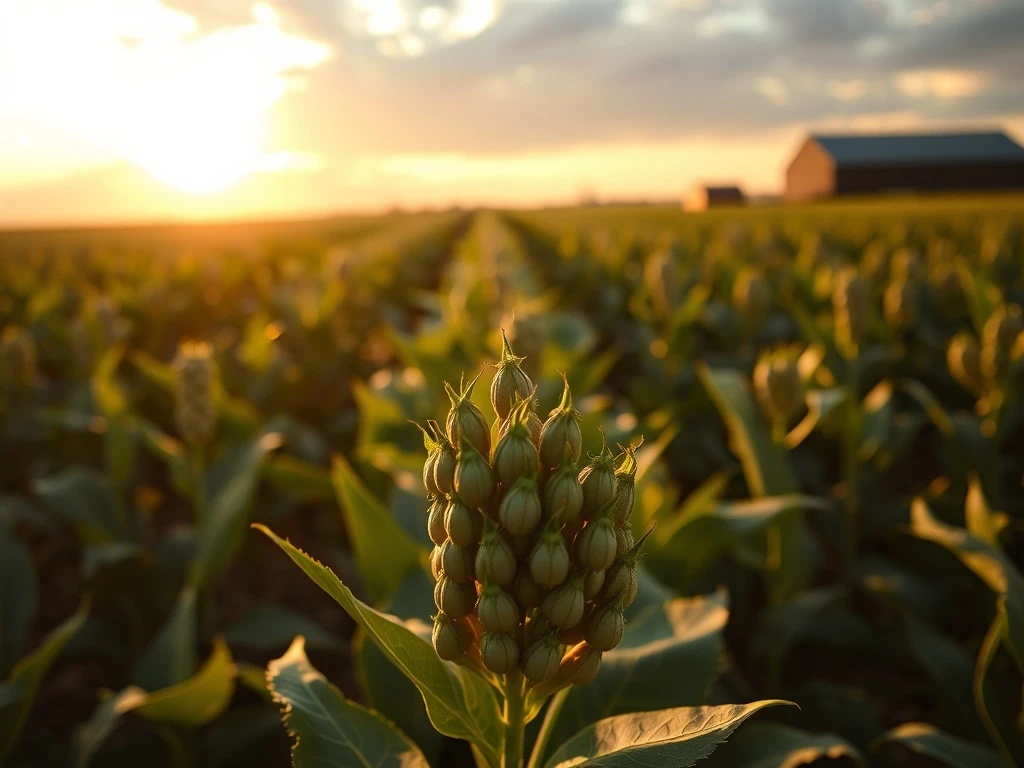
CHICAGO, March 10, 2026 — Soybean futures posted solid gains across most contracts during Tuesday’s trading session, with prices climbing 5 to 7 cents as the market digested a USDA WASDE report that showed remarkably few adjustments to global supply estimates. The March update, released midday Tuesday, left U.S. ending stocks unchanged at 350 million bushels despite minor tweaks to import and crush categories. Meanwhile, the cmdtyView national average cash bean price rose 5¾ cents to settle at $11.27¼, reflecting steady physical market demand. Traders maintained cautious optimism ahead of critical diplomatic meetings between U.S. and Chinese officials scheduled for this weekend in Paris.
USDA March WASDE Report Reveals Minimal Supply Adjustments
The U.S. Department of Agriculture’s monthly World Agricultural Supply and Demand Estimates report typically moves markets with significant forecast revisions. However, the March 10, 2026 edition presented what analysts described as a “status quo” update for soybeans. The USDA increased U.S. soybean imports by 5 million bushels while simultaneously raising the domestic crush estimate by an identical amount to 2.575 billion bushels. These offsetting changes resulted in unchanged ending stocks of 350 million bushels. “The market was braced for more dramatic revisions,” noted Dr. Evelyn Chen, senior agricultural economist at the University of Illinois. “This report essentially confirms current supply trajectories without introducing new volatility.”
Global soybean production estimates saw only minor adjustments. Brazil’s massive crop remained pegged at 180 million metric tons, maintaining its position as the world’s leading producer. Argentina’s estimate decreased by 0.5 MMT to 48 MMT, reflecting ongoing yield concerns in key growing regions. The most notable international change involved a 0.18 MMT increase to old crop carryover stocks, partially offset by a 0.2 MMT reduction in 2025/26 ending stocks to 125.31 MMT. These marginal adjustments suggest global soybean supplies remain adequate despite regional production challenges.
Geopolitical Tensions and Energy Markets Influence Soy Complex
While soybeans themselves traded higher, the broader soy complex presented a mixed picture that revealed underlying market tensions. Soymeal futures gained 80 cents to $1.10, benefiting from strong protein demand. Conversely, soyoil futures traded steady to 51 points lower, pressured by a dramatic $8.38 drop in crude oil prices. The energy market decline followed the U.S. Navy’s announcement that it would begin escorting commercial vessels through the Strait of Hormuz after reports of Iranian mine-laying activities. “The soyoil-crude correlation remains tight,” observed Michael Torres, head of commodities research at Global Ag Insights. “When crude drops sharply on geopolitical news, vegetable oils typically follow.”
- Transportation Risk Premium: The Hormuz situation adds approximately $2-3 per barrel to global shipping costs, indirectly affecting agricultural export competitiveness.
- Biofuel Demand Uncertainty: Lower crude prices temporarily reduce the economic incentive for biodiesel blending, weighing on soyoil demand.
- Supply Chain Monitoring: Major grain traders have increased monitoring of Black Sea and South American shipping routes for potential disruptions.
Expert Analysis: Chinese Demand Patterns Under Scrutiny
Market attention remains firmly fixed on Chinese demand signals as new customs data reveals shifting import patterns. January-February soybean imports totaled 12.55 million metric tons, representing a 7.8% decline compared to the same period last year. “This isn’t necessarily alarming,” stated Ling Wei, director of Asian commodities at Singapore-based Far East Trading. “Chinese crushers are working through existing inventories and may be timing purchases around diplomatic developments.” The data arrives as U.S. Secretary of Agriculture Thomas Bessent prepares to meet Chinese counterparts in Paris this weekend, preceding a planned meeting between former President Donald Trump and President Xi Jinping later this month.
Historical Context: Comparing March WASDE Reports
The minimal changes in this March’s report contrast with historical patterns where spring revisions often trigger significant market movements. The table below illustrates how March WASDE adjustments have varied over recent years, highlighting 2026’s unusual stability.
| Year | U.S. Ending Stocks Change | Brazil Production Change | Market Reaction |
|---|---|---|---|
| 2023 | -25 million bushels | -5 MMT | Soybeans +42¢ |
| 2024 | +15 million bushels | +3 MMT | Soybeans -18¢ |
| 2025 | -10 million bushels | No change | Soybeans +31¢ |
| 2026 | No change | No change | Soybeans +5-7¢ |
This historical comparison reveals that 2026’s report represents the least disruptive March update in four years. The stability suggests either exceptional forecasting accuracy or deliberate conservatism from USDA analysts amid uncertain geopolitical and weather conditions. “When USDA makes minimal changes,” explained veteran trader Carlos Mendez of Chicago’s trading pits, “it often means they’re waiting for more data rather than lacking conviction.”
Forward Outlook: Diplomatic Meetings and Planting Intentions
Market participants now shift focus to two critical upcoming events that could determine price direction through spring. First, the Paris meetings between U.S. and Chinese agricultural officials this weekend may provide clarity on 2026 import quotas and phytosanitary protocols. Second, the USDA’s Prospective Plantings report, scheduled for release on March 31, will offer the first survey-based estimate of 2026 U.S. soybean acreage. “Between diplomacy and planting decisions, we have two major catalysts approaching,” noted agricultural analyst Sarah Jensen in a client briefing. “Today’s calm may precede significant volatility.”
Producer and Processor Reactions to Current Prices
At the farm level, current cash prices near $11.25 provide adequate but not exceptional returns for most producers. “We’re seeing selective selling,” reported Iowa-based grain merchandiser David Miller. “Farmers with strong balance sheets are holding, while those with storage or cash flow concerns are moving product.” Processors, meanwhile, express satisfaction with steady crush margins. “The meal-oil spread is working in our favor,” commented a representative from Archer Daniels Midland, speaking on background. “We’re running near capacity with good demand from both livestock and food sectors.”
Conclusion
Soybean markets exhibited measured strength Tuesday as traders processed a USDA report that confirmed existing supply estimates rather than introducing new variables. The 5-7 cent gains reflect relief at the absence of bearish surprises combined with optimism about upcoming diplomatic engagement. Critical watchpoints include Chinese buying patterns following the Paris talks, U.S. planting intentions due at month’s end, and ongoing geopolitical developments affecting global trade flows. While today’s soybeans pop higher represents modest movement, it occurs within a context of building anticipation for more definitive fundamental drivers to emerge in coming weeks.
Frequently Asked Questions
Q1: Why did soybean prices rise despite minimal USDA report changes?
The market had anticipated potentially bearish revisions, so unchanged estimates provided relief. Additionally, traders positioned ahead of upcoming US-China trade talks contributed to upward momentum.
Q2: How does the Strait of Hormuz situation affect soybean markets?
Increased tensions raise global shipping insurance costs and create uncertainty about petroleum supplies, which influences biodiesel demand and overall agricultural transportation economics.
Q3: What are the next major dates for soybean market watchers?
Key events include US-China agricultural meetings in Paris (March 14-15), USDA Prospective Plantings report (March 31), and the Trump-Xi meeting scheduled for late March.
Q4: Are current soybean prices profitable for farmers?
At approximately $11.25 cash price, most producers achieve modest profits, though margins vary significantly by region, input costs, and yield history.
Q5: How significant is the 7.8% drop in Chinese soybean imports?
While notable, the decline likely reflects inventory management rather than structural demand reduction. Analysts will monitor April import data for clearer trends.
Q6: What should soybean traders watch most closely this week?
Primary focus should be on any statements emerging from Paris meetings regarding Chinese purchase commitments and on daily export sales reports for demand signals.



