
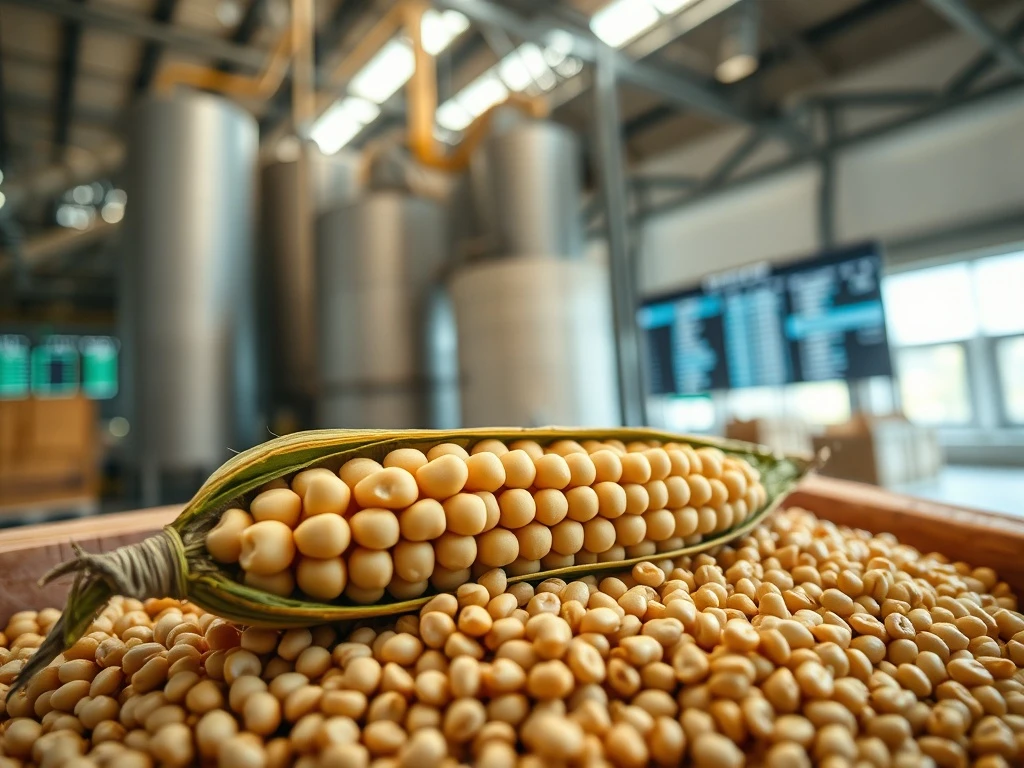
CHICAGO, March 8, 2026 — Soybean futures extended their rally into Friday’s trading session, posting midday gains of 18 to 20 cents for front-month contracts. The continued upward momentum, driven by spillover support from a sharp rally in energy markets and shifting export dynamics, marks a significant week for agricultural commodities. According to data from cmdtyView, the national average cash bean price climbed 18 3/4 cents to $11.24 1/4 by midday. This price action follows a week of volatile trading and comes amid critical updates on global supply and demand fundamentals.
Soybean Futures Gain on Energy and Export Dynamics
The rally in soy complex products was broad-based on Friday. Soymeal futures traded $7.50 to $8.50 higher, while Soy Oil futures saw gains of 45 to 60 points. Market analysts immediately pointed to the energy complex as a primary catalyst. Concurrently, crude oil futures surged $10.10 at midday, providing direct support for soy oil, a key biodiesel feedstock. This intermarket relationship underscores the growing linkage between energy and agricultural markets. Furthermore, delivery notices against March contracts added tangible evidence of physical market activity, with 50 lots for soymeal and 71 for bean oil registered overnight.
The U.S. Department of Agriculture’s weekly Export Sales report provided a nuanced backdrop. Current export commitments for soybeans stand at 36.034 million metric tons (MMT). This figure represents 84% of the USDA’s full-year export estimate. However, the current sales pace lags behind the five-year average of 92% for this point in the marketing year. More notably, actual shipments, at 26.154 MMT, are at just 61% of the USDA’s forecast, trailing the average shipping pace of 78%. This gap between commitments and shipments introduces an element of uncertainty into future demand fulfillment.
Global Supply Pressure from South America
While U.S. futures rallied, attention remained fixed on Southern Hemisphere production. Brazilian agricultural consultancy AgroConsult raised its estimate for the country’s soybean crop to 183.1 MMT, an increase of 0.85 MMT from its previous assessment. This ongoing harvest is flooding export channels. Official data shows Brazil’s February soybean exports reached 7.113 MMT. This volume more than tripled January’s shipments and exceeded February 2025’s total by 10.66%. The rapid influx of cheaper Brazilian beans into the global market continues to pressure U.S. export competitiveness and cap upside potential for Chicago prices.
- Brazilian Crop Size: The upward revision to 183.1 MMT reinforces expectations of a record global supply.
- Export Volume: The triple-digit monthly increase confirms a massive supply wave hitting the market.
- Argentinian Conditions: The Buenos Aires Grains Exchange reported only marginal improvement, with 30% of crops rated good/excellent, up just 1 point from the prior week.
Analyst Perspectives on Price Drivers
Market experts emphasize the clash between macro support and fundamental oversupply. “The crude oil spike is providing a classic, short-term inflationary push to the entire ag complex,” noted a senior analyst from Barchart, referencing the firm’s real-time commodity data. “However, the towering South American harvest is the dominant fundamental. Every rally is met with commercial hedging pressure.” This view is echoed in trading patterns, where rallies are often sold into. The analyst further pointed to the USDA’s World Agricultural Supply and Demand Estimates (WASDE), due next week, as the next major catalyst that could recalibrate global balance sheets.
Comparing Key Soybean Contract Prices
The rally was consistent across the futures curve, indicating broad-based buying rather than isolated contract-specific activity. The following table details the midday price action for key Chicago Board of Trade (CBOT) soybean contracts on March 8, 2026, illustrating the uniform strength.
| Contract | Price | Net Change |
|---|---|---|
| Mar 26 Soybeans | $11.82 | +18 1/4 cents |
| May 26 Soybeans | $11.98 1/4 | +19 cents |
| Jul 26 Soybeans | $12.10 3/4 | +18 1/4 cents |
| Cash Average (cmdtyView) | $11.24 1/4 | +18 3/4 cents |
Market Outlook and Next Catalysts
The immediate trajectory for soybean prices hinges on two factors: the sustainability of the energy rally and the pace of the Brazilian harvest and export flow. Traders are also preparing for the upcoming USDA Prospective Plantings report at the end of March, which will provide the first official survey of U.S. farmers’ planting intentions for the 2026 crop. Any significant deviation from expected acreage could trigger the next major price move. In the near term, technical resistance levels just above the Friday highs will test the strength of the current rally, with many analysts viewing the move as corrective within a larger bearish supply-driven trend.
Trader and Producer Sentiment
On the trading floor, sentiment is cautiously opportunistic. “The pop from crude is a gift for anyone needing to price old-crop inventory,” shared a veteran Iowa grain merchandiser, reflecting the perspective of U.S. producers. Meanwhile, end-users like crushers and exporters are monitoring the rally for cost implications, but remain confident that ample South American supply will limit sustained price inflation. This dichotomy between short-term financial market moves and long-term physical supply realities defines the current soybean market landscape.
Conclusion
The soybeans rally on Friday, March 8, 2026, demonstrated the complex forces shaping agricultural markets. A shock surge in crude oil prices provided powerful, if potentially temporary, support to soybean and soyoil futures. However, this upward move unfolds against a backdrop of record Brazilian production and lagging U.S. export shipment paces. The market now enters a waiting period, caught between macro-economic energy inputs and the overwhelming fundamental reality of a massive global harvest. The key takeaway is that while external factors can fuel short-term rallies, the historic supply from South America remains the dominant price anchor. Market participants should watch the upcoming USDA reports for signals that could either reinforce or challenge this current dynamic.
Frequently Asked Questions
Q1: Why are soybean prices rallying on Friday, March 8, 2026?
Soybean prices are rallying primarily due to a sharp $10.10 per barrel surge in crude oil futures, which lifts biofuel feedstocks like soyoil. Spillover buying and short-covering in the soybean complex amplified the gains.
Q2: How does Brazil’s soybean crop affect U.S. prices?
Brazil’s estimated record crop of 183.1 million metric tons creates a large, competitive global supply. This surplus pressures U.S. export prices and typically limits the duration and height of rallies in Chicago futures.
Q3: What is the significance of the U.S. export shipment pace?
Shipments are at only 61% of the USDA’s forecast, behind the 78% average pace. This lag suggests either logistical delays or weaker-than-expected demand, adding uncertainty to whether current sales commitments will be fulfilled.
Q4: What is the connection between crude oil and soybeans?
Soybean oil is a major feedstock for biodiesel production. When crude oil prices rise, biodiesel becomes more economically competitive, increasing demand for soyoil and, by extension, supporting the entire soybean complex.
Q5: What should traders watch next in the soybean market?
The key upcoming events are the USDA’s WASDE report next week, which updates global supply/demand tables, and the Prospective Plantings report at month’s end, which will indicate U.S. acreage intentions for the new growing season.
Q6: How does this rally impact U.S. farmers?
For farmers holding unsold 2025 crop inventory, the rally provides a better pricing opportunity. For those planning 2026 planting, the rally may influence decisions, but the overwhelming South American supply likely keeps a lid on expectations for significantly higher prices.



