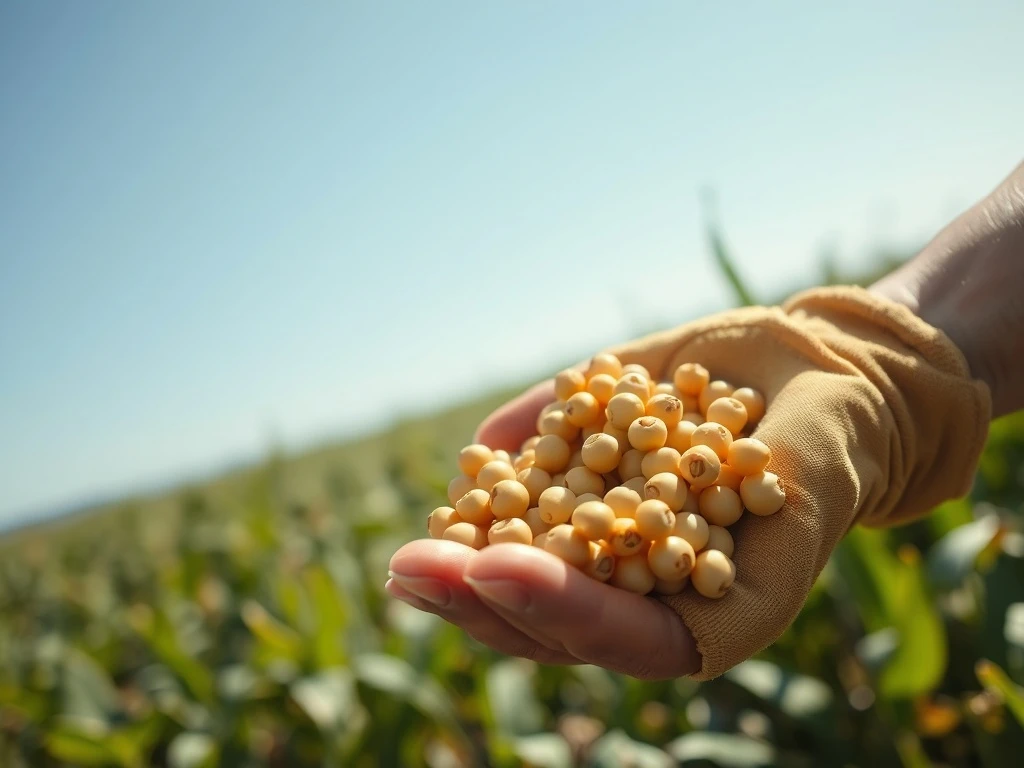
CHICAGO, March 9, 2026 — Soybean futures continued their upward momentum into Friday’s trading session, posting substantial midday gains as supportive export data and a surging energy complex provided a bullish tailwind. Front-month contracts traded 18 to 20 cents higher by midday, with the national average cash price climbing 18 3/4 cents to $11.24 1/4. The sustained soybeans rally reflects a complex interplay of global supply dynamics and macroeconomic factors, placing the agricultural commodity squarely in focus for traders and analysts monitoring the March 9, 2026, markets.
Soybean Futures Gain on Export and Spillover Support
The rally in soybean futures found concrete support in the latest U.S. Department of Agriculture (USDA) Export Sales report. According to the data, export commitments for the current marketing year reached 36.034 million metric tons (MMT). This figure represents 84% of the USDA’s full-year export estimate. However, market participants noted this pace lags behind the five-year average of 92% for this point in the season. Simultaneously, the physical shipment pace of 26.154 MMT, or 61% of the USDA forecast, also trails the average of 78%. Despite these relative shortfalls, the absolute volume of business provided enough fundamental support to sustain buying interest. Furthermore, the entire oilseed complex benefited from a powerful surge in the energy sector. Nearby crude oil futures skyrocketed by over $10 per barrel by midday, generating significant spillover support for vegetable oils like soy oil, which traded 45 to 60 points higher.
Deliveries against expiring futures contracts added another layer of market activity. The Chicago Board of Trade reported 50 additional deliveries against March soy meal and 71 against March bean oil overnight. This activity indicates the physical market is efficiently connecting with the futures market, a sign of healthy liquidity. The combined strength in soy products was unmistakable; soymeal futures posted gains of $7.50 to $8.50 per ton, contributing to the overall bullish sentiment for the crushed bean value.
Global Supply Dynamics from South America
While U.S. data provided support, the global picture, particularly from South America, presented a mixed bag for soybean market bulls. In Brazil, the world’s largest exporter, consultancy AgroConsult released an updated crop estimate. The firm now pegs the Brazilian soybean harvest at 183.1 MMT, a slight increase of 0.85 MMT from its previous forecast. This upward revision suggests robust production, which typically exerts downward pressure on global prices. However, strong demand is currently absorbing that supply. Brazil’s February export volumes were tallied at 7.113 MMT, a figure more than triple January’s shipments and 10.66% higher than February 2025 levels. This export surge demonstrates intense international demand, particularly from China, which helps offset the bearish pressure of a large harvest.
- Brazilian Production Strength: The 183.1 MMT estimate confirms a large, though not record-breaking, harvest is progressing.
- Record February Exports: The triple-digit monthly increase signals voracious global demand that is quickly drawing down available supplies.
- Argentinian Crop Conditions: Across the border in Argentina, the Buenos Aires Grains Exchange reported only marginal improvement. Its weekly update noted 30% of the soybean crop was rated in good-to-excellent condition, a mere 1-percentage-point gain from the prior week. This slow progress keeps a lid on production optimism from the third major global player.
Expert Analysis on Price Drivers
Market analysts point to the confluence of factors driving the rally. “The market is being pulled in two directions,” explained a senior grains analyst from a major financial institution, who spoke on the condition of anonymity per company policy. “The sheer weight of the Brazilian crop is a known, bearish factor that has been in the market for months. What’s providing the lift now is the combination of resilient demand, evidenced by those Brazilian export numbers, and the explosive move in crude oil. When crude rallies this sharply, it pulls all biofuel feedstocks, including soy oil, higher with it.” This view is supported by public data from the USDA’s Foreign Agricultural Service and the Brazilian Ministry of Industry, Foreign Trade and Services, which track export commitments and shipments.
Comparing Key Soybean Contract Prices
The rally was broad-based across the futures curve, indicating confidence in near-term fundamentals. The following table shows the price action for key soybean futures contracts as of midday on March 9, 2026, illustrating the uniform strength.
| Contract | Price | Net Change |
|---|---|---|
| Mar 26 Soybeans | $11.82 | +18 1/4 cents |
| May 26 Soybeans | $11.98 1/4 | +19 cents |
| Jul 26 Soybeans | $12.10 3/4 | +18 1/4 cents |
| National Cash Average | $11.24 1/4 | +18 3/4 cents |
The steady gains along the curve, from the nearby March contract out to July, suggest traders are pricing in sustained tightness rather than a fleeting, one-day event. This structure often encourages commercial hedgers to secure inventory, further supporting cash market strength. Historically, a strong cash basis during late winter can signal tighter old-crop supplies ahead of the South American harvest fully hitting global ports.
Forward Outlook and Market Catalysts
The immediate focus for traders will shift to the upcoming USDA World Agricultural Supply and Demand Estimates (WASDE) report. This monthly report, a cornerstone of agricultural market analysis, could adjust U.S. ending stocks or global production estimates, providing the next major catalyst for the soybeans rally. Additionally, weekly export sales data will be scrutinized for any acceleration in the U.S. sales pace. Weather patterns in Argentina over the next fortnight will be critical; any further deterioration could trim production estimates from the Buenos Aires Grains Exchange, removing a source of potential global supply. Finally, the trajectory of crude oil prices remains a wildcard. A sustained rally in energy markets would continue to provide indirect support for the entire oilseed complex through the soy oil channel.
Trader Sentiment and Positioning
On the trading floors, sentiment has cautiously turned more bullish. After weeks of focusing on the impending Brazilian harvest, the market is now reacting to the tangible evidence of demand and external energy support. The Commitment of Traders reports from the Commodity Futures Trading Commission (CFTC) in the coming weeks will reveal whether managed money funds are rebuilding long positions in soybean futures after a period of liquidation. Early anecdotal evidence from floor brokers suggests some speculative buying entered the market on Friday, attracted by the breakout above key technical resistance levels and the powerful move in crude.
Conclusion
The soybeans rally extending into Friday, March 9, 2026, is underpinned by a firm foundation of strong physical exports, supportive product markets, and a surging energy sector. While a massive Brazilian harvest looms, current demand is proving sufficient to absorb the supply and push prices higher. The market’s next major test will be the USDA’s March WASDE report, which will provide an updated official balance sheet. For now, the momentum is bullish, with traders watching export paces, Argentine weather, and crude oil futures for clues on whether this rally marks a sustained reversal or a temporary rebound. The convergence of these factors makes the soybean market a critical barometer for global agricultural and energy economic health.
Frequently Asked Questions
Q1: Why are soybean prices rallying on March 9, 2026?
Soybean futures are rallying due to a combination of strong export data from Brazil, supportive gains in soymeal and soyoil markets, and significant spillover buying from a sharp rally in crude oil futures, which boosts biofuel feedstock values.
Q2: What was the Brazilian soybean crop estimate from AgroConsult?
Consultancy AgroConsult estimated the 2026 Brazilian soybean crop at 183.1 million metric tons (MMT), a slight increase of 0.85 MMT from its previous forecast, indicating a large but stable production outlook.
Q3: How does the U.S. soybean export pace compare to historical averages?
Current U.S. export commitments are at 84% of the USDA’s forecast, behind the 92% average pace for this time of year. Shipments are at 61% of the forecast, lagging the 78% average pace, indicating room for improvement.
Q4: What is the significance of crude oil prices for soybeans?
Soybeans are processed into soy oil, a key feedstock for biodiesel. When crude oil prices rise sharply, as they did on March 9 (up over $10), it makes biofuels more economically attractive, increasing demand for soy oil and pulling the entire soybean complex higher.
Q5: What are the key price levels for soybean futures as of midday?
Key prices include March 2026 futures at $11.82 (up 18.25 cents), May 2026 at $11.98 1/4 (up 19 cents), and the national average cash price at $11.24 1/4 (up 18.75 cents).
Q6: How does this rally affect farmers and end-users?
For farmers with unsold old-crop inventory, the rally provides improved pricing opportunities. For end-users like livestock feeders and food processors, rising soymeal and soyoil prices increase input costs, potentially squeezing margins.