
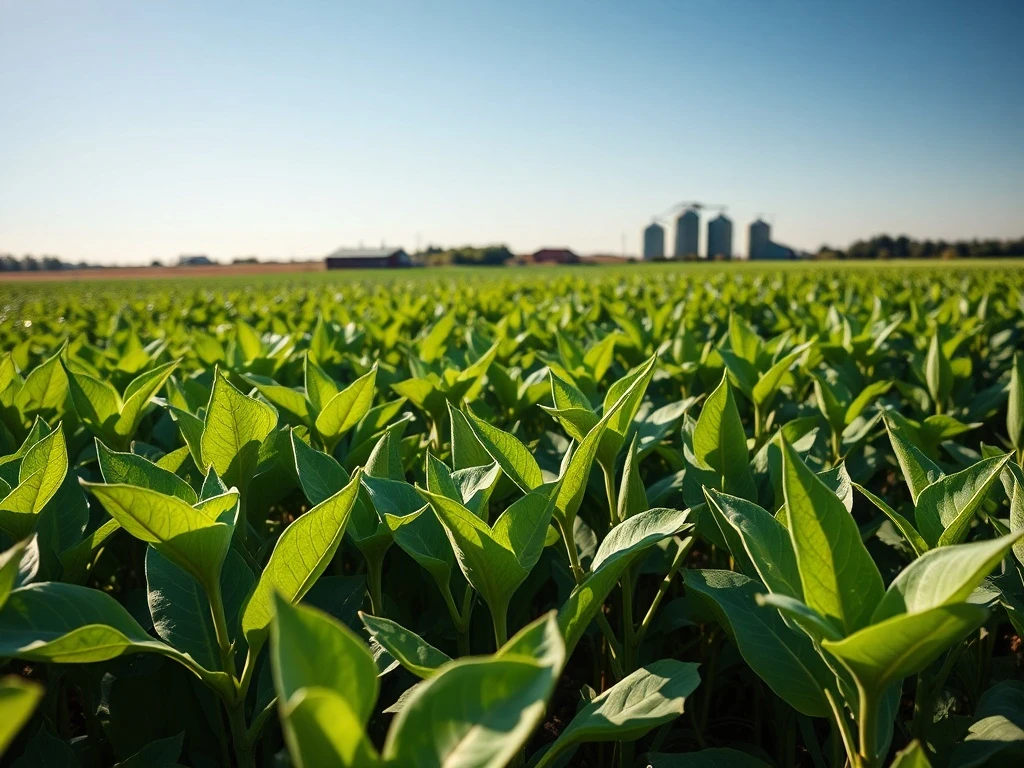
CHICAGO, July 3, 2024 — Soybean futures rallied significantly during Wednesday’s trading session, with contracts gaining 8 to 15 cents as markets reacted to fresh export data and escalating global trade tensions. The price movement occurred during the last full trading day before the July 4th holiday, with the Chicago Board of Trade reporting active trading across all soybean contracts. July 2024 soybeans settled at $11.79 ¾, up 14 ¾ cents, while November 2024 contracts reached $11.23 ½, up 10 ½ cents. This soybeans rallying Wednesday development follows a morning announcement from the USDA regarding substantial export sales and comes amid growing concerns about Indonesia’s threatened tariffs on Chinese goods, which could reshape global vegetable oil markets.
Soybean Futures Gain on Strong Export Data and Market Fundamentals
The USDA reported a private export sale of 110,100 metric tons of soybeans to unknown destinations Wednesday morning, providing immediate support to prices. Significantly, the sale split evenly between old crop (55,100 MT) and new crop (55,000 MT) shipments, indicating sustained demand across marketing years. Market analysts now anticipate Friday’s Export Sales report to show 200,000 to 600,000 MT for 2023/24 sales, with new crop expectations ranging between 50,000 and 150,000 MT. Alan Brugler of Barchart, who authored the original market analysis, noted the absence of deliveries against July soy meal and soybean futures overnight contributed to the bullish sentiment. Meanwhile, soy oil contracts saw particularly strong gains, rising 79 to 159 points on the day.
Market technicians observed that the rally extended across the entire soybean complex. Soymeal gained 40 cents per ton in front months, while the re-issuance of 121 stopped soy oil contracts indicated robust trading activity. The technical picture strengthened as prices held above key support levels, with the oldest soybean long position now dated June 7. Trading patterns suggest commercial buyers entered the market ahead of the holiday weekend, anticipating potential supply disruptions or further positive news. Consequently, the price action reflects both immediate fundamental support and broader technical considerations.
Global Trade Tensions Reshape Vegetable Oil Market Dynamics
Beyond immediate USDA data, the soybean futures rally connects directly to escalating trade tensions between Indonesia and China. Indonesia has threatened to impose 200% tariffs on Chinese consumer goods, potentially triggering retaliatory measures from Beijing. Since Indonesia is the world’s largest palm oil exporter and China a major buyer, this confrontation carries significant implications for global vegetable oil markets. Some analysts interpret the situation as bullish for bean oil, either as a substitute vegetable oil or through reduced used cooking oil imports from palm oil sources. However, bearish perspectives suggest displaced Indonesian palm oil could flood other markets, pressuring alternative oils worldwide.
- Substitution Effect: Chinese buyers may seek soybean oil and other alternatives if palm oil imports become economically unattractive due to tariffs or political tensions.
- Market Displacement: Indonesian palm oil unable to enter China could redirect to other regions, increasing competition for soybean oil in markets like India and Europe.
- Price Volatility: The uncertainty creates potential for increased volatility across the entire vegetable oil complex, affecting food manufacturers and biodiesel producers globally.
Export Performance and Market Analysis from USDA Figures
The USDA’s May export statistics provide crucial context for Wednesday’s price movement. Soybean exports totaled 1.41 million metric tons (51.8 million bushels) during the month, representing a 20.38% decrease from April but a substantial 42.94% increase from May 2023. Year-to-date figures show 1.532 billion bushels reported for the marketing year so far. Soybean meal shipments presented a mixed picture at 1.01 MMT, marking a 19.63% monthly decline and a 6.5% year-over-year decrease. Conversely, bean oil exports surged to 42,508 MT—the highest level in 22 months—highlighting shifting demand patterns within the soybean complex. These figures come from the USDA’s official Foreign Agricultural Service reports, which commodity traders consider authoritative benchmarks.
Historical Context and Seasonal Patterns in Soybean Markets
Wednesday’s rally fits within established seasonal patterns for soybean markets. July typically brings weather uncertainties and export activity that influence prices. Comparing current levels to historical averages reveals meaningful context. The November contract trading above $11.20 represents a recovery from spring lows but remains below the peaks seen during the 2022 supply chain disruptions. Meanwhile, the soybean-to-corn price ratio, a key metric watched by farmers making planting decisions, has moved in favor of soybeans recently. This could influence 2025 planting intentions if the trend persists through the summer.
| Contract | July 3 Price | Change | Year-Ago Level |
|---|---|---|---|
| Jul 24 Soybeans | $11.79 ¾ | +14 ¾¢ | $13.42 ½ |
| Nov 24 Soybeans | $11.23 ½ | +10 ½¢ | $12.89 ¼ |
| Nearby Cash | $11.23 ¾ | +10 ¼¢ | $12.76 |
Market Outlook and Factors to Watch Through July
Traders will monitor several key developments following the holiday weekend. Friday’s abbreviated trading session opens at 8:30 am CDT and will feature the weekly Export Sales report, providing fresh demand data. Weather forecasts for the Midwest growing region will gain importance as soybeans enter critical pod-filling stages in July. Additionally, the Indonesia-China trade situation requires close observation, as official tariff announcements could trigger immediate market reactions. The Commodity Futures Trading Commission’s weekly Commitments of Traders report, delayed until Monday due to the holiday, will reveal whether managed money positions align with the recent price strength. Finally, Brazilian export pace and currency movements may influence U.S. soybean competitiveness in global markets.
Industry Reactions and Agricultural Community Response
Agricultural economists expressed cautious optimism about the price movement. Dr. Scott Irwin of the University of Illinois, a leading agricultural markets expert, noted that “soybean markets are responding to genuine demand signals amid complex global trade flows.” The American Soybean Association highlighted the importance of export markets for producer profitability. Meanwhile, grain merchandisers reported increased farmer selling at these price levels, particularly for old-crop inventory. Elevator operators in Iowa and Illinois described moderate delivery activity as producers capitalized on the rally. Food manufacturers, particularly those using soybean oil, expressed concern about potential cost pressures if the vegetable oil complex maintains its upward trajectory.
Conclusion
The soybeans rallying Wednesday represents a convergence of supportive factors: strong export data, technical buying, and global trade developments affecting vegetable oil markets. While the immediate catalyst was the USDA’s reported 110,100 MT sale, broader considerations about Indonesia-China tensions and seasonal patterns contributed to the upward move. Markets now face a shortened trading week with Friday’s Export Sales report providing the next fundamental test. The soybean complex’s performance suggests traders are pricing in sustained demand despite global economic uncertainties. As the 2024 crop develops under summer skies, these market movements remind participants that soybeans remain deeply connected to both agricultural fundamentals and international trade dynamics.
Frequently Asked Questions
Q1: Why did soybean prices rally on Wednesday, July 3, 2024?
Soybean futures gained 8-15 cents primarily due to a USDA-reported export sale of 110,100 metric tons to unknown destinations and concerns about Indonesia-China trade tensions affecting global vegetable oil markets. Technical factors and positioning ahead of the July 4th holiday also contributed.
Q2: How do Indonesia’s threatened tariffs on China affect soybean markets?
Indonesia’s proposed 200% tariffs on Chinese goods could trigger Chinese retaliation affecting palm oil imports. This may increase demand for substitute oils like soybean oil or displace palm oil to other markets, creating uncertainty in vegetable oil pricing globally.
Q3: What should traders watch after the July 4th holiday?
Key factors include Friday’s Export Sales report, Midwest weather forecasts during critical growth stages, developments in Indonesia-China trade relations, and the delayed CFTC Commitments of Traders report on Monday.
Q4: How do current soybean prices compare to historical levels?
While Wednesday’s rally brought November soybeans to $11.23 ½, this remains below year-ago levels of $12.89 ¼. Current prices reflect improved demand but continued pressure from large global supplies and competitive South American exports.
Q5: What was notable about soybean export performance in May?
May soybean exports totaled 1.41 MMT, down 20.38% from April but up 42.94% from May 2023. Bean oil exports reached 42,508 MT—the highest in 22 months—while soybean meal shipments declined both monthly and yearly.
Q6: How might this rally affect farmers’ decisions?
The improved prices, particularly the soybean-to-corn ratio, could influence storage decisions for existing crops and potentially affect 2025 planting intentions if the strength persists through the summer growing season.



