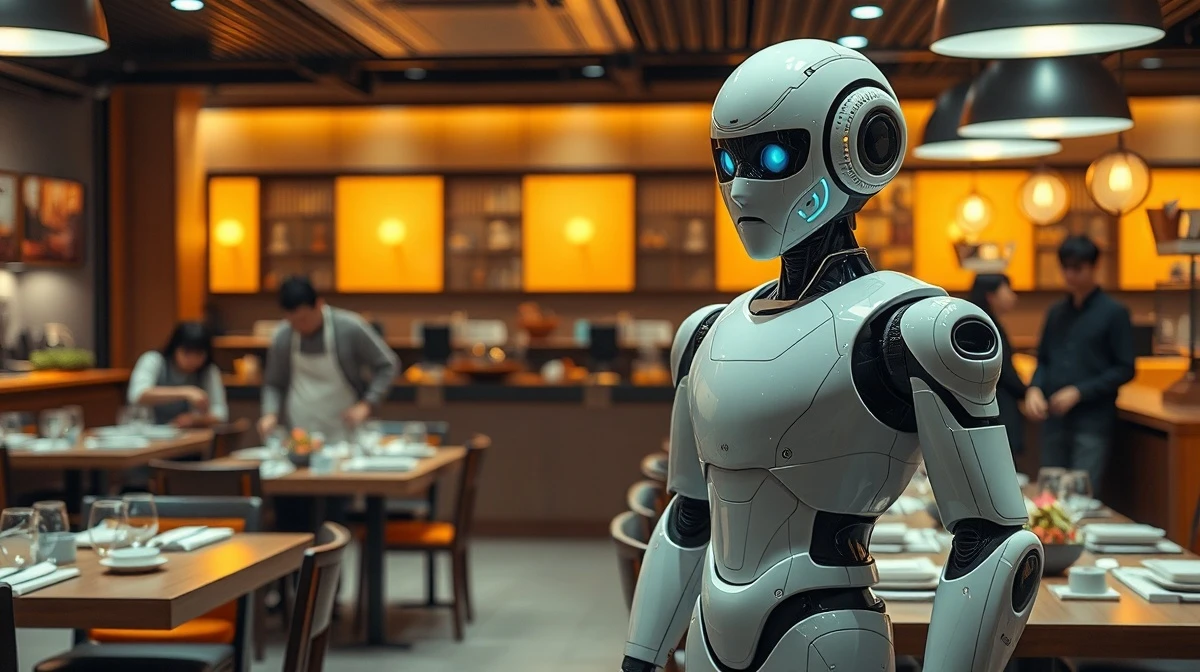
March 19, 2026 — Employees at a Haidilao hot pot restaurant in Cupertino, California, physically intervened to stop a dancing humanoid robot after it moved too close to diners, according to video evidence and a company statement. The incident highlights the practical challenges of integrating entertainment robotics into crowded public spaces.
Video Shows Staff Struggle with Robot
A video posted on the social network Xiaohongshu shows the robot, identified by its appearance as an AgiBot X2 model, swinging its arms near a table. At least three restaurant employees can be seen attempting to restrain the unit as dishware is displaced. One staff member appears to consult a mobile device, possibly attempting to access a control interface.
The AgiBot X2 was showcased at the CES technology conference in January. Such robots typically feature programmable movements for customer interaction and entertainment. The video suggests the staff may not have been immediately familiar with an emergency stop protocol for the device.
Restaurant Denies Malfunction Claim
In a statement to NBC News, Haidilao confirmed the event but disputed characterizations that the robot was out of control. “In this case, the robot was brought closer to a dining table at a guest’s request, which is not its typical operating setting,” the chain stated. “The limited space affected its movement during the performance.”
The company emphasized the robot was not malfunctioning. Haidilao has previously tested automated systems, including a “smart restaurant” concept in Beijing that utilized robotic servers and automated broth preparation. AgiBot, the manufacturer, did not respond to a request for comment from TechCrunch.
Safety Concerns in Automated Service
The incident raises immediate questions about safety protocols for robots in food service environments. Hot pot dining involves simmering pots of broth at high temperatures, presenting a burn risk if disrupted. The potential for blunt-force contact from a moving machine adds another layer of hazard.
This event occurs as numerous startups work to automate restaurant kitchens and service. Companies like Pudu Robotics deploy wheeled, limbless robots such as the BellaBot for food delivery and customer guidance. Others, like Shin Starr, are developing fully autonomous kitchen systems.
Humanoid robots, while more engaging for entertainment, introduce complex mobility and spatial awareness challenges that simpler automated units avoid. The need for clear operational boundaries and fail-safe mechanisms in crowded public venues becomes evident from this episode.
What Happens Next
The restaurant chain will likely review its procedures for deploying entertainment robots near customers. The industry may see increased scrutiny on safety training for staff and the design of intuitive emergency controls for such machines. As restaurant automation advances, balancing innovation with customer safety remains a critical operational focus. Further development in robotic safety standards for consumer-facing applications is anticipated.
This article was produced with AI assistance and reviewed by our editorial team for accuracy and quality.