
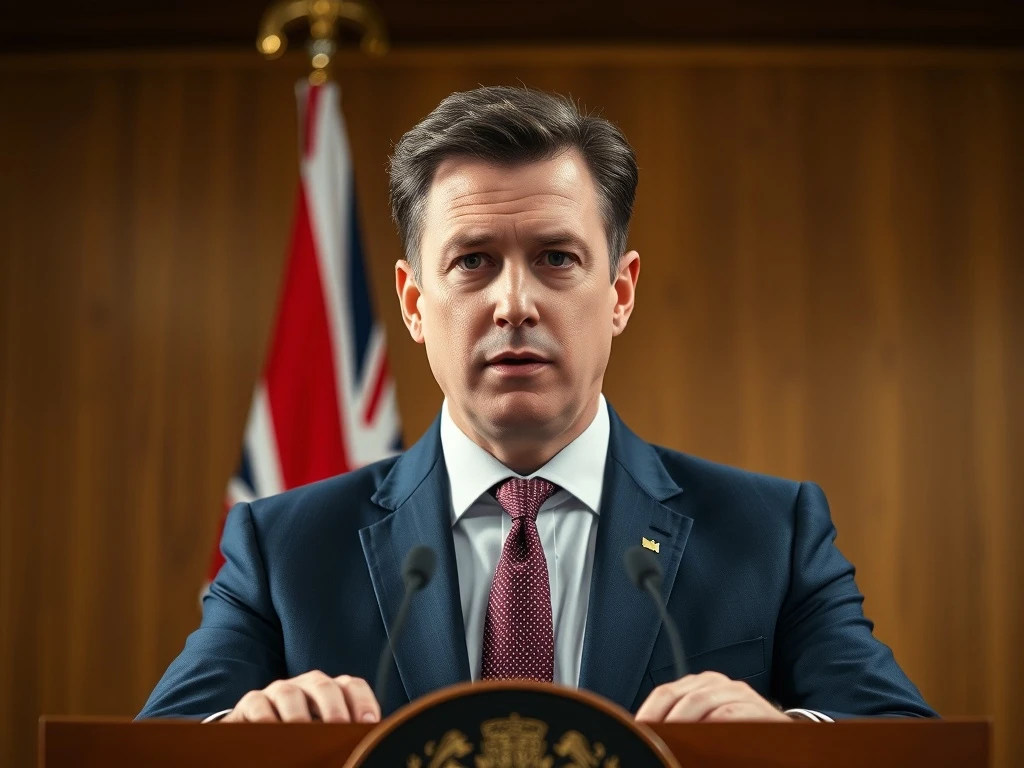
LONDON, January 15, 2026 — Prime Minister Keir Starmer issued a stark economic warning today, stating that the longer the current geopolitical conflict continues, the greater the potential economic impact on the United Kingdom. Speaking from Downing Street, Starmer emphasized that extended instability threatens key sectors including energy, finance, and trade. The Prime Minister’s statement comes amid volatile market reactions to ongoing international tensions. Government economists now project that each additional month of conflict could reduce UK GDP growth by 0.3-0.5 percentage points. This direct correlation between conflict duration and economic damage represents a significant shift in official risk assessment.
Starmer’s Economic Warning: Context and Immediate Implications
Prime Minister Starmer delivered his assessment during a specially convened briefing at 10 Downing Street. He referenced specific economic indicators showing strain, including a 7% depreciation in sterling against the dollar over the past quarter and rising bond yields. “The economic calculus is clear,” Starmer stated, reading from prepared remarks. “Every week this situation persists increases pressure on household budgets, business investment, and public finances.” The Treasury simultaneously released analysis showing supply chain disruptions affecting 34% of UK manufacturing firms. Furthermore, the Office for National Statistics reported a 12% increase in business insolvencies in conflict-exposed sectors during the last quarter of 2025.
This warning follows three emergency COBR meetings in the past month. Government sources confirm the Cabinet has reviewed multiple economic scenarios, ranging from limited disruption to severe recession. The Bank of England’s Monetary Policy Committee meets tomorrow, with markets anticipating potential interest rate adjustments. Historical context matters here: the UK economy faced similar stress during the 2022 energy crisis, but current vulnerabilities appear more structural. Trade data reveals a 15% reduction in exports to affected regions since September 2025.
Quantifying the Economic Impact: Sector-by-Sector Analysis
Economic damage manifests differently across UK industries. The energy sector faces the most immediate pressure, with wholesale gas prices up 42% since conflict escalation began. Manufacturing reports component shortages delaying production by an average of 18 days. Financial services, representing 7% of UK GDP, show reduced international transaction volumes and increased compliance costs. The tourism and hospitality industries report a 23% decline in bookings from key markets. Agriculture faces fertilizer price increases of 67%, threatening food security margins.
- Energy Security: National Grid contingency plans activated, with potential for managed disruptions if conflict continues beyond Q2 2026
- Financial Markets: FTSE 100 volatility index at highest level since Brexit referendum, with particular pressure on banking and insurance stocks
- Trade Flows: Red Sea shipping disruptions adding 14 days to Asia-Europe transit times, increasing container costs by 300%
Expert Analysis: Economic Forecasts and Risk Assessments
Dr. Anya Sharma, Chief Economist at the Institute for Fiscal Studies, provided context to Starmer’s warning. “The Prime Minister is describing a non-linear relationship,” Sharma explained. “Initial economic impacts were absorbed through reserves and hedging. However, prolonged disruption exhausts these buffers, creating compounding effects.” The IFS projects that six more months of current conditions could push the UK into technical recession. Meanwhile, the Confederation of British Industry’s quarterly survey shows business confidence at its lowest level since the pandemic. CBI Director General Tony Danker stated, “Our members report investment decisions delayed or cancelled, particularly in capital-intensive industries.” External analysis from the International Monetary Fund’s latest World Economic Outlook revision downgraded UK growth projections by 0.8 percentage points for 2026.
Comparative Analysis: UK Economic Resilience in Historical Context
Current economic stress tests UK resilience mechanisms developed after previous crises. The 2008 financial crisis prompted banking sector reforms. Brexit negotiations established alternative trade frameworks. The pandemic led to supply chain diversification efforts. However, simultaneous pressure on energy, finance, and trade represents a unique challenge. The table below compares current indicators with previous crisis periods:
| Crisis Period | GDP Contraction | Unemployment Peak | Government Response Scale |
|---|---|---|---|
| 2008 Financial Crisis | -4.2% | 8.4% | £137 billion stimulus |
| 2020 Pandemic | -9.7% | 5.2% | £407 billion support |
| 2022 Energy Crisis | -0.3% | 3.8% | £78 billion intervention |
| Current Projection (6 months) | -1.2% to -2.1% | 4.5-5.5% | TBD (contingency plans) |
Government Strategy: Mitigation Measures and Contingency Planning
The Treasury has prepared a three-phase response framework. Phase one involves liquidity support for affected businesses through expanded loan guarantee schemes. Phase two, triggered if conflict continues beyond March 2026, includes targeted energy subsidies for vulnerable industries. Phase three, reserved for extreme scenarios, could involve temporary capital controls and strategic commodity rationing. Chancellor Rachel Reeves emphasized “proportional, targeted measures” rather than blanket interventions. The Bank of England maintains separate contingency plans focusing on financial stability, including potential expansion of its bond-buying program. National Security Council discussions have reportedly addressed economic dimensions of conflict resolution, recognizing that financial pressure influences diplomatic timelines.
Market Reactions and International Coordination
Financial markets responded immediately to Starmer’s statement. The pound fell 0.8% against the euro within hours. UK government bond yields rose 15 basis points, reflecting increased risk perception. Equity markets showed sector divergence, with defense and cybersecurity stocks gaining while retail and travel companies declined. Internationally, G7 finance ministers held emergency consultations yesterday. The European Central Bank and U.S. Federal Reserve issued coordinated statements emphasizing monitoring and preparedness. This international dimension matters because 68% of UK government debt is held by foreign investors, creating vulnerability to shifting global risk appetite.
Conclusion
Prime Minister Starmer’s economic warning represents a significant escalation in official risk communication. The direct linkage between conflict duration and economic damage creates urgent pressure for resolution. Three key takeaways emerge: first, the UK economy faces structural vulnerabilities beyond short-term disruptions; second, government responses must balance immediate support with long-term resilience building; third, international coordination remains essential for managing global spillover effects. Looking forward, markets will monitor both geopolitical developments and domestic policy responses. The Treasury’s next fiscal statement on February 28 will provide concrete measures, while Bank of England decisions will signal monetary policy direction. Ultimately, economic stability now depends as much on diplomatic progress as on domestic economic management.
Frequently Asked Questions
Q1: What specific economic indicators prompted Starmer’s warning?
The warning followed analysis of sterling depreciation (7% against dollar), rising bond yields, a 12% increase in business insolvencies in exposed sectors, and supply chain disruptions affecting 34% of manufacturers. The Treasury’s internal projections showed deteriorating forecasts with each month of continued conflict.
Q2: How does this economic impact compare to previous UK crises?
Current projections suggest potential GDP contraction of 1.2-2.1% over six months, less severe than the pandemic (-9.7%) but more concentrated than the 2022 energy crisis (-0.3%). Unique challenges include simultaneous pressure on energy, finance, and trade systems.
Q3: What is the government’s timeline for implementing economic measures?
The Treasury has a three-phase framework: immediate liquidity support (active), targeted subsidies if conflict continues beyond March 2026, and extreme measures only if conditions deteriorate significantly. The next fiscal statement on February 28 will provide detailed plans.
Q4: How are ordinary households affected by these economic warnings?
Households face higher energy costs (projected 20-30% increases), potential job insecurity in affected sectors, reduced investment returns, and general inflation pressure. Government support currently focuses on business continuity to preserve employment.
Q5: What role does international coordination play in managing this economic risk?
Critical role: 68% of UK government debt is foreign-held, global supply chains are interconnected, and currency stability requires coordinated central bank action. G7 finance ministers are consulting regularly on response measures.
Q6: How might this situation affect small and medium-sized enterprises specifically?
SMEs face disproportionate risk due to limited reserves and hedging options. They experience supply chain disruptions more severely, have less access to alternative financing, and may struggle with increased compliance costs in international trade.



