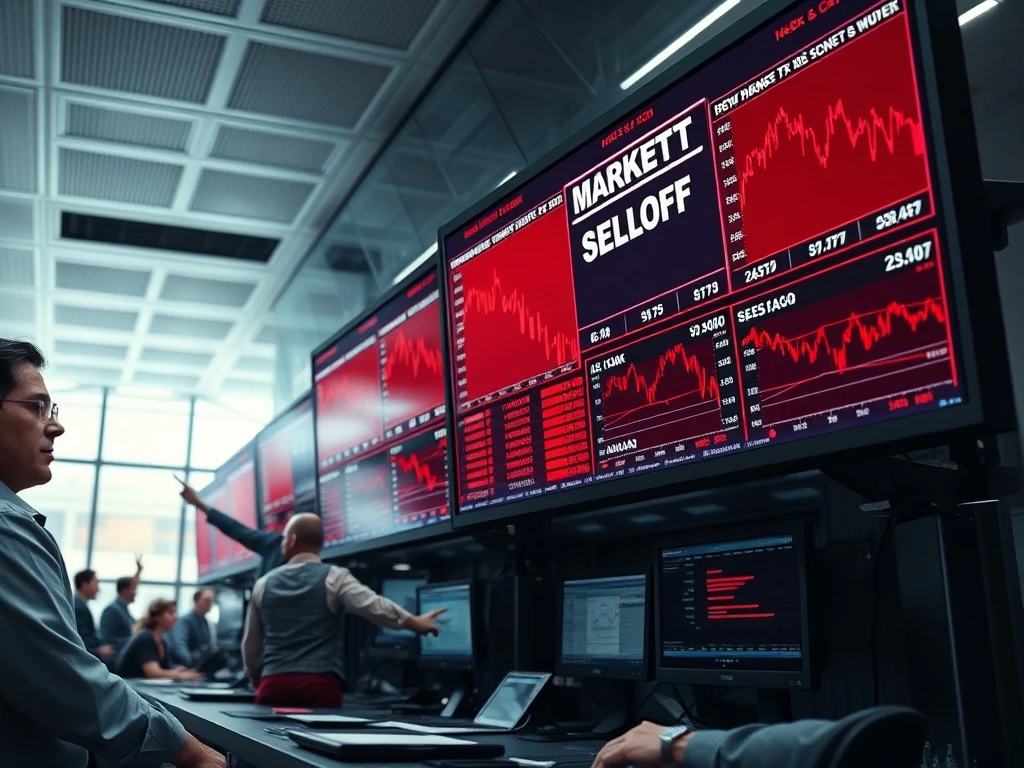
NEW YORK, March 9, 2026 — U.S. stock markets closed sharply lower Friday, recording their worst single-day decline in months as a dual shock of escalating Middle East conflict and a surprisingly weak domestic jobs report rattled investor confidence. The S&P 500 Index ($SPX) plummeted 1.33%, the Dow Jones Industrial Average ($DOWI) fell 0.95% to a 3.5-month low, and the technology-heavy Nasdaq 100 Index ($IUXX) tumbled 1.51%. The selloff, which accelerated throughout the trading session, was driven by a 12% surge in crude oil prices and a report showing U.S. employers cut 92,000 jobs in February, contradicting expectations of growth and raising alarms about economic resilience.
Geopolitical Crisis Fuels Inflation Fears
The primary catalyst for Friday’s market turmoil was a significant escalation in the week-long Middle East conflict, directly threatening global energy supplies. Iran launched a barrage of missiles and drones targeting Gulf states overnight, while U.S. and Israeli airstrikes continued. Crucially, the strategic Strait of Hormuz—a chokepoint for roughly 20% of the world’s seaborne oil—remained closed, halting exports from the Persian Gulf. An Iranian drone attack also forced Qatar to shutter its Ras Laffan plant, the world’s largest liquefied natural gas export facility, removing 20% of global LNG supply from the market.
Consequently, West Texas Intermediate (WTI) crude oil futures (CLJ26) skyrocketed more than 12% to settle at a 2.5-year high. Goldman Sachs analysts estimated the real-time risk premium for crude at $18 per barrel, reflecting the potential impact of a prolonged Strait of Hormuz closure. “The war could bring down the economies of the world,” Qatar’s energy minister warned in an interview with the Financial Times, predicting a shutdown of all Gulf energy production within weeks if hostilities continue, potentially pushing oil to $150 a barrel.
Unexpected Weakness in the US Labor Market
Compounding the geopolitical anxiety was a starkly negative U.S. February jobs report from the Bureau of Labor Statistics. Instead of the expected gain of 55,000 positions, employers shed 92,000 jobs, marking the largest decline in four months. The unemployment rate ticked up to 4.4%, while average hourly earnings rose slightly faster than forecast. This combination—fewer jobs but persistent wage growth—presented a complex challenge for the Federal Reserve, signaling potential economic softness alongside lingering inflationary pressures.
- Market Confidence Shock: The data directly contradicted prevailing narratives of labor market stability, triggering a reassessment of U.S. economic strength.
- Federal Policy Dilemma: The weak jobs number bolstered arguments for interest rate cuts, but soaring energy costs and steady wage growth argued for continued caution.
- Consumer Spending Concerns: A separate report showed U.S. retail sales dipped in January, hinting that the consumer engine might be losing steam.
Federal Reserve Officials Urge Caution
In speeches and comments, Fed officials acknowledged the crosscurrents but emphasized a patient approach. Fed Governor Christopher Waller sought to calm inflation fears, stating, “The Iran war is unlikely to cause sustained inflation. That’s one reason the Fed doesn’t look at energy prices but looks at core prices, excluding energy, as core is a better predictor of future inflation.” Meanwhile, Boston Fed President Susan Collins highlighted ongoing risks, saying, “My baseline features a still-uncertain inflation picture, with continued upside risks.” Market pricing, as of Friday’s close, reflected this caution, discounting only a 5% chance of a rate cut at the Fed’s upcoming March 17-18 meeting.
Sector-by-Sector Carnage and Isolated Gains
The selloff was broad-based but particularly severe in sectors most exposed to the day’s twin shocks. The so-called Magnificent Seven technology stocks, including Meta Platforms (META), Tesla (TSLA), and Nvidia (NVDA), fell more than 2%, dragging down major indexes. Airline stocks were hammered as jet fuel costs surged, with American Airlines (AAL) and Southwest (LUV) dropping over 5%. Semiconductor and AI-infrastructure stocks also saw steep declines.
Only a few sectors found favor. Defense stocks like Lockheed Martin (LMT) and Northrop Grumman (NOC) rose more than 2% on speculation of increased military spending. Fertilizer producers such as CF Industries (CF) gained on fears that Middle East conflict could disrupt global nutrient supplies. A notable outlier was Marvell Technology (MRVL), which surged over 18% after providing strong forward revenue guidance.
| Index/Asset | Friday Change | Key Driver |
|---|---|---|
| S&P 500 (SPY) | -1.33% | Oil prices, Jobs data |
| Nasdaq 100 (QQQ) | -1.51% | Tech selloff, Higher rates |
| WTI Crude Oil | +12%+ | Strait of Hormuz closure |
| 10-Year Treasury Yield | 4.131% (-0.5 bp) | Safe-haven demand |
Global Ripples and the Path Forward
The shockwaves extended beyond U.S. borders. The Euro Stoxx 50 fell 1.09% to a three-month low, while European natural gas prices hit a three-year high. The immediate path for markets appears inextricably linked to geopolitical developments in the Middle East. Analysts will watch for any diplomatic opening or military de-escalation that could reopen the Strait of Hormuz. Domestically, the focus shifts to whether February’s jobs report was an anomaly or the start of a troubling trend, with the next Fed meeting poised to provide critical guidance.
Earnings Season Provides a Silver Lining
Amid the turmoil, corporate earnings offered a note of resilience. With over 95% of S&P 500 companies having reported for Q4 2025, the season has been strong. According to Bloomberg Intelligence, 74% of companies beat expectations, with overall earnings growth projected at 8.4%—the tenth consecutive quarter of year-over-year growth. This fundamental strength may provide a floor for equities if the geopolitical and economic clouds begin to clear.
Conclusion
The March 9, 2026, market plunge underscores the fragile balance between geopolitical risk and economic data. The closure of the Strait of Hormuz triggered a classic supply shock, reviving inflation fears just as a weak jobs report introduced new doubts about economic momentum. While Federal Reserve officials signal a steady hand, the market’s violent reaction highlights the absence of a clear near-term catalyst for stability. Investors must now navigate a landscape where oil prices and employment reports hold equal power to dictate sentiment, with the ongoing conflict serving as a persistent overhang. The coming weeks will test whether corporate earnings strength can offset these macro headwinds.
Frequently Asked Questions
Q1: Why did the stock market fall so sharply on March 9, 2026?
The market fell due to two major factors: a 12% spike in oil prices caused by the Middle East conflict closing the Strait of Hormuz, and a surprise loss of 92,000 U.S. jobs in February, which raised concerns about economic weakness.
Q2: What is the Strait of Hormuz, and why does its closure matter?
The Strait of Hormuz is a narrow sea passage between Oman and Iran. It is a critical chokepoint for global oil, with about 20% of the world’s seaborne petroleum passing through it. Its closure halts exports from major producers like Saudi Arabia and the UAE, tightening supply and driving prices higher.
Q3: How did the Federal Reserve react to the market selloff?
Fed officials, including Governor Christopher Waller, commented that the war-related energy price spike was unlikely to cause “sustained inflation.” The market interpreted this as a sign the Fed would look through the volatility, with odds of a March rate cut remaining very low at just 5%.
Q4: Which stocks were hit the hardest, and which gained?
Airlines, semiconductors, and mega-cap tech stocks fell hardest. Defense contractors (like Lockheed Martin) and fertilizer companies (like CF Industries) gained on expectations of higher military spending and supply disruptions.
Q5: Was the weak jobs report a sign of a coming recession?
One month of data does not define a trend, but the loss of 92,000 jobs—the largest decline in four months—is a significant yellow flag. It suggests the labor market may be cooling faster than anticipated, which could impact consumer spending and economic growth.
Q6: What should investors watch next?
Investors should monitor developments in the Middle East for any sign of the Strait of Hormuz reopening, the next U.S. inflation (CPI) report, and commentary from the Federal Reserve’s policy meeting on March 17-18 for clues on the interest rate path.