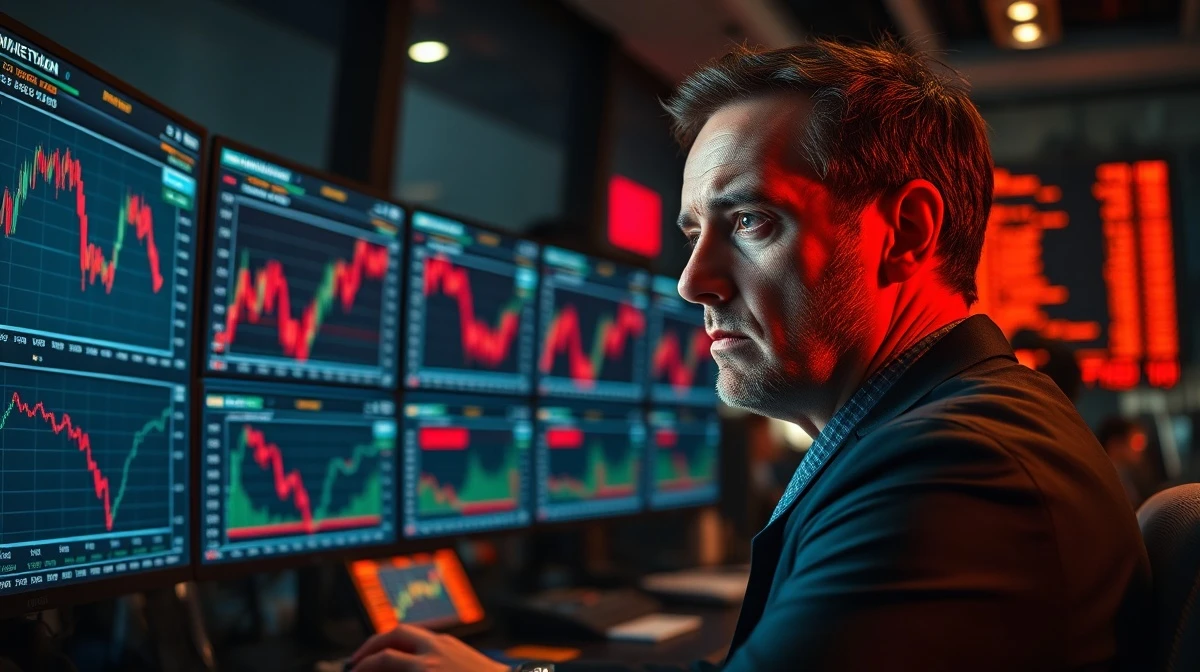
U.S. stock markets extended losses on March 19, 2026, with major indexes hitting multi-month lows. The selloff was driven by surging global bond yields and renewed inflation concerns stemming from escalating conflict in the Middle East and its impact on energy supplies.
Market Indexes Hit New Lows
The S&P 500 Index fell 0.43%, while the Dow Jones Industrial Average dropped 0.59%. The Nasdaq 100 declined 0.44%. All three major benchmarks retreated to their lowest levels in nearly four months. Futures for the S&P 500 and Nasdaq 100 also traded lower, down 0.40% and 0.41% respectively.
Global markets followed suit. The Euro Stoxx 50 fell 1.96% to a 1.5-week low. Japan’s Nikkei 225 closed down 3.38%, and China’s Shanghai Composite dropped 1.39% to a 2.5-month low.
Central Banks Signal Hawkish Stance
Bond yields climbed sharply after several major central banks warned that the Iran conflict poses significant upside risks to inflation. The 10-year German Bund yield jumped to 3.011%, its highest level in over two years. The 10-year UK Gilt yield reached 4.914%, a 14-month peak. In the U.S., the 10-year Treasury note yield rose to 4.322%, a 6.75-month high.
The European Central Bank left its deposit facility rate unchanged at 2.00% but raised its 2026 inflation forecast. It also cut its Eurozone GDP growth forecast for the year to 0.9% from 1.2%. The Bank of England maintained its bank rate at 3.75%, with Governor Andrew Bailey stating policymakers “stand ready to act” to contain any inflation surge triggered by the Middle East war.
Energy Crisis Fuels Inflation Worries
European natural gas prices surged more than 12% to a three-year high. The spike followed reports of “extensive damage” from Iranian attacks at Qatar’s Ras Laffan Industrial City, the world’s largest natural gas export plant. Reuters reported the strikes damaged 17% of the facility’s LNG export capacity, with repairs expected to take three to five years.
Crude oil prices remained volatile. West Texas Intermediate futures initially surged 3% in overnight trading before paring gains. Prices bounced higher again after a statement from Iran’s semi-official ISNA news agency said Iran’s response to attacks on its energy infrastructure “is underway and not yet complete.” Iran has threatened to target energy infrastructure in Saudi Arabia, Qatar, and the UAE in retaliation for strikes on its South Pars gas field and Asaluyeh oil facilities.
The International Energy Agency warned last week that the conflict is disrupting 7.5% of global oil supply and could cut supply by 8 million barrels per day this month. The closure of the Strait of Hormuz has choked off about one-fifth of the world’s oil and natural gas flows.
U.S. Economic Data Presents Mixed Picture
Stronger-than-expected U.S. economic reports initially pushed bond yields higher. Weekly initial unemployment claims unexpectedly fell by 8,000 to 205,000, a nine-week low. The March Philadelphia Fed business outlook survey rose to 18.1, a six-month high.
However, other data showed weakness. January new home sales fell 17.6% month-over-month to 587,000, a 3.25-year low. This weaker data helped Treasury notes recover from their worst levels of the session.
Notable Stock Movers
Major technology stocks weighed on the market. Tesla fell more than 2%, while Amazon, Nvidia, and Meta Platforms each dropped more than 1%. Mining stocks sold off sharply as precious metals prices declined. Anglogold Ashanti and Newmont Mining led S&P 500 decliners, falling more than 7% and 6% respectively.
Natural gas producers rallied on expectations of increased U.S. LNG exports following the damage in Qatar. Cheniere Energy surged more than 10%. Accenture gained over 6% after reporting better-than-expected quarterly revenue. Five Below jumped more than 10% on strong sales guidance for 2027.
Market participants are now looking ahead to the Federal Reserve’s policy meeting scheduled for late April. According to Barchart data, markets are currently discounting a 6% chance of a 25 basis point rate hike at that meeting.
This article was produced with AI assistance and reviewed by our editorial team for accuracy and quality.