
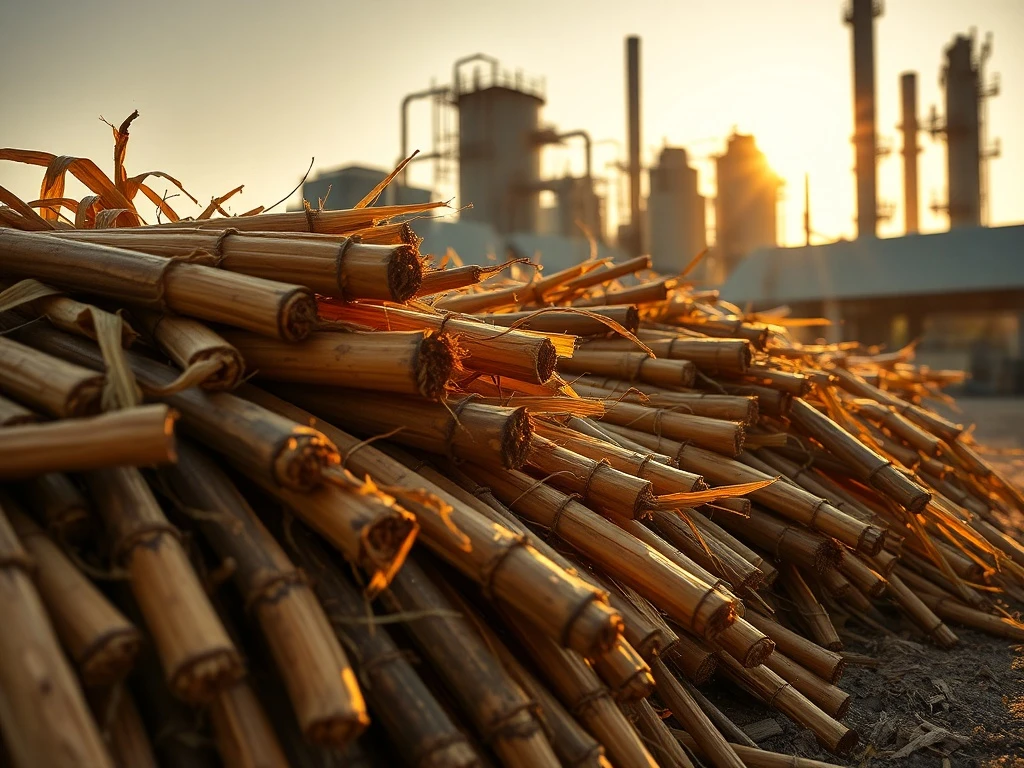
NEW YORK, March 8, 2026 — Global sugar prices surged sharply higher on Friday, closing up 2.77% for May New York world sugar futures, as a dramatic +12% spike in crude oil prices to a 2.5-year high reshaped the economic calculus for sugar mills worldwide. The immediate catalyst is clear: soaring oil lifts ethanol values, prompting mills to divert more sugarcane toward biofuel production, which in turn tightens physical sugar supplies. This price jump interrupts a prolonged bearish trend that saw sugar hit 5.25-year lows just weeks ago, highlighting the commodity’s renewed sensitivity to energy market volatility.
Sugar Prices React to Crude Oil’s Dramatic Surge
May NY world sugar #11 (SBK26) settled at +0.38 (+2.77%), while May London ICE white sugar #5 (SWK26) closed up +8.00 (+1.97%) on March 8. This rally directly correlates with West Texas Intermediate (WTI) crude oil futures (CLJ26) breaching a 2.5-year high. Analysts from Barchart note the fundamental link is ethanol. “When crude oil rallies this aggressively, ethanol becomes disproportionately profitable,” explains a veteran commodity strategist. Consequently, mills in Brazil, the world’s largest sugar producer, face a powerful incentive to allocate more of their cane crushing capacity to ethanol distilleries rather than sugar refineries. This supply diversion occurs even as global balance sheets project a surplus, creating a tense standoff between structural forecasts and acute market signals.
This price action marks a stark reversal from February 12, when sugar plunged to its lowest level since 2020. The bearish sentiment was rooted in persistent surplus projections from leading analysts. For instance, sugar trader Czarnikow forecast a global surplus of 3.4 million metric tons (MMT) for the 2026/27 crop year on February 11, following an 8.3 MMT surplus in 2025/26. Similarly, Green Pool Commodity Specialists and StoneX projected significant surpluses, reinforcing a gloomy outlook that now faces a sudden energy-market shock.
Global Sugar Surplus Forecasts Face a Volatile Reality
The theoretical surplus is colliding with on-the-ground production realities and policy decisions. Major institutions have issued varying forecasts, but all point to an oversupplied market—on paper. The International Sugar Organization (ISO) recently tempered its outlook, forecasting a +1.22 MMT surplus for 2025-26, down from a prior +1.63 MMT estimate. However, the ISO also highlighted a key driver: increased production in India, Thailand, and Pakistan. Meanwhile, the USDA’s Foreign Agricultural Service (FAS) projected record global production of 189.318 MMT in December. These bullish production forecasts now wrestle with the bearish demand implications of the oil-led ethanol shift.
- Brazilian Pivot: A +12% oil price jump can instantly change the optimal cane allocation ratio in Brazil’s Center-South region, the world’s sugar powerhouse.
- Consumer Impact: Food and beverage manufacturers face higher input costs, potentially leading to passed-on expenses for consumers if the rally sustains.
- Trader Volatility: The clash between long-term surplus data and short-term energy shocks creates extreme volatility, challenging hedge funds and physical traders.
Expert Analysis: A Market at a Crossroads
“The market is experiencing a classic short-term shock versus long-term trend conflict,” says a senior analyst at Czarnikow, referencing their recent surplus report. “The crude move is significant, but whether it can override the fundamental weight of the surplus depends on its duration.” The analyst emphasizes that Brazilian mills are highly flexible and can adjust their sucrose allocation weekly based on relative ethanol returns. Concurrently, data from Brazil’s industry group Unica showed a -36% year-on-year drop in sugar production for the latter half of January, though cumulative output remains slightly up. Consulting firm Safras & Mercado adds a longer-term perspective, predicting a -3.91% drop in Brazil’s 2026/27 sugar production, which would further tighten future supplies.
Producer Dynamics: India and Thailand Hold the Key
While Brazil reacts to ethanol, actions in Asia critically influence the global balance. The Indian Sugar and Bio-energy Manufacturers Association (ISMA) reported a 12% year-on-year increase in domestic output for the Oct-Feb period. However, ISMA also reduced its estimate for sugar diverted to ethanol, freeing up more for export. The Indian government has already approved an additional 500,000 MT for export this season. As the world’s second-largest producer, India’s export policy remains a major swing factor. In Thailand, the third-largest producer and second-largest exporter, the Sugar Millers Corp projects a +5% output increase. The table below summarizes the conflicting signals from top producers.
| Producer | 2025/26 Output Trend | Key Factor Influencing Supply |
|---|---|---|
| Brazil | Mixed (Recent dips, annual gain) | Crude oil price & ethanol parity |
| India | Up +12% (Oct-Feb) | Government export quotas & ethanol blend policy |
| Thailand | Projected +5% increase | Weather conditions and milling capacity |
What Happens Next for Sugar Markets?
The immediate trajectory hinges on the sustainability of the crude oil rally. If oil prices consolidate at elevated levels, the ethanol incentive will keep sugar supplies tighter than surplus projections suggest, supporting prices. Market participants will closely monitor weekly Brazilian cane crush and allocation data from Unica for confirmation of the shift. Furthermore, the pace of Indian exports under its new quota will test the market’s ability to absorb additional sugar without pressuring prices back down. The next ISO quarterly market report, expected in late March, will provide a crucial updated assessment of the surplus in light of these new variables.
Industry and Trader Reactions to the Spike
Physical traders report increased inquiry for nearby sugar shipments, indicating some buyers are moving to cover short-term needs amid price uncertainty. Conversely, large end-users with longer-term contracts are largely watching from the sidelines, betting the surplus will eventually cap gains. The price surge has also triggered margin calls for speculators holding short positions established during February’s downturn, potentially fueling a short-covering rally that extends gains temporarily. The overall sentiment remains cautious, recognizing this as a volatility event within a broader, still-ample supply context.
Conclusion
The March 8 surge in sugar prices underscores the commodity’s enduring and powerful link to the energy complex via the ethanol channel. While analyst forecasts for a global sugar surplus in 2026 remain largely unchanged, the dramatic crude oil price movement introduces a significant near-term disruptive force. The central question is whether the oil rally has the stamina to fundamentally alter production decisions in Brazil for a sustained period. Investors and industry stakeholders should monitor Brazilian allocation ratios, Indian export volumes, and weekly oil price action. For now, the sugar market has re-entered a phase where energy prices, not just agricultural fundamentals, dictate daily volatility.
Frequently Asked Questions
Q1: Why did sugar prices jump on March 8, 2026?
Sugar prices rose 2.77% primarily because crude oil prices surged over 12% to a 2.5-year high. Higher oil makes ethanol production more profitable, leading sugar mills, especially in Brazil, to divert sugarcane from sugar to ethanol output, reducing immediate sugar supplies.
Q2: Does this mean the global sugar surplus is gone?
No. Major institutions like the ISO and Czarnikow still project a surplus for the 2025/26 and 2026/27 crop years. The price jump is a reaction to a short-term market shock (oil) that affects production economics, not a reversal of the overall supply-and-demand balance.
Q3: How does crude oil price affect sugar production?
In key producing countries like Brazil, a significant portion of sugarcane is processed into ethanol, a biofuel that competes with gasoline. When oil prices rise, ethanol becomes more valuable, so mills allocate more cane to make ethanol instead of sugar, tightening sugar supplies.
Q4: Which country’s production decisions matter most right now?
Brazil is the most critical because it is the world’s largest producer and exporter and has the flexible infrastructure to rapidly shift cane between sugar and ethanol based on market prices. Decisions in India, regarding export quotas, are also highly influential.
Q5: What should consumers expect from this price move?
If the sugar price increase is sustained, it could eventually lead to higher costs for food and beverage companies that use sugar as an ingredient, potentially resulting in slightly higher prices for products like soft drinks, candy, and baked goods.
Q6: What are the key dates or reports to watch next?
Market participants will closely watch the next Unica report on Brazilian cane crushing and allocation, the ISO’s quarterly market report expected in late March, and ongoing data on Indian sugar exports under its newly approved quota.



