
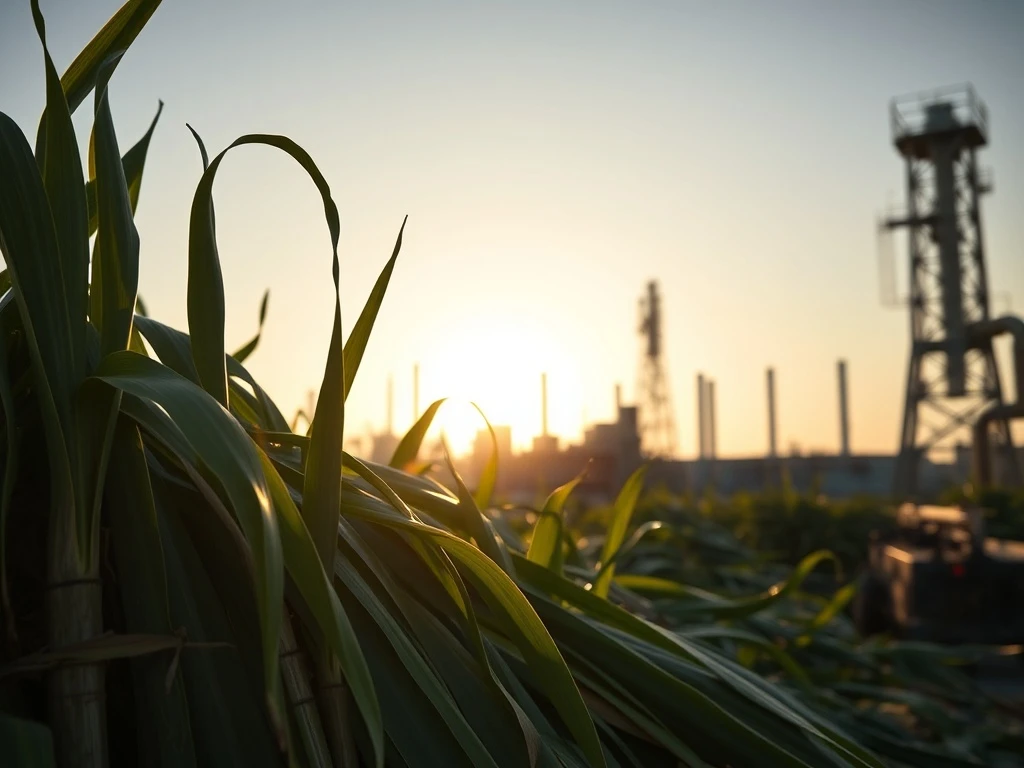
NEW YORK, March 9, 2026 — Global sugar prices rallied sharply on Monday, with key futures contracts climbing over 3% as a sudden surge in crude oil markets triggered immediate shifts in agricultural commodity calculations. The May NY world sugar #11 contract closed up +0.47 (+3.33%) while London white sugar followed suit, driven by geopolitical tensions that sent Brent crude soaring. This direct link between energy and soft commodities highlights the fragile balance in global sugar supplies, where mills constantly weigh producing sweetener against biofuel.
Sugar Prices Surge on Oil Shock and Ethanol Economics
The immediate catalyst was a significant military escalation in the Middle East. Following reports that Israel bombed approximately 30 oil depots in Iran, crude oil benchmarks experienced their most volatile single-day move in months. Consequently, this oil price spike directly benefits ethanol, a key biofuel alternative produced from sugarcane. Rich Asplund of Barchart reported the connection succinctly: higher oil prices make ethanol production more profitable, encouraging mills to divert more cane crushing toward biofuel rather than sugar. This diversion mechanism creates a swift, tangible supply constraint in the sugar market, sending prices higher. The rally marks a dramatic reversal from just weeks prior, when sugar languished near multi-year lows.
This price action underscores a fundamental reality of modern agribusiness: sugar is no longer just a food commodity. In major producing nations like Brazil, the world’s largest producer, mills operate as sophisticated bio-refineries. Their daily decisions on the crushing ratio—what percentage of cane becomes sugar versus ethanol—are dictated by real-time price signals from both the soft commodity and energy complex. Today’s events provided a textbook example of that volatility transmission.
Global Sugar Surplus Forecasts Face New Pressure
Despite today’s rally, the broader market narrative for months has centered on a looming global surplus. Multiple analysts have projected hefty oversupplies for the 2025/26 and 2026/27 crop years, which had kept a lid on prices. For instance, sugar trader Czarnikow expects a surplus of 3.4 million metric tons (MMT) next season, following an 8.3 MMT surplus this year. Similarly, Green Pool Commodity Specialists and StoneX have issued forecasts ranging from 156,000 MT to 2.9 MMT in surplus. The International Sugar Organization (ISO) recently tempered its surplus forecast to +1.22 MMT, noting increased production in India, Thailand, and Pakistan.
- Brazilian Dynamics: Recent data from industry group Unica showed a stark -36% year-on-year drop in Center-South sugar production for the latter half of January. However, cumulative output remains marginally higher. The key metric is the allocation ratio, which has shifted toward sugar this season.
- Indian Output and Export Policy: India’s sugar output is up significantly, with the ISMA reporting a 12% year-on-year increase for the Oct-Feb period. The government has already approved additional export quotas, adding 500,000 MT to earlier allowances, which could dampen global prices if realized.
- Thai Production Recovery: Thailand, a major exporter, is projected to see its sugar crop rise by 5% this season, further contributing to global availability.
Expert Analysis on Market Crosscurrents
The conflicting signals—between structural surplus forecasts and acute supply shocks—create a complex landscape for traders. “The market is grappling with two different timelines,” explains a veteran softs analyst who requested anonymity due to firm policy. “The quarterly and annual reports from ISO and USDA paint a picture of ample physical sugar. But the minute-by-minute reality of geopolitics and energy markets can override that for weeks at a time.” This analyst points to the USDA’s latest report, which projects record global sugar production of 189.3 MMT for 2025/26, as the fundamental anchor. However, the agency also forecasts a drawdown in ending stocks, suggesting underlying demand strength. The immediate price response to oil validates the market’s sensitivity to the ethanol channel, a factor explicitly modeled by institutions like the USDA’s Foreign Agricultural Service.
Historical Context and Price Volatility Comparison
Today’s event echoes previous episodes where energy and food prices became entangled. The 2021-2022 period saw similar spikes when post-pandemic demand and the Ukraine conflict roiled both markets. However, the current situation features a unique element: the sugar market was already at a technical inflection point after hitting 5.25-year lows in mid-February. This means the oil-driven rally is occurring from a deeply oversold position, potentially amplifying the move. The table below compares key analyst surplus forecasts, highlighting the consensus view that was challenged by today’s geopolitical news.
| Analyst/Institution | Report Date | 2025/26 Surplus Forecast (MMT) | Key Driver Cited |
|---|---|---|---|
| Czarnikow | Feb 11, 2026 | 8.3 | Global production recovery |
| Green Pool | Jan 29, 2026 | 2.74 | Improved yields in Asia |
| StoneX | Feb 13, 2026 | 2.9 | Brazilian cane allocation |
| International Sugar Organization (ISO) | Feb 27, 2026 | 1.22 | India, Thailand, Pakistan output |
What Happens Next: Monitoring Key Triggers
The sustainability of today’s sugar price jump hinges on several factors. First, the stability of crude oil markets will be paramount; any de-escalation in the Middle East could quickly unwind the ethanol premium. Second, traders will scrutinize the next set of crushing data from Brazil’s Center-South region to see if mills are materially adjusting their real-time allocation in response. Third, the pace of Indian export shipments under the newly approved quotas will test whether physical supply is as tight as futures suggest. Finally, weather patterns in key growing regions, particularly upcoming monsoon forecasts for India and Thailand, will influence longer-term production prospects.
Industry and Trader Reactions to the Spike
Initial reactions from the trade have been cautious. Physical sugar traders report a sudden flurry of inquiry from buyers concerned about short-term availability, but few are panicking given the overwhelming surplus projections. “This is a futures-led move driven by hedge funds and algorithms reacting to oil,” one European physical trader commented via message. “The physical sugar is still there. If the forward curve stays elevated, it will eventually pull that sugar out of warehouses.” End-users in the food and beverage industry, meanwhile, are likely reviewing their hedging strategies, as prolonged sugar volatility directly impacts input costs for countless products.
Conclusion
Monday’s surge in sugar prices serves as a powerful reminder of the commodity’s dual identity in the global market. While fundamental analysis points toward a period of ample supply and structural surplus, sugar remains acutely vulnerable to shocks from the energy complex via the ethanol production link. The 3.33% gain reflects a market quickly repricing short-term risk, even as longer-term forecasts suggest moderation. Investors and industry participants should watch the evolving situation in the Middle East, Brazilian mill allocation data, and Indian export flows closely. These factors will determine whether today’s move is a fleeting spike or the start of a more sustained recalibration for sugar markets in 2026.
Frequently Asked Questions
Q1: Why did sugar prices jump on March 9, 2026?
Sugar prices rose over 3% primarily due to a sharp increase in crude oil prices after geopolitical tensions in the Middle East. Higher oil makes ethanol production more profitable, causing sugar mills to divert cane to biofuel, reducing immediate sugar supplies.
Q2: How does the price of crude oil affect sugar?
In major producing countries like Brazil, sugarcane can be processed into either sugar or ethanol. When oil prices rise, ethanol becomes a more competitive fuel, so mills shift production toward it. This reduces the amount of cane crushed for sugar, tightening supply and pushing sugar prices higher.
Q3: Weren’t analysts predicting a global sugar surplus? How does that fit?
Yes, multiple institutions forecast a surplus for the 2025/26 season, ranging from 1.22 to over 8 million metric tons. Today’s price move is a short-term, event-driven reaction. The surplus projections are based on full-season production estimates, which could still materialize if the oil price spike is temporary.
Q4: Which countries’ sugar production is most important right now?
Brazil is the world’s largest producer and the most sensitive to ethanol economics. India is the second-largest producer and a key swing exporter. Thailand is the third-largest producer and second-largest exporter. Output and policy decisions in these three nations dominate global sugar trade.
Q5: What should consumers expect regarding sugar prices in products?
Short-term futures volatility does not immediately translate to retail prices. However, if high sugar prices persist for several months, food and beverage manufacturers may eventually pass on higher input costs. The impact is lagged and often diluted.
Q6: What are the key dates or reports to watch next?
Key updates include weekly Brazilian Unica reports on crushing and allocation, monthly USDA World Agricultural Supply and Demand Estimates (WASDE), and any further announcements from India’s government regarding export quotas. Weather reports for Asian monsoon seasons are also critical.
This article was produced with AI assistance and reviewed by our editorial team for accuracy and quality.



