
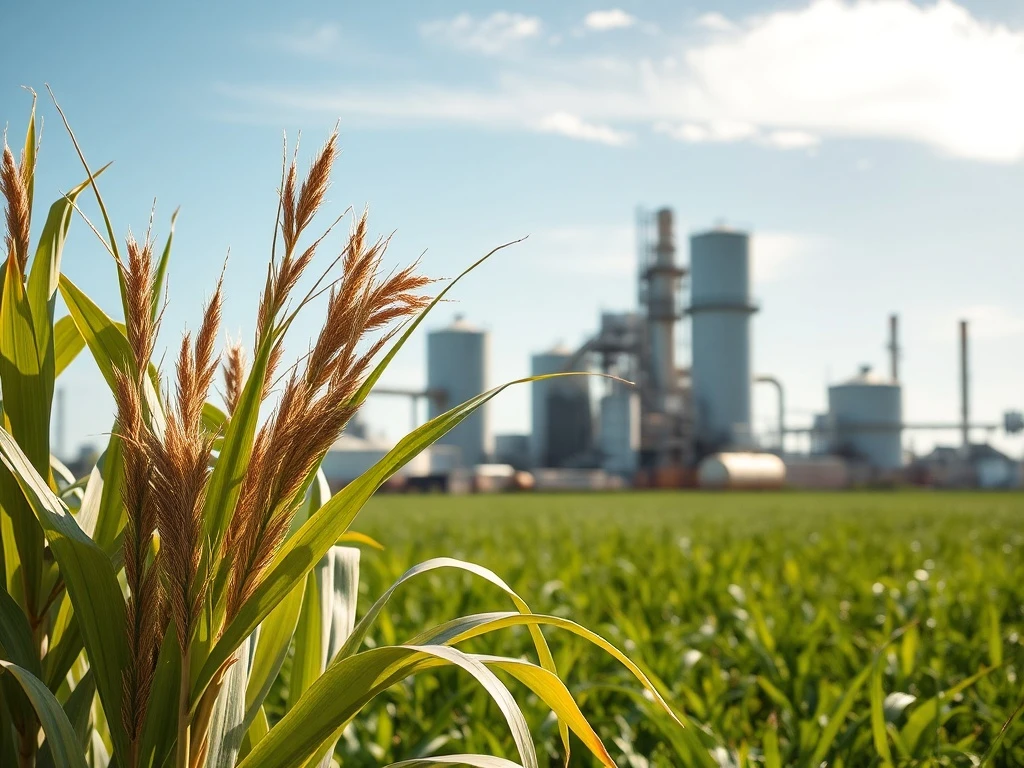
CHICAGO, March 9, 2026 — Global sugar prices surged Monday as escalating Middle East tensions sent crude oil markets soaring, creating immediate ripple effects through agricultural commodities. May NY world sugar #11 (SBK26) closed up +0.49 (+3.48%) while May London ICE white sugar #5 (SWK26) gained +6.00 (+1.45%). The sudden sugar prices jump follows Israel’s bombing of 30 oil depots in Iran, which triggered a fresh crude oil surge that benefits ethanol prices. This development encourages sugar mills worldwide to divert more cane crushing toward ethanol production rather than sugar, potentially curbing global sugar supplies at a critical moment.
Sugar Prices Surge on Oil-Ethanol Connection
The immediate catalyst for Monday’s price movement came from energy markets. When crude oil prices rise, ethanol becomes more economically competitive as a fuel additive and alternative energy source. Sugar mills, particularly in Brazil—the world’s largest sugar producer—face a crucial decision at their crushing facilities. Each ton of sugarcane can produce either sugar or ethanol. With ethanol prices climbing alongside oil, mills have strong financial incentives to shift production toward biofuels. “The oil-ethanol arbitrage is driving real-time decisions in sugar-producing regions,” explains commodity analyst Maria Silva, who tracks Brazilian agricultural markets. “Every dollar increase in crude translates to approximately 0.8% shift toward ethanol production capacity in Center-South Brazil.”
This relationship isn’t theoretical. During the 2022 energy crisis, Brazilian mills diverted nearly 48% of their cane to ethanol—the highest percentage in a decade. Current market conditions suggest a similar shift could occur if oil prices remain elevated. The timing is particularly significant as Northern Hemisphere sugar producers, including India and Thailand, are midway through their 2025/26 crushing seasons. Their production decisions in coming weeks will determine global supply balances for the remainder of the year.
Global Sugar Surplus Forecasts Face Pressure
Despite Monday’s gains, sugar markets entered March 2026 with bearish sentiment following multiple forecasts predicting continued global surpluses. On February 11, analysts from sugar trader Czarnikow projected a 3.4 million metric ton (MMT) surplus for the 2026/27 crop year, following an 8.3 MMT surplus in 2025/26. These figures represent significant inventory builds that typically pressure prices downward. However, the oil-driven ethanol shift could alter these calculations substantially.
- Production Adjustments: Every 5% shift from sugar to ethanol production in Brazil removes approximately 2 MMT of sugar from global markets
- Timing Matters: The current oil spike coincides with Brazil’s intercrop period, meaning immediate production decisions affect the coming main crop
- Geographic Variation: Indian mills have less ethanol flexibility due to government policies, while Thai producers face different economic calculations
Institutional Forecasts and Market Reality
Multiple organizations have issued conflicting surplus projections, creating uncertainty in sugar markets. Green Pool Commodity Specialists said on January 29 they expect a 2.74 MMT global sugar surplus for 2025/26 and a 156,000 MT surplus for 2026/27. Meanwhile, StoneX projected a 2.9 MMT surplus in 2025/26 on February 13. The International Sugar Organization (ISO) offered a more moderate forecast on February 27, predicting a +1.22 MMT surplus in 2025-26 after a -3.46 MMT deficit in 2024-25. “These surplus projections assume normal ethanol economics,” notes Dr. James Chen of the Agricultural Policy Institute. “When crude oil exceeds $85 per barrel, the entire calculus changes. Mills don’t just follow sugar prices—they watch the ethanol premium.”
Regional Production Dynamics Create Complex Picture
The global sugar market operates as an interconnected system where production decisions in one region affect prices worldwide. Brazil’s dominance gives it particular influence, but India’s export policies and Thailand’s recovery from drought also matter significantly. Understanding these regional dynamics explains why Monday’s price movement represents more than a simple reaction to oil markets.
| Country | 2025/26 Production Forecast | Year-over-Year Change | Key Factor |
|---|---|---|---|
| Brazil | 44.7 MMT (USDA) | +2.3% | Ethanol shift capacity |
| India | 35.25 MMT (USDA) | +25% | Export policy uncertainty |
| Thailand | 10.25 MMT (USDA) | +2% | Drought recovery |
| Pakistan | 6.8 MMT (ISO) | +18% | Improved yields |
India’s Export Policy Adds Another Layer
While ethanol economics drive Brazilian decisions, policy choices shape Indian sugar markets. The Indian Sugar and Bio-energy Manufacturers Association (ISMA) reported on March 6 that India’s 2025-26 sugar output from October 1 to February 28 reached 24.75 MMT, up 12% year-over-year. Last Wednesday, ISMA projected India’s full 2025/26 sugar production at 29.3 MMT, up 12% year-over-year but below an earlier projection of 30.95 MMT. More significantly, ISMA cut its estimate for sugar used for ethanol production in India to 3.4 MMT from a July forecast of 5 MMT.
This reduction in ethanol diversion could allow India to boost sugar exports. On February 13, India’s government approved an additional 500,000 MT of sugar for export for the 2025/26 season, on top of the 1.5 MMT approved in November. India introduced a quota system for sugar exports in 2022/23 after late rain reduced production and limited domestic supplies. “India’s export decisions will determine whether the global surplus materializes,” says trade analyst Rajiv Mehta. “If they release 2 MMT onto world markets, that overwhelms any Brazilian production shift. If they hold back, prices find support.”
Brazilian Production Signals Mixed Messages
Brazilian sugar production data presents conflicting signals. Unica reported on February 18 that sugar production in Brazil’s Center-South region in the second half of January fell by 36% year-over-year to only 5,000 MT. This dramatic decline suggests mills were already shifting toward ethanol before the latest oil price spike. However, cumulative 2025-26 Center-South sugar output through January rose 0.9% year-over-year to 40.24 MMT, indicating strong overall production. “The late-January numbers are more indicative of current decisions,” explains São Paulo-based analyst Carlos Mendes. “Mills are responding in real time to market signals. The February data, when released, will show the initial impact of higher oil prices.”
What Comes Next for Sugar Markets
The immediate future of sugar prices depends on three interconnected factors: crude oil price stability, Brazilian production decisions, and Indian export policy. Energy analysts project oil markets will remain volatile as Middle East tensions continue. This suggests ethanol economics will favor diversion from sugar for at least the coming month. Brazilian mills typically make quarterly production allocations, meaning March decisions will affect April-June output.
Meanwhile, Indian authorities face domestic pressure to maintain adequate sugar supplies for local consumption while supporting farmer incomes through exports. The government’s next export policy announcement, expected in late March, will provide crucial direction. Thailand’s production recovery continues gradually, with most analysts expecting normal yields after several years of drought-reduced output.
Broader Agricultural Commodity Impacts
The sugar-oil connection illustrates how energy markets increasingly influence agricultural commodities. Corn faces similar dynamics in the United States, where ethanol production consumes approximately 40% of the crop. Wheat and rice don’t have direct biofuel links but experience indirect effects through fertilizer costs (tied to natural gas prices) and transportation expenses. “We’re seeing the full integration of food and fuel markets,” observes commodities researcher Dr. Elena Rodriguez. “A geopolitical event affecting oil now transmits within hours to sugar, corn, and palm oil. This creates both volatility and opportunity for informed market participants.”
Conclusion
Monday’s sugar prices jump reflects immediate market recognition that higher crude oil prices change ethanol economics, potentially reducing global sugar supplies. While surplus forecasts had dominated market sentiment through February, the March 9 price movement signals that energy markets may override those projections. The key variables to watch are Brazilian production allocation data for March, Indian export policy announcements, and crude oil price stability. Sugar traders should monitor not just agricultural reports but energy market developments and geopolitical news. The integration of food and fuel markets means today’s oil price spike could become tomorrow’s sugar shortage—or surplus—depending on how producing regions respond in coming weeks.
Frequently Asked Questions
Q1: Why do sugar prices rise when crude oil surges?
Higher oil prices make ethanol more valuable as a fuel alternative. Sugar mills can produce either sugar or ethanol from sugarcane. When ethanol becomes more profitable due to oil prices, mills shift production toward biofuels, reducing sugar supplies and pushing prices higher.
Q2: How much did sugar prices increase on March 9, 2026?
May NY world sugar #11 (SBK26) closed up +0.49 (+3.48%), and May London ICE white sugar #5 (SWK26) gained +6.00 (+1.45%). This followed news of Middle East tensions affecting oil markets.
Q3: Which countries’ production decisions most affect global sugar prices?
Brazil (world’s largest producer), India (second-largest), and Thailand (third-largest) collectively determine global supply. Brazil’s ethanol shift capacity, India’s export policies, and Thailand’s recovery from drought are currently the most significant factors.
Q4: What is the connection between sugar and ethanol production?
Sugar mills use essentially the same raw material—sugarcane—to produce either crystalline sugar or ethanol fuel. The processing equipment can be adjusted based on which product offers better returns. This creates a direct economic link between sugar and energy markets.
Q5: Are global sugar surpluses still expected despite the price increase?
Multiple organizations forecast surpluses for 2025/26 and 2026/27, but these projections assume normal ethanol economics. If oil prices remain elevated, increased diversion to ethanol could reduce sugar supplies enough to eliminate expected surpluses.
Q6: How does this affect consumers and food manufacturers?
Higher sugar prices eventually translate to increased costs for products containing sugar, from baked goods to beverages. However, the effect takes months to reach retail shelves as manufacturers work through existing inventory and hedging contracts.
This article was produced with AI assistance and reviewed by our editorial team for accuracy and quality.



