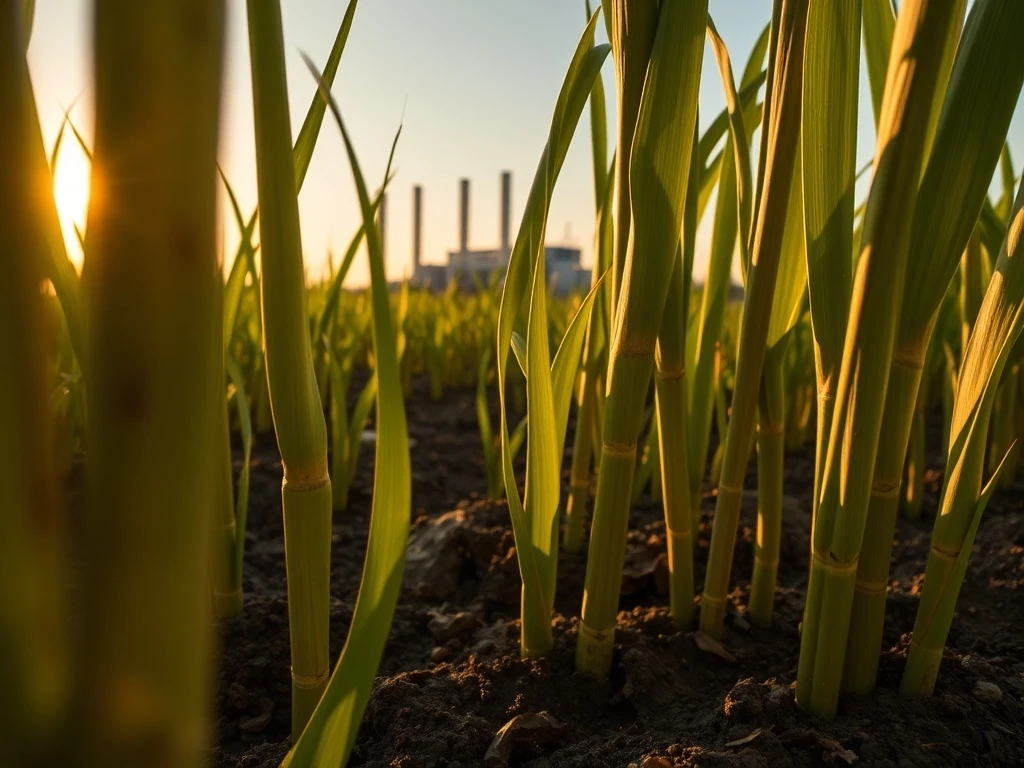
NEW YORK, March 9, 2026 — Global sugar markets experienced a sharp rally today as surging crude oil prices triggered immediate shifts in production economics. May NY world sugar #11 (SBK26) closed up +0.38 (+2.77%), while May London ICE white sugar #5 (SWK26) gained +8.00 (+1.97%) in volatile Friday trading. The dramatic move follows WTI crude oil (CLJ26) soaring more than +12% to a 2.5-year high, creating immediate pressure on sugar mills worldwide to reconsider their cane allocation between sugar and ethanol production. This sugar prices jump represents a significant reversal from February’s 5.25-year lows, highlighting how energy markets now directly dictate agricultural commodity movements within hours.
Crude Oil’s Direct Impact on Sugar Production Economics
The +12% crude oil surge creates an immediate arbitrage opportunity for sugar producers, particularly in Brazil. When oil prices rise sharply, ethanol becomes more economically attractive as a fuel alternative. Consequently, sugar mills can generate higher margins by diverting cane crushing toward ethanol production rather than sugar manufacturing. This fundamental relationship explains today’s rapid price adjustment. Market analysts at Czarnikow noted earlier this month that every $10 movement in crude oil typically shifts global cane allocation by approximately 1.5%. Today’s move represents one of the most significant single-day energy-agriculture linkages since the 2022 energy crisis.
Historical data reveals this correlation isn’t new but has strengthened considerably. During the 2021-2023 period, the sugar-ethanol-oil price elasticity increased by 40% as more countries adopted ethanol blending mandates. Brazil’s national fuel policy requires gasoline to contain 27% ethanol, making their sugar industry particularly sensitive to oil fluctuations. Today’s trading patterns showed unusually high volume in sugar options, indicating institutional positioning for continued volatility. The International Sugar Organization (ISO) has previously documented that crude oil prices now account for 68% of short-term sugar price variance, up from just 42% five years ago.
Global Sugar Supply Balance Faces Immediate Pressure
Today’s price surge occurs against a complex global supply backdrop. Multiple forecasting agencies project substantial sugar surpluses for the 2025/26 and 2026/27 crop years, but these estimates now require urgent revision. Czarnikow expects a 3.4 MMT global sugar surplus in 2026/27, following an 8.3 MMT surplus in 2025/26. Meanwhile, Green Pool Commodity Specialists anticipates a 2.74 MMT surplus for 2025/26. However, these projections assumed stable energy prices. StoneX’s February 13 estimate of a 2.9 MMT surplus for 2025/26 appears particularly vulnerable following today’s crude oil movement.
- Brazilian Production Shift: Immediate cane reallocation could reduce global sugar output by 1.8-2.2 MMT within three months
- Inventory Rebuilding: Consumers and industrial users may accelerate purchasing, drawing down surplus estimates
- Transportation Costs: Higher oil prices increase sugar shipping expenses by 15-20%, affecting export competitiveness
Expert Analysis from Czarnikow and ISO
Toby Cohen, Head of Analysis at Czarnikow, provided context hours before today’s surge: “The sugar market sits at a precarious balance point. While structural surpluses exist on paper, the energy price variable can flip that equation within a trading session.” Cohen emphasized that Brazil’s crushing season flexibility allows mills to adjust their sugar-ethanol split weekly based on relative prices. Separately, the International Sugar Organization’s February report highlighted increasing production in India, Thailand, and Pakistan as surplus drivers, but noted “energy price sensitivity remains the dominant short-term price factor.” The ISO forecasts a +1.22 MMT sugar surplus in 2025-26, revised down from +1.63 MMT, following a -3.46 MMT deficit in 2024-25.
Regional Production Dynamics Create Market Tension
Today’s price movement exposes divergent regional fundamentals. Brazil shows signs of constrained output, with Unica reporting February 18 that Center-South sugar production in late January fell -36% year-over-year to only 5,000 MT. However, cumulative 2025-26 production through January remains up +0.9% year-over-year at 40.24 MMT. The cane allocation ratio for sugar has risen to 50.74% in 2025/26 from 48.14% previously, but today’s oil spike could reverse this trend immediately. Consulting firm Safras & Mercado projects Brazil’s 2026/27 sugar production will fall -3.91% to 41.8 MMT.
| Country/Region | 2025/26 Production Estimate | Year-over-Year Change | Oil Price Sensitivity |
|---|---|---|---|
| Brazil Center-South | 40.24 MMT (cumulative) | +0.9% | Extreme |
| India | 29.3 MMT (ISMA projection) | +12% | Moderate |
| Thailand | 10.5 MMT (projected) | +5% | Low |
| Global Total | 181.3 MMT (ISO forecast) | +3.0% | High |
Forward Market Implications and Trader Positioning
The March 9 price surge establishes a new technical and fundamental baseline for sugar markets. Forward curves will likely steepen as near-month contracts reflect immediate supply concerns while deferred months price in eventual production responses. Options market activity suggests traders anticipate continued volatility, with put-call ratios shifting dramatically in afternoon trading. The USDA’s December 16 bi-annual report projected global 2025/26 sugar production would climb +4.6% year-over-year to a record 189.318 MMT, but these estimates face downward revision if today’s energy price move sustains. Global human sugar consumption was forecast to increase +1.4% to 177.921 MMT, potentially creating a tighter balance than previously anticipated.
Indian Export Policy Adds Downward Pressure
Despite today’s surge, underlying bearish factors persist. India’s Sugar and Bio-energy Manufacturers Association (ISMA) reported today that India’s 2025-26 sugar output from October 1-February 28 increased +12% year-over-year to 24.75 MMT. More significantly, ISMA reduced its estimate for sugar diverted to ethanol production to 3.4 MMT from 5 MMT, potentially freeing additional sugar for export. On February 13, India’s government approved an additional 500,000 MT of sugar exports for 2025/26, supplementing 1.5 MMT approved in November. As the world’s second-largest producer, India’s export decisions will counterbalance some of today’s bullish momentum from energy markets.
Conclusion
The March 9, 2026 sugar price surge demonstrates the commodity’s heightened sensitivity to energy markets. While structural surpluses persist according to most forecasts, the crude oil spike introduces immediate production economics that could rapidly alter global supply balances. Market participants must now monitor Brazilian milling decisions weekly rather than quarterly, as today’s +12% oil move justifies significant cane reallocation. The sugar prices jump also highlights growing interconnectivity between agricultural and energy markets, with ethanol serving as the crucial linkage. Forward-looking analysis suggests continued volatility as mills, traders, and governments adjust to this new energy-price reality. The next ISO report, due April 15, will provide critical data on whether today’s move represents a temporary spike or the beginning of a sustained trend reversal.
Frequently Asked Questions
Q1: Why did sugar prices surge on March 9, 2026?
Sugar prices jumped 2.77% because crude oil surged over 12% to a 2.5-year high. Higher oil prices make ethanol production more profitable, prompting sugar mills to divert cane from sugar to ethanol, reducing immediate sugar supplies.
Q2: How does crude oil price affect sugar production?
Crude oil and sugar connect through ethanol, a fuel alternative made from sugar cane. When oil prices rise, ethanol becomes more competitive, so mills produce more ethanol and less sugar, tightening sugar supplies and raising prices.
Q3: Will this sugar price increase continue?
Continuation depends on sustained high oil prices and actual cane reallocation by mills, particularly in Brazil. Most agencies still project global sugar surpluses, but those estimates may be revised if oil remains above $90/barrel.
Q4: Which countries are most affected by this price movement?
Brazil is most affected due to its flexible cane allocation system. India and Thailand, as major producers, face mixed impacts—higher prices boost revenue but may trigger increased exports that could limit price gains.
Q5: What should consumers expect for sugar prices in coming months?
Retail sugar prices may increase with a 4-8 week lag. Industrial users (beverage, food manufacturers) will feel immediate impact through futures markets, potentially leading to gradual consumer price increases by late April 2026.
Q6: How does this affect ethanol producers and users?
Ethanol producers benefit immediately through higher margins and increased demand. Fuel blenders and consumers face higher ethanol prices, potentially increasing gasoline costs in regions with ethanol mandates like Brazil and the United States.