
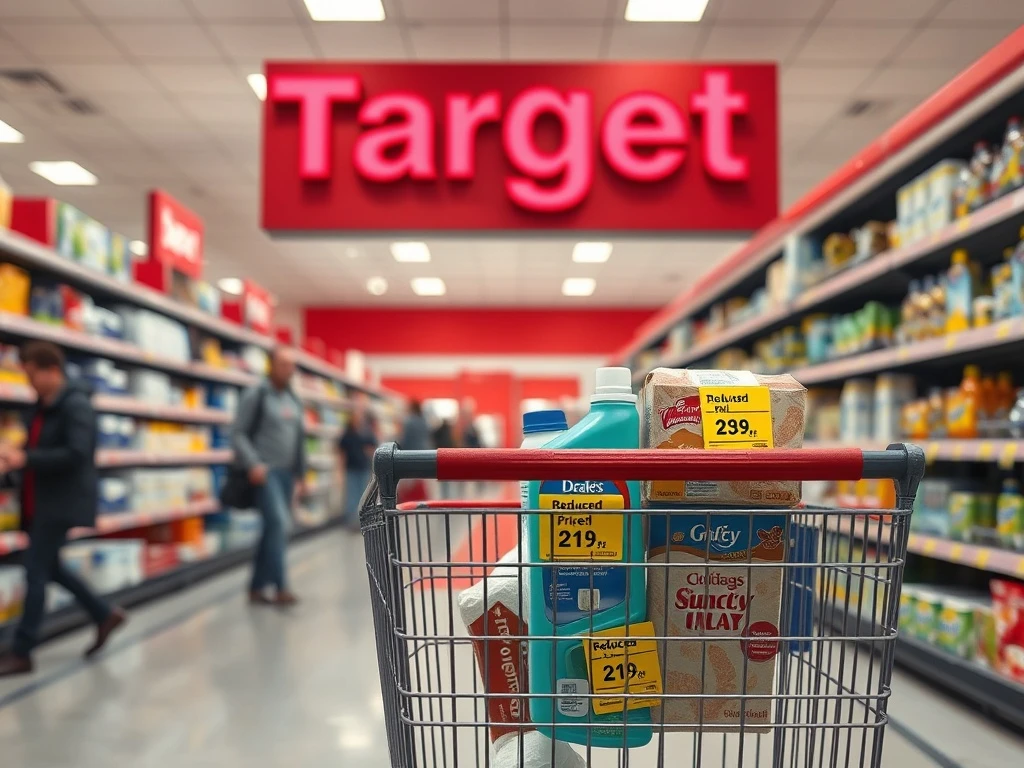
MINNEAPOLIS, May 15, 2026 — In a significant move reflecting ongoing economic pressures, retail giant Target Corporation announced today it will implement price reductions on approximately 3,000 frequently purchased items. This strategic decision arrives as the latest Consumer Price Index (CPI) report, released Wednesday by the Bureau of Labor Statistics, shows annual inflation holding at 2.8%, remaining persistently above the Federal Reserve‘s longstanding 2% target. The Target price cuts, effective immediately across most U.S. stores, primarily target grocery staples, household essentials, and select seasonal products. Company executives framed the action as a direct response to sustained consumer strain, marking one of the most aggressive pricing interventions by a major retailer this year.
Target’s Strategic Price Reduction Initiative
Target Chair and CEO Brian Cornell detailed the plan during an investor call this morning. The reductions will affect roughly 5% of the retailer’s core assortment, with an average price drop of 10-15%. Consequently, a family’s typical grocery basket could see savings of $10-$15 per week. “We are listening to our guests,” Cornell stated, directly referencing recent earnings call feedback about budget sensitivity. “This is a sustained investment, not a short-term promotion.” The company will fund these cuts through supply chain efficiencies and modified promotional strategies rather than significant margin compression. Analysts at Retail Dive note this mirrors a similar, smaller-scale initiative Walmart launched in late 2025, signaling a potential industry pivot.
The timeline for this decision is critical. Target’s internal pricing team began a six-month review last November, cross-referencing sales data with consumer sentiment surveys. The final decision accelerated following the April CPI data, which showed food-at-home prices rising 3.1% year-over-year. A Target spokesperson confirmed the price cuts are “locked in” for at least the next quarter, providing consumers with predictable relief. This move represents a clear shift from the pandemic-era strategy of managing through inflation to actively combating it for customer loyalty.
Immediate Consumer Impact and Economic Context
The immediate impact for millions of households will be tangible relief at the checkout lane. However, economists caution that while helpful, retail-level actions cannot single-handedly reverse broader inflationary trends. The Federal Reserve, led by Chair Lisa Cook, has maintained its benchmark interest rate at 5.25-5.50% for the past nine months, awaiting clearer signs that inflation is converging toward its target. “Monetary policy operates with a lag,” explained Dr. Anika Patel, Chief Economist at the Center for American Progress. “Retail price adjustments are more immediate but address symptoms, not the underlying monetary causes.”
- Household Budget Relief: A family spending $800 monthly on affected categories could save $80-$120, freeing cash for other expenses or savings.
- Competitive Pressure: Rivals like Kroger, Amazon Fresh, and regional chains now face pressure to respond, potentially widening consumer benefits.
- Inflation Psychology: Visible price cuts could subtly influence consumer inflation expectations, a key factor the Fed monitors closely.
Expert Analysis on Retail and Monetary Policy
Dr. Michael Weber, Associate Professor of Finance at the University of Chicago Booth School of Business, provided context on the unusual dynamic. “We’re seeing a decoupling,” Weber observed. “Sticky service-sector inflation and shelter costs keep the CPI elevated, while goods inflation has cooled significantly due to resolved supply chains. Target is exploiting that goods deflation to make a strategic play for market share.” This perspective is supported by data from the National Retail Federation, which shows consumer confidence in making major purchases remains at a two-year low. Furthermore, a statement from the Federal Reserve Bank of Minneapolis noted that regional business contacts “continue to report pushback on price increases,” validating Target’s consumer-first calculus.
Broader Retail Landscape and Historical Comparison
This announcement places Target within a specific historical context of retailer-led anti-inflation campaigns. The most famous precedent is the “Wal-Mart Effect” of the 1990s, where the megaretailer’s efficiency forced broad price discipline. However, today’s environment is distinct due to the dominant role of central bank policy. The table below contrasts key aspects of past and present retail price interventions.
| Initiative / Era | Primary Driver | Scale | Economic Context |
|---|---|---|---|
| Target Price Cuts (2026) | Consumer Demand Softness & Competitive Strategy | ~3,000 items, 5% of assortment | Inflation above Fed target, high interest rates |
| Walmart “Rollback” Campaign (1990s) | Supply Chain & Logistics Efficiency | Thousands of items, ongoing | Low inflation, stable growth |
| Kroger Price Freeze (2022) | Supply Chain Crisis & Short-Term Consumer Relief | Hundreds of key items, temporary | Peak post-pandemic inflation (~9%) |
The current action is more strategic and data-driven than the reactive measures of 2022. It also differs from the 1990s by occurring alongside active monetary tightening, creating a unique two-pronged pressure on prices. Industry analysts will watch margin reports closely; if Target maintains profitability, it could validate a new model of “value-led growth” for the sector.
What Happens Next: Market Reactions and Fed Watch
The immediate next steps involve market reaction and competitor response. Target’s stock (TGT) closed with moderate gains following the announcement, suggesting investor approval of the long-term customer retention strategy. The more significant development will be whether the Federal Reserve interprets this as a meaningful signal in its June policy meeting. While the Fed focuses on core PCE inflation, persistent consumer goods price cuts could contribute to a disinflationary trend. “The Fed will welcome any durable disinflation,” noted former Fed Vice Chair Alan Blinder in a commentary for The Wall Street Journal. “But one retailer’s campaign doesn’t change the calculus on services. The May jobs report will be far more consequential.”
Consumer and Competitor Reactions
Initial consumer reaction on social media and in-store has been positive but measured. “It’s a help, but my rent and car payment are still the real problems,” shared Maria Gonzalez, a shopper at a Target in Columbus, Ohio. This sentiment underscores the limited scope of retail action on overall cost of living. Competitively, a spokesperson for Albertsons said the company “continually evaluates its pricing,” while Amazon declined to comment. The most likely response may be targeted price matching on identical items rather than sweeping cuts. The United Food and Commercial Workers Union (UFCW) issued a statement urging that price reductions “must not come at the expense of frontline worker wages or hours,” highlighting another stakeholder dimension.
Conclusion
Target’s decision to cut prices on 3,000 items is a bold, consumer-focused maneuver within a complex economic landscape. While providing direct, tangible relief for household budgets, the action highlights the persistent gap between the Federal Reserve’s inflation target and current reality. The success of this strategy hinges on maintaining operational efficiency without sacrificing service or employee welfare. For consumers, it offers a respite. For economists and policymakers, it serves as a real-time case study in how corporate strategy interacts with macroeconomic policy. The coming months will reveal whether this marks a turning point in the post-pandemic inflation narrative or a strategic outlier in an otherwise cautious retail environment. Watch for the next CPI release on June 11 and the Fed’s subsequent statement for the broader policy implications.
Frequently Asked Questions
Q1: What items are included in Target’s price cuts?
The reductions focus on everyday essentials: dairy products, bread, fresh fruits and vegetables, paper products like toilet paper and paper towels, cleaning supplies, and select baby items. A full list is available on Target’s website and in-store signage.
Q2: How long will these lower prices last?
Target has committed to these price reductions for at least the remainder of the 2026 fiscal second and third quarters (through October). The company states the cuts are part of a “long-term investment” in affordability, suggesting they could extend further barring a major economic shift.
Q3: Does this mean inflation is finally ending?
Not necessarily. While helpful, retail price cuts on goods address only one component of inflation. Broader measures include stubbornly high costs for services (like healthcare and dining out), housing, and energy. The Federal Reserve’s policy decisions will remain the primary driver of the national inflation trend.
Q4: Will other stores like Walmart and Kroger lower their prices too?
Industry analysts expect competitive responses, likely in the form of targeted price matching on identical branded items. However, a blanket, large-scale cut matching Target’s scope is less certain, as each retailer has different supply chain agreements and margin structures.
Q5: Why is the Federal Reserve’s 2% inflation target important?
The 2% target, established over two decades ago, is considered a level that promotes maximum employment and stable prices over the long run. Consistently higher inflation erodes purchasing power and complicates business planning, while lower inflation risks deflation, which can stifle investment and growth.
Q6: How does this affect Target’s employees and store operations?
Target states the cuts are funded through supply chain and operational efficiencies, not labor cost reductions. The UFCW union is monitoring the situation to ensure worker hours and wages are not impacted. Store operations may see increased foot traffic, requiring careful staffing management.



