
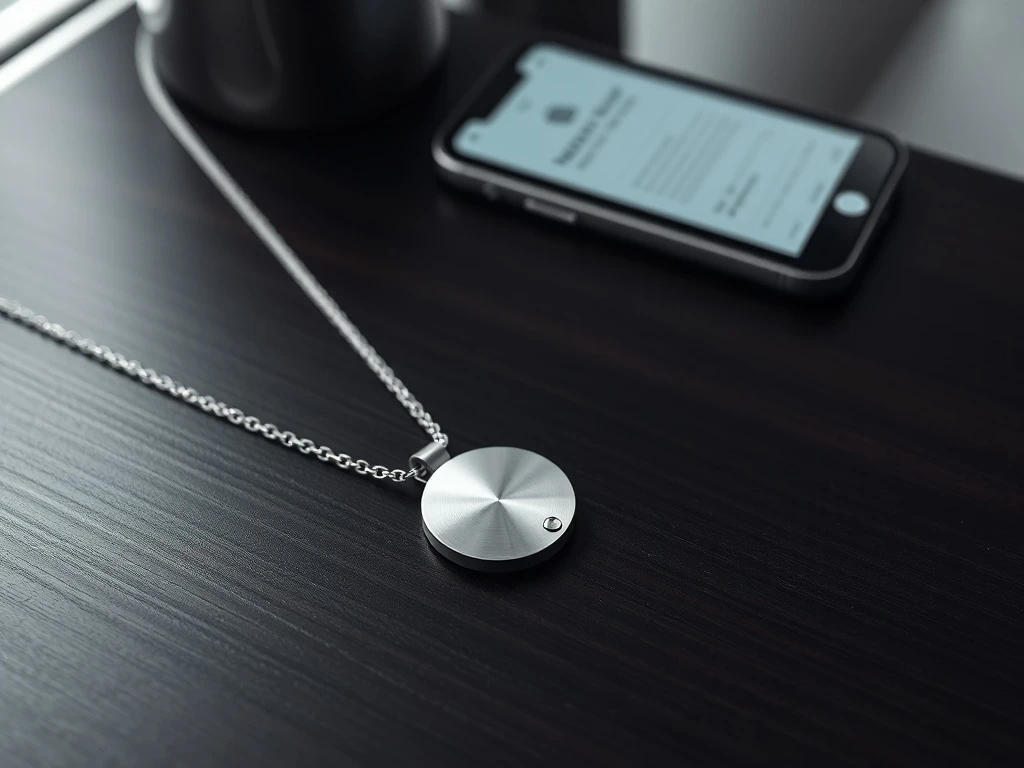
SAN FRANCISCO, CA — June 9, 2026: A startup founded by a former Apple design engineer has secured $5 million to launch a novel wearable that tackles one of ambient computing’s thorniest issues: consent. Elena Wagenmans, who helped shape iconic Apple products, unveiled Taya, a voice note-taking pendant designed to record only the wearer’s voice. The seed round, led by MaC Venture Capital and Female Founders Fund with participation from a16z Speedrun, signals strong investor belief in a privacy-by-design approach to the booming AI notetaker market. Wagenmans founded Taya in 2024 with ex-Apple colleagues Cinnamon Sipper and Amy Zhou, aiming to create a “single-player” gadget that aids personal reflection without surveilling others.
Taya’s Core Innovation: Isolating the User’s Voice
The Taya Necklace retails for $89 and functions as a piece of discreet jewelry. Its primary technical challenge—and selling point—is its focused audio capture. Unlike ambient recorders from rivals like Plaud or Amazon’s Bee, Taya uses a combination of user voice profiling and directional microphone technology to minimize all audio except the wearer’s. During device onboarding, the accompanying iOS app prompts users to record a voice snippet. This sample creates an acoustic fingerprint that the device’s algorithms prioritize during active recording sessions. Consequently, background conversations, office noise, and other environmental sounds are significantly attenuated. The microphone remains off by default, activating only when the user taps the pendant’s button. This intentional, physical interaction contrasts with the “always-listening” potential of some competitors, directly addressing privacy anxieties that have stalled wider adoption of voice-based wearables.
Wagenmans’ experience at Apple heavily influenced this philosophy. She observed that social image and privacy concerns often prevent people from using useful recording tools. “We realized that there is a lot of utility that you can provide, being a single-player [gadget],” Wagenmans told TechCrunch. “Essentially, we want to capture your voice, not the room that you’re in or the other people.” The startup, now with five full-time employees in San Francisco, is experimenting with haptic feedback mechanisms to confirm when a note is saved, enhancing the user experience without visual distraction.
Funding and Strategic Positioning in a Crowded 2026 Market
The $5 million seed investment arrives as the AI-powered note-taking hardware sector experiences rapid differentiation. Startups are carving distinct niches: some focus on meeting transcription (Plaud), others on life-logging pendants (Friend, Omi). Taya’s backers explicitly position it outside the “ambient recorder” category. Adrian Fenty, Managing Partner at lead investor MaC Venture Capital, argues this distinction is critical for scaling beyond early adopters. “We’re excited about the category, but would actually place Taya outside of the notetaker bucket,” Fenty said. “Those products are ambient recorders; they capture meetings and conversations around you. Taya’s intentional, single-player capture is focused on just you. We believe that Taya can be a company that aids human work and personal evolution.”
- Market Differentiation: Taya avoids the legal and ethical gray areas of multi-party recording by design, potentially bypassing stringent consent laws that vary by state and country.
- Investor Confidence: Participation from top-tier funds like Female Founders Fund and a16z Speedrun validates the privacy-first hardware thesis during a cautious investment climate.
- Product Roadmap: The funding will accelerate R&D on directional mic arrays and the AI chat feature within its app, which allows users to query their past voice notes conversationally.
Expert Analysis on Privacy and Wearable Adoption
Dr. Anya Petrova, a technology ethicist at Stanford’s Center for Internet and Society, notes that Taya’s approach reflects a broader industry pivot following public backlash. “The controversies around devices like the now-discontinued Google Glass or even smart glasses from Meta highlighted a deep public discomfort with passive recording,” Petrova explained. “A device that requires explicit user action and processes audio to exclude others is a direct response to that societal feedback. It’s a technical solution to a social trust problem.” This external perspective underscores the market need Taya addresses. Furthermore, the startup’s ethos aligns with smaller players like Sandbar and Pebble, which also promote personal, non-invasive note-taking, suggesting a cohesive shift in a segment of the hardware industry.
The Competitive Landscape for AI Note-Taking Hardware
The wearable AI assistant space is fragmenting along axes of form factor, functionality, and privacy. Taya enters a market where differentiation is key to survival. The following table compares key players based on public data and announced features as of mid-2026.
| Device/Company | Primary Form Factor | Core Function | Privacy Stance | Price Point |
|---|---|---|---|---|
| Taya | Pendant Necklace | Single-user voice notes & AI chat | Records only wearer’s voice; mic off by default | $89 |
| Plaud Note | Standalone Card/Clip | Meeting transcription & summarization | Ambient recording with user-controlled activation | $139+ |
| Amazon Bee | Wristband/Pendant | General voice capture & Alexa integration | Ambient, always-potential listening (varies by mode) | Unannounced |
| Friend.ai Pendant | Pendant | Life-logging & conversation memory | Ambient recording; emphasizes user consent protocols | $199 (est.) |
This landscape reveals Taya’s clear trade-off: it sacrifices the ability to capture group discussions for a stronger privacy guarantee and lower price. Its success hinges on convincing users that capturing their own thoughts—for journaling, idea generation, or task management—provides more daily value and less social friction than recording meetings or conversations.
What’s Next for Taya and the Privacy-First Wearable Category
With capital in hand, Taya’s immediate focus is refining its core technology and initiating production. The company has not announced a firm shipping date but is targeting a limited release to early backers by Q4 2026. Longer-term, the roadmap likely includes exploring complementary form factors and deeper AI integration. The startup’s “single-player” philosophy could extend to other personal productivity tools, creating an ecosystem centered on individual data sovereignty. Industry analysts will watch whether this focused approach can achieve the scale necessary to compete with well-funded giants like Amazon, which can subsidize hardware costs with service revenues.
Broader Industry and Consumer Reactions
Initial reactions from the tech community have been cautiously optimistic. Early adopters on forums like Hacker News have praised the explicit privacy design but questioned the accuracy of voice isolation in noisy environments. Meanwhile, hardware reviewers are keen to test the device’s effectiveness as a jewelry piece—its aesthetic appeal is a non-negotiable part of its value proposition, according to Wagenmans. The funding announcement has also sparked discussion about the viability of hardware startups founded by Apple alumni, who often bring strong design sensibilities but face steep manufacturing and distribution challenges.
Conclusion
The launch of the Taya voice note-taking pendant represents a significant bet on a specific future for wearables: one where devices serve the individual first, prioritizing ethical design and social acceptability. By solving the consent problem through technical isolation of the user’s voice, former Apple engineer Elena Wagenmans and her team are addressing a major adoption barrier. The $5 million in seed funding validates this niche. As AI becomes more embedded in daily life, tools that enhance personal productivity without compromising the privacy of others may find a substantial, dedicated market. The success of Taya will test whether a privacy-first, single-player gadget can achieve mainstream appeal in an increasingly connected—and often surveilled—world.
Frequently Asked Questions
Q1: How does the Taya pendant ensure it only records the wearer’s voice?
Taya uses a multi-layered approach. During setup, you record a voice sample that creates an acoustic profile. During use, its software prioritizes this profile, and the company is experimenting with directional microphones to physically focus on sound coming from the wearer’s chest/neck area.
Q2: What happens to the voice notes after recording?
Notes are securely transmitted to the companion iOS app via Bluetooth. You can play them back, organize them, or use an AI chat feature to ask questions about your past notes. The company emphasizes on-device processing where possible for privacy.
Q3: When will the Taya pendant be available for purchase?
As of June 2026, Taya has not announced a public release date. The $5 million in seed funding will be used to finalize development and manufacturing, with a limited early-access release targeted for late 2026.
Q4: How is Taya different from using the voice memo app on my phone?
Taya offers always-accessible, one-tap recording without needing to unlock or hold your phone. Its core value is convenience and discretion, acting as a piece of jewelry that facilitates spontaneous note-taking in situations where pulling out a phone is awkward or disruptive.
Q5: Does this funding round indicate a trend in venture capital?
Yes. Investment in privacy-centric hardware and “single-player” AI tools is growing. Investors are seeking startups that address ethical concerns head-on, believing this will lead to more sustainable user adoption and mitigate regulatory risk.
Q6: Who are Taya’s main competitors in the wearable AI space?
Key competitors include Plaud (meeting transcription), Friend and Omi (life-logging pendants), and Amazon’s rumored Bee device. Taya differentiates itself by not recording ambient conversations and focusing solely on the user’s intentional voice notes.



