
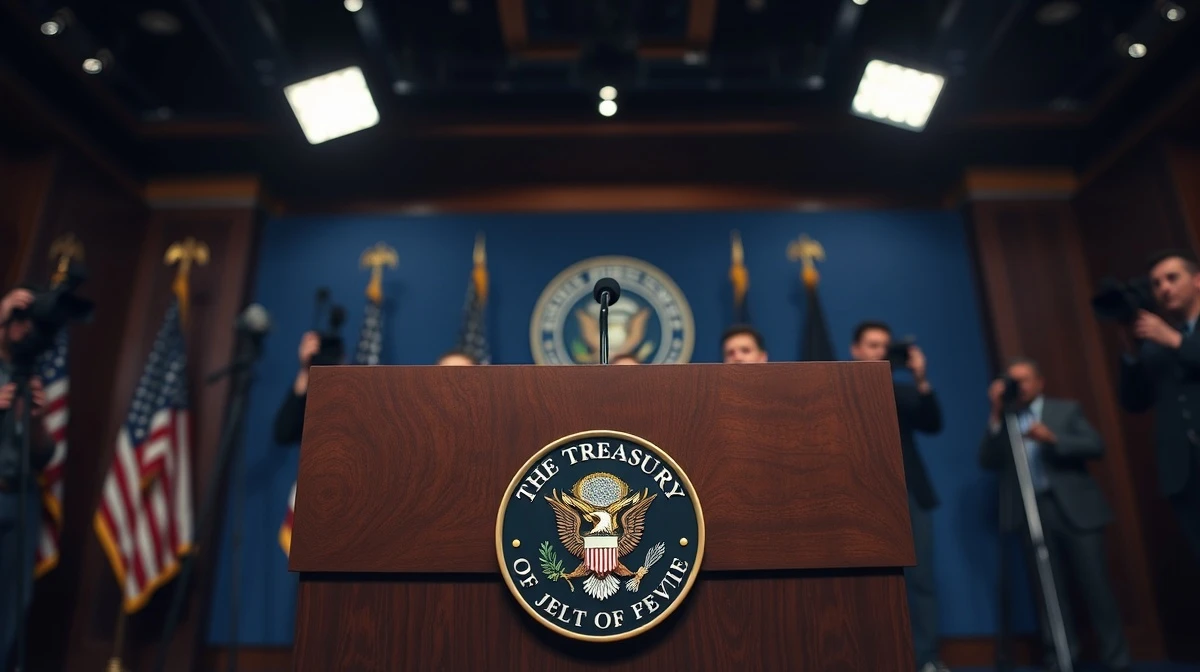
WASHINGTON — U.S. Treasury Secretary Bessent has articulated a strategic economic doctrine centered on the principle of sometimes needing to “escalate to de-escalate,” signaling a potentially more assertive stance in managing financial stability and international economic disputes. The remarks, delivered in a recent policy address, frame a tactical approach to navigating complex market pressures and geopolitical friction.
Defining the Strategic Doctrine
Secretary Bessent’s phrase suggests a calculated use of policy tools to preempt or counter economic threats before they intensify. While not detailing specific actions, the concept implies that measured, firm responses—potentially including sanctions, currency interventions, or regulatory actions—could be deployed to prevent broader conflicts or market contagion. The strategy appears designed to address scenarios where inaction could be perceived as weakness, thereby inviting further instability.
This doctrine emerges against a backdrop of persistent inflation concerns, volatile bond markets, and ongoing trade tensions with major economic partners. Market analysts note that the Treasury’s approach may be informed by recent episodes of financial stress where traditional incremental measures proved insufficient to calm investor nerves.
Context and Potential Applications
The “escalate to de-escalate” philosophy has historical precedents in other policy realms but is less commonly applied explicitly to economic statecraft. Officials at the Treasury Department have historically balanced diplomatic engagement with the leverage of U.S. financial power. Bessent’s public framing indicates a shift toward more openly telegraphing a willingness to use that leverage decisively.
Potential applications could include more aggressive countermeasures against perceived currency manipulation, swift sanctions in response to economic coercion, or preemptive liquidity provisions to stem banking sector crises. The strategy requires precise calibration, as misjudged escalation could itself trigger the very instability it seeks to prevent.
Market and International Reaction
Initial reaction from financial markets has been muted but attentive. The lack of immediate, specific policy announcements has led investors to treat the remarks as a strategic signal rather than an operational shift. However, some bond market participants have expressed caution, noting that an escalation-driven policy could increase short-term volatility even if its long-term goal is stability.
Internationally, allied finance ministries are likely seeking clarification on the doctrine’s scope. Adversarial nations may interpret the stance as a hardening of the U.S. position in economic negotiations. The doctrine’s success hinges on its credibility and the clarity of its red lines to other global actors.
Analysis of Strategic Risks
Adopting an “escalate to de-escalate” posture carries inherent risks. A core challenge is the potential for miscalculation by other nations, who might respond with their own escalatory measures, leading to a cycle of retaliation rather than de-escalation. Furthermore, frequent use of aggressive financial tools could incentivize other countries to develop alternative financial systems to bypass U.S.-centric channels.
The strategy also depends heavily on accurate intelligence and economic forecasting to identify the correct moments for intervention. Overreach could undermine global confidence in the U.S. as a steward of the international financial system, while underreach could render the doctrine an empty threat.
Historical Precedents and Future Implementation
Past Treasury secretaries have employed elements of this tactic without explicitly naming it. The U.S. Treasury’s press release archive shows instances of sudden sanctions announcements aimed at curtailing specific behaviors. The 2008 financial crisis also saw dramatic, large-scale escalations in government intervention to de-escalate a systemic panic.
Moving forward, observers will monitor the Treasury’s actions in specific friction points, such as enforcement of financial sanctions or responses to market disruptions. The doctrine’s first real-world test will likely come during the next period of significant financial stress or geopolitical economic confrontation.
Secretary Bessent’s public articulation of this strategy sets a new tone for U.S. economic policy. Its ultimate impact will be determined not by the rhetoric but by the precision and effectiveness of its application in the complex global arena.
This article was produced with AI assistance and reviewed by our editorial team for accuracy and quality.



