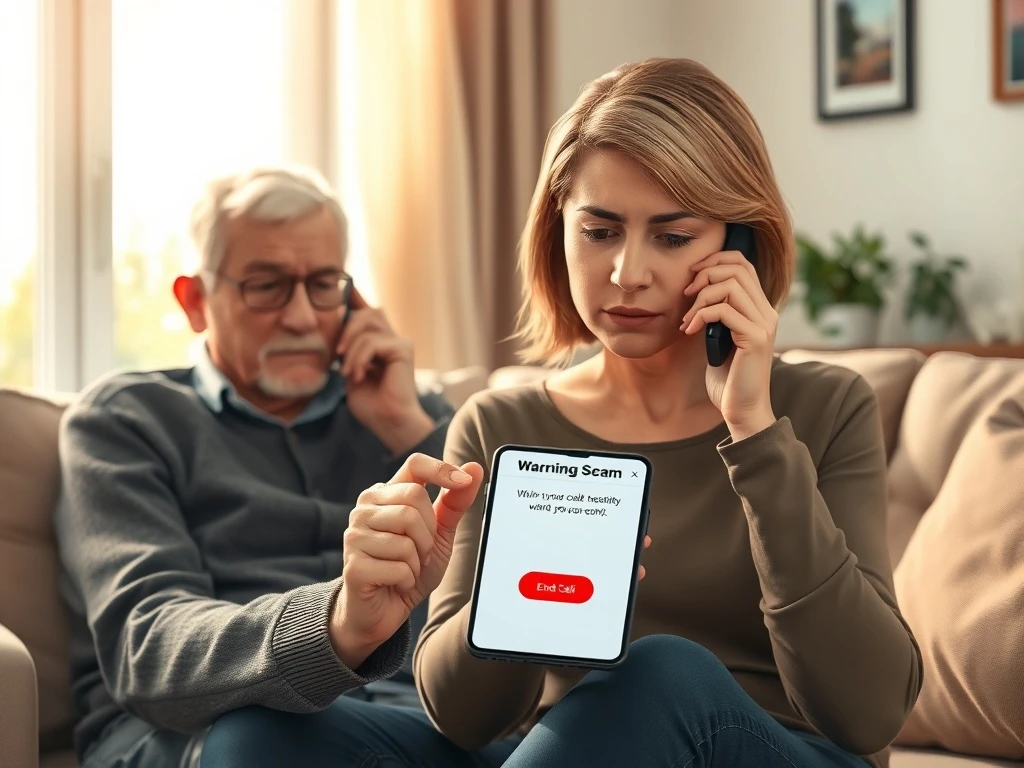
STOCKHOLM, March 13, 2026 — Caller identification platform Truecaller has launched a worldwide rollout of its family protection feature that allows designated administrators to remotely terminate suspected scam calls for vulnerable family members. The company, which boasts over 450 million users globally, confirmed the expansion today after successful pilot programs in Sweden, Chile, Malaysia, and Kenya throughout late 2025. This represents a strategic shift for Truecaller as it moves beyond individual call screening toward proactive family network security. The feature arrives amid escalating global phone fraud, particularly targeting elderly populations less familiar with digital scams.
Truecaller’s Family Protection: How the Remote Intervention Works
The new system enables one tech-savvy family member to become an administrator for a group of up to five people. Kunal Dua, Vice President of Product at Truecaller, explained the mechanism during a briefing. “Every family has someone more vulnerable to these sophisticated scams,” Dua stated. “Now, a designated person can receive real-time alerts about suspicious calls reaching their loved ones.” Once other members join the group through the Truecaller app, the admin receives notifications about potentially fraudulent calls those members receive. Crucially, if the admin believes the call represents immediate danger, they can remotely end the call from their own device.
However, platform limitations exist. While admins receive fraud alerts for both iOS and Android group members, the remote call termination function only works for Android devices. This technical constraint stems from operating system-level restrictions Apple maintains on third-party call management. On Android, members can grant additional permissions allowing the admin to view real-time activity status—such as whether the member is walking or driving—along with battery level and sound settings. Truecaller emphasizes this helps admins avoid calling elderly relatives during potentially dangerous situations.
Addressing the Global Scam Epidemic and Protecting Vulnerable Users
The feature’s global launch responds directly to documented increases in phone-based fraud worldwide. Truecaller’s own data reveals staggering numbers: the platform identified over 7.7 billion fraud calls globally in 2025. In India, Truecaller’s largest market with hundreds of millions of users, authorities have reported significant financial losses from scam operations. These often involve tactics like “digital arrest” scams, where perpetrators impersonate law enforcement to extract money or information. The family protection tool provides a direct countermeasure, allowing intervention before financial or personal data is compromised.
- Immediate Intervention: Admins can disconnect calls in progress, preventing real-time social engineering.
- Proactive Blocking: Admins can block specific numbers and international dialing codes, sharing blocklists across the group.
- Privacy Safeguards: Truecaller confirms admins cannot access non-spam call history or SMS content of group members, addressing potential privacy concerns.
- Cost Accessibility: The feature remains free, available even to users not subscribed to Truecaller’s paid plans.
Executive Insight: A Fundamental Shift in Strategy
Kunal Dua framed the launch as a pivotal moment for the company. “This is a fundamental shift for Truecaller in terms of what we’ve been focusing on as a problem,” he told TechCrunch. “We’re moving from identifying spam to actively preventing harm within trusted networks.” This strategic pivot coincides with the company exploring AI enhancements for the feature. Truecaller recently introduced an AI-powered voicemail assistant in India that summarizes call transcripts. Similar AI could eventually analyze call patterns in real-time to alert admins about specific fraud types a member might be encountering.
Competitive and Regulatory Headwinds Facing Truecaller
The family protection rollout occurs against a challenging backdrop for the Stockholm-based company. Truecaller’s stock has declined over 80% in the past twelve months. Its Q4 2025 financial report showed a 49% year-on-year drop in EBITDA and a 31% decline in advertising revenue. More significantly, Truecaller faces potential disruption from regulatory initiatives like India’s Caller Name Presentation (CNAP) system. CNAP displays a caller’s name as registered with their telecom carrier, potentially reducing reliance on third-party apps like Truecaller for basic caller ID.
| Challenge | Impact on Truecaller | Company Response |
|---|---|---|
| CNAP Rollout in India | Potential reduction in user growth for basic caller ID | Argues CNAP lacks community spam reports; positions as complementary service |
| Stock Performance | ~80% decline in 12 months (as of March 2026) | Focusing on premium features like Family Protection to drive value |
| AI Competition | Carriers & phones building native scam detection | Developing proprietary AI for predictive scam blocking |
CEO Rishit Jhunjhunwala addressed CNAP concerns during the Q4 2025 earnings call. “CNAP is partially rolled out, and so far, the impact on our user growth is limited,” he stated. “Our focus continues to be on delivering a superior product… where we provide a lot more information and context.” The family protection feature exemplifies this strategy—offering value beyond simple name display that CNAP provides.
The Road Ahead: AI Integration and Market Expansion
Truecaller’s development roadmap indicates deeper AI integration for fraud prevention. The company is actively exploring AI systems that can screen calls and automatically disconnect them when detecting specific scam-associated phrases like “digital arrest.” This would augment the human-admin model with automated protection. Furthermore, successful adoption in India—a market particularly plagued by scam calls—could serve as a blueprint for other regions with high fraud rates. The company’s ability to monetize these protection features through premium subscriptions while maintaining a free tier will be critical for financial recovery.
Industry and User Reactions to the New Model
Initial reactions from digital safety advocates have been cautiously optimistic. The model of “trusted network” protection addresses a key gap: elderly users often lack the technical confidence to screen calls themselves but may listen to a family member’s warning. However, some privacy experts question the data permissions model, particularly the real-time activity tracking on Android. Truecaller maintains that all such tracking requires explicit, revocable member consent and is designed solely for safety context. Early user feedback from pilot countries suggests high satisfaction among families with elderly relatives, citing specific prevented fraud attempts during the testing phase.
Conclusion
Truecaller’s global launch of its family protection feature marks a significant evolution from reactive call identification to proactive, network-based scam prevention. By allowing designated admins to remotely intervene in suspicious calls, the platform addresses a critical vulnerability in the digital safety net, particularly for elderly users. The rollout comes as Truecaller navigates substantial market challenges, including regulatory shifts and financial pressures, making this feature a key component of its value proposition beyond basic caller ID. As phone scams grow more sophisticated, tools enabling trusted family intervention represent a practical, human-centric layer of defense. The success of this model will depend on widespread adoption, seamless functionality across device ecosystems, and continued innovation—particularly through AI—to stay ahead of fraudsters.
Frequently Asked Questions
Q1: How does Truecaller’s new family protection feature actually work?
One person becomes an admin for a group of up to five. When a group member receives a call flagged as potential spam, the admin gets an alert. If the admin suspects a scam, they can remotely end that call from their own phone, but only for members using Android devices.
Q2: Is this Truecaller feature available for free, or is it a paid service?
The family protection feature is completely free. Users can create and manage family groups without needing a paid Truecaller subscription, making it accessible to a broad user base.
Q3: What are the main limitations of the remote call termination function?
The key limitation is platform dependency. Admins can terminate calls only for group members using Android phones. For iOS members, admins receive fraud alerts but cannot remotely end calls due to Apple’s system restrictions on third-party call control.
Q4: How does Truecaller protect member privacy within a family group?
Truecaller states that admins cannot view the non-spam call history or SMS content of group members. Permissions for real-time activity data (like walking/driving status on Android) require explicit member consent and can be revoked at any time.
Q5: Why is Truecaller expanding this feature globally now, in March 2026?
The global rollout follows successful pilot programs in Sweden, Chile, Malaysia, and Kenya throughout late 2025. Positive results and high scam call volumes—over 7.7 billion detected in 2025—prompted the worldwide expansion, including in critical markets like India.
Q6: How might India’s CNAP system affect Truecaller’s future, given this new feature?
Truecaller positions features like family protection as value-added services that go beyond CNAP’s basic caller name display. The company argues its platform offers community-based spam reports and proactive protection that carrier systems don’t provide, aiming to make the services complementary rather than competitive.
This article was produced with AI assistance and reviewed by our editorial team for accuracy and quality.