
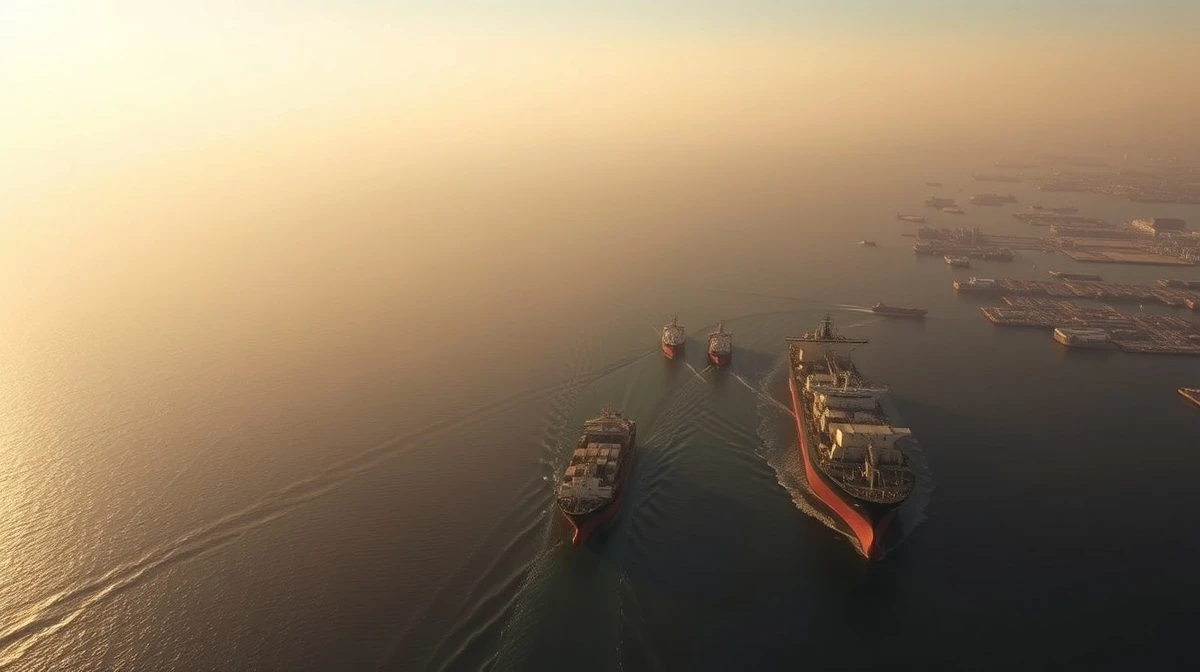
WASHINGTON — President Donald Trump has issued a 48-hour ultimatum to Iran to reopen the Strait of Hormuz to international shipping, according to a statement from the White House. The demand, delivered on March 22, 2026, escalates a simmering regional conflict into a direct confrontation over one of the world’s most vital maritime chokepoints.
White House Statement Details Demand
The White House statement, released early Saturday, declared that Iran’s “unlawful obstruction” of the strait constitutes an immediate threat to global energy security and freedom of navigation. It calls for the full and unimpeded passage of all commercial vessels within two days. The statement did not specify what consequences would follow if Tehran refuses to comply.
“The free flow of commerce is non-negotiable,” the statement read. It accused Iran of leveraging its geographic position to hold the global economy hostage. The ultimatum follows weeks of increased Iranian naval exercises and reported harassment of commercial shipping in the waterway.
Strategic Importance of the Strait
The Strait of Hormuz is arguably the world’s most important oil transit channel. According to data from the U.S. Energy Information Administration, nearly 20-30% of global oil consumption passes through the narrow seaway. A closure or sustained disruption would trigger immediate volatility in energy markets worldwide.
Iran has repeatedly threatened to block the strait in response to severe international sanctions. Its ability to do so, even temporarily through asymmetric naval tactics, has long been a central concern for Western and Asian energy importers. The U.S. Navy’s Fifth Fleet, based in Bahrain, is tasked with ensuring the strait remains open.
Regional and Global Reactions
Initial reactions from U.S. allies have been cautious. A spokesperson for the United Kingdom’s Foreign Office stated they were “assessing the situation” and reiterated the importance of freedom of navigation. Gulf Cooperation Council members, including Saudi Arabia and the United Arab Emirates, have not issued immediate public statements.
Analysts note the ultimatum creates a high-stakes deadline. “This moves the crisis from a phase of posturing to one of potential action,” said a report from the International Crisis Group. Market data from Bloomberg showed a sharp pre-market spike in crude oil futures following the news.
Historical Context of Tensions
U.S.-Iranian tensions have been elevated for years, centered on Iran’s nuclear program and regional influence. The strait has been a flashpoint before. In 2019 and 2021, Iran was accused of attacking tankers in the Gulf of Oman, leading to a significant U.S. military buildup in the region.
The current crisis appears more direct, with a public deadline set by the U.S. president. The last major U.S. military action in the area was the 2020 strike that killed Iranian General Qasem Soleimani in Baghdad.
What Happens Next
All attention now turns to Tehran’s response. Iran could comply, seek to negotiate, or reject the ultimatum outright, risking a military confrontation. The U.S. has significant naval and air assets in the region capable of enforcing the demand. Global markets and diplomatic channels will be intensely monitored over the next 48 hours as the deadline approaches.
This article was produced with AI assistance and reviewed by our editorial team for accuracy and quality.



