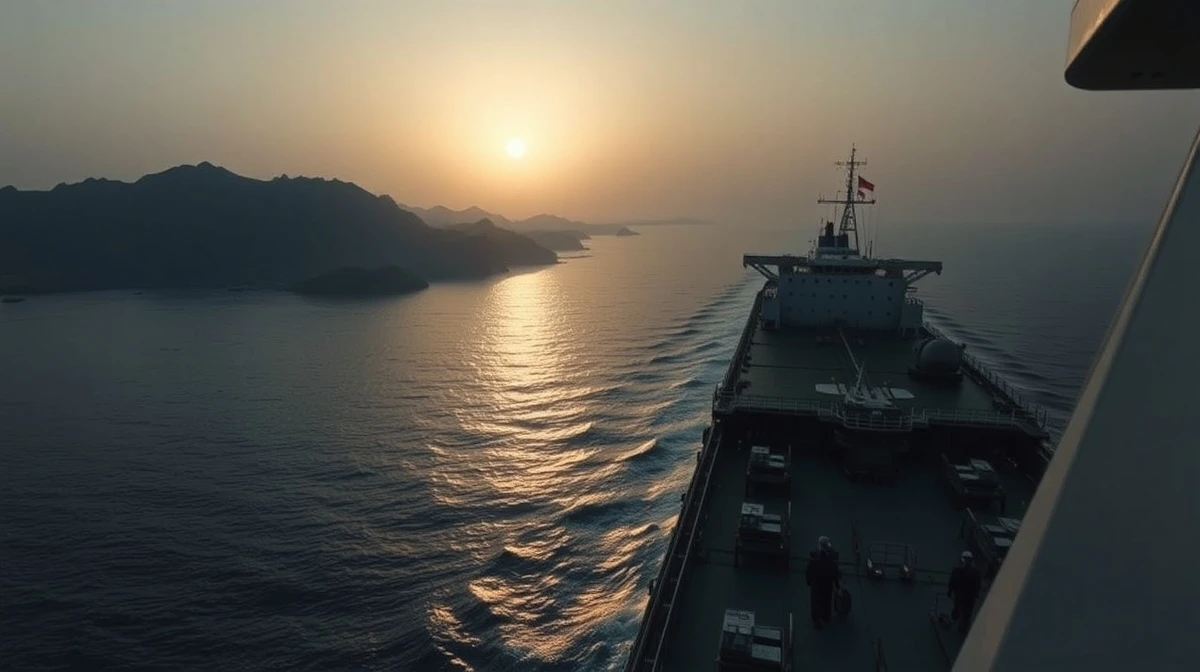
April 10, 2026 — Former U.S. President Donald Trump has declared that Iran’s management of oil shipments through the Strait of Hormuz violates international agreements. His statement directly challenges current diplomatic arrangements and raises the specter of renewed friction over the world’s most critical oil transit route.
A Direct Challenge to Current Policy
“Iran’s handling of oil through the Strait of Hormuz is not the agreement we have,” Trump stated. The remark, made during a policy speech, targets arrangements made by subsequent administrations. Industry watchers note the comment signals a potential foreign policy priority should Trump return to office.
Also read: Japan to Release 20 Days of Oil from Reserves in May
This suggests a hardline stance reminiscent of his previous term. The Strait sees about 21 million barrels of oil daily, roughly a fifth of global consumption.
Geopolitical and Market Implications
Trump’s assertion carries immediate weight. It injects uncertainty into global energy markets. Brent crude futures reacted, rising over 2% in early trading following the comments.
Also read: NZD/USD Pressured Near 0.5850 Ahead of US CPI
Data from the U.S. Energy Information Administration shows the waterway’s irreplaceable role. Any threat to transit there can spike prices worldwide. “This is a direct shot across the bow of current de-escalation efforts,” an analyst from a major commodities firm noted, speaking on background. The implication is clear: stability is fragile.
Historical Context of Tension
The Strait has been a flashpoint for decades. During Trump’s presidency, tensions peaked. The U.S. reimposed sanctions on Iranian oil exports in 2018. Iran responded with harassment of commercial shipping and seized tankers.
A notable incident in 2019 saw Iran capture a British-flagged tanker. The U.S. military increased its presence in response. This cycle of action and retaliation brought the region close to open conflict. Trump’s latest comments threaten to revive that volatile script.
What This Means for Global Supply
The immediate risk is a confidence shock. Shipping insurance premiums for the region could climb. Some tanker companies might hesitate to use the route. According to EIA analysis, few viable alternatives exist for moving such vast quantities of oil.
Major consumers in Asia and Europe are watching closely. A sustained disruption would force a scramble for reserves. The U.S. Strategic Petroleum Reserve, while a buffer, cannot offset a long-term closure. This could signal a return to energy-driven inflation pressures.
Looking Ahead
Trump’s statement is more than rhetoric. It frames the Strait of Hormuz as a central issue for the upcoming political cycle. The Biden administration has pursued a more cautious path, focusing on diplomatic channels to ensure free passage.
That approach is now under direct critique. The coming weeks will test market nerves. Further commentary from Trump or his advisors will be scrutinized for specific policy plans. For now, the warning hangs over the narrow waters of the Gulf, a reminder of how quickly calm can shatter.

This article was produced with AI assistance and reviewed by our editorial team for accuracy and quality.