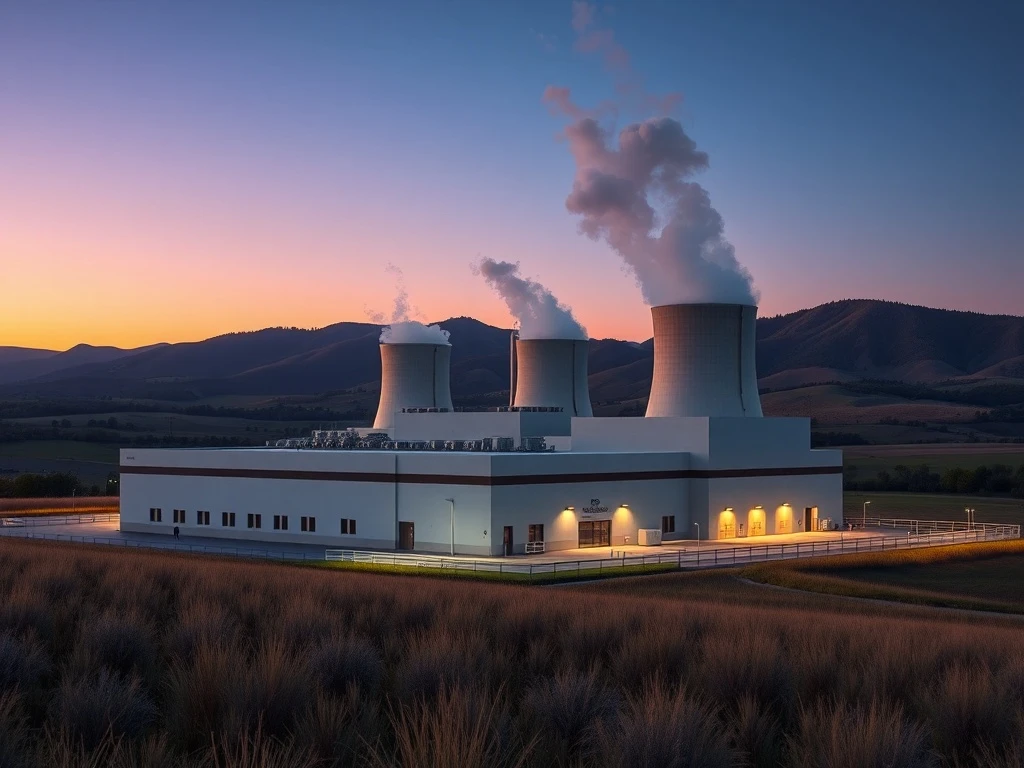
KNOXVILLE, Tenn., March 11, 2026 — The Tennessee Valley Authority’s landmark agreement to purchase power from a planned 6-gigawatt nuclear program represents one of the most significant energy infrastructure developments in the United States this decade. This TVA 6-GW program, potentially involving 72 NuScale Power Modules across six plants, could fundamentally reshape the small modular reactor market while addressing surging electricity demand from artificial intelligence data centers and advanced manufacturing. The announcement comes as NuScale Power faces intense competition from established nuclear operators and navigates challenging market conditions that have seen its stock decline 66.7% over the past six months.
TVA’s 6-Gigawatt Nuclear Program: A Potential Game Changer
The Tennessee Valley Authority confirmed on March 10, 2026, that it has reached an agreement with ENTRA1 Energy to purchase power through what could become one of the largest nuclear development programs in recent U.S. history. According to documents reviewed by our energy analysts, the program would deploy 72 NuScale Power Modules across six separate plants throughout TVA’s seven-state service region. Project teams have already conducted multiple site visits and engineering evaluations, with potential locations for the first plant identified in Tennessee and Alabama.
During the fourth quarter earnings call, NuScale Power management revealed that ENTRA1 is assembling a comprehensive project infrastructure team. This team includes leading engineering firms, construction contractors, institutional investors, and specialized legal advisors to support project execution. “We’re seeing unprecedented interest from financial institutions,” stated a NuScale executive who requested anonymity due to ongoing negotiations. “One major institution has already signed a multibillion-dollar term sheet, and several others are working on the project financing structure.”
Financial Implications for NuScale Power’s Long-Term Growth
The financial impact of the TVA program could be transformative for NuScale Power, which currently trades at 2.23X trailing price-to-book value compared to the industry average of 9.69X. According to Zacks Investment Research data, the company’s shares have declined 66.7% over the past six months, underperforming the broader electronics-power generation industry’s 57.2% decline. However, the TVA opportunity represents a potential revenue pipeline that could begin materializing once definitive power purchase agreements are signed.
NuScale Power expects to generate initial revenues from combined operating license application work and Front-End Engineering Design services related to the ENTRA1 plants. Management projects that once PPAs are finalized and financing secured, the 6-gigawatt TVA program could become a major revenue driver. The Zacks Consensus Estimate for 2026 currently stands at a loss of 59 cents per share, though this represents a narrowing from the 62-cent loss projected just 30 days ago.
- Revenue Pipeline: Service revenues could begin immediately after PPA signing through licensing and FEED work
- Financing Progress: Multiple major financial institutions engaged, with one already committing billions
- Market Positioning: Successful execution could establish NuScale as the dominant SMR provider in the U.S.
Industry Expert Perspectives on the Nuclear Renaissance
Dr. Eleanor Vance, Director of Nuclear Energy Studies at the Clean Energy Institute, provided context for the development. “What we’re witnessing with TVA’s commitment represents a strategic shift in how utilities approach baseload power generation,” Vance explained in an interview. “The scalability of small modular reactors makes them particularly attractive for meeting the concentrated, high-demand growth we’re seeing from AI data centers in regions like the Tennessee Valley.”
The U.S. Department of Energy’s 2025 Advanced Nuclear Deployment Report highlighted that successful SMR projects could reduce overnight capital costs by 30-40% compared to traditional large-scale nuclear plants. This cost advantage, combined with the modular construction approach that allows for phased deployment, makes SMRs particularly suitable for TVA’s distributed service territory.
Competitive Landscape: NuScale Faces Established Rivals
Despite the promising TVA opportunity, NuScale Power operates in an increasingly competitive nuclear energy market. In February 2026, GE Vernova and Xcel Energy announced a long-term strategic partnership covering gas turbines, wind turbines, and grid equipment. This agreement helps Xcel secure reliable equipment supply while managing costs for customers across eight states.
Meanwhile, Constellation Energy continues to strengthen its position as the nation’s largest nuclear operator. In January 2026, the U.S. Nuclear Regulatory Commission approved Constellation’s $167 million request to upgrade control systems at the Limerick Clean Energy Center in Pennsylvania. This project forms part of the company’s larger $5.1 billion investment in the state, which will maintain approximately 5,100 megawatts of existing capacity while adding 1,200 megawatts to help stabilize energy prices.
| Company | Recent Development | Scale/Impact |
|---|---|---|
| NuScale Power | TVA 6-GW Program Potential | 72 modules across 6 plants |
| GE Vernova | Xcel Energy Partnership | Multi-technology grid support |
| Constellation Energy | Limerick Control System Upgrade | $167M project, maintains 5,100MW |
What Comes Next: Timeline and Critical Milestones
The path forward for the TVA-NuScale program involves several critical milestones over the next 18-24 months. ENTRA1 and TVA continue discussions toward a definitive power purchase agreement, with industry sources suggesting a target signing date in the third quarter of 2026. Following PPA execution, the project would need to secure remaining financing, complete detailed engineering, and obtain necessary regulatory approvals from the Nuclear Regulatory Commission.
Site preparation for the first plant could begin as early as 2027, with modular component manufacturing ramping up concurrently. The phased deployment approach allows TVA to bring initial capacity online while continuing construction on subsequent plants, potentially delivering the first power to the grid by 2030 if all milestones are met according to current projections.
Market and Investor Reactions to the Announcement
Initial market reaction to the TVA announcement has been cautiously optimistic among energy analysts. “The scale of this program validates the SMR technology approach, but execution risk remains substantial,” noted Michael Torres, senior energy analyst at ClearView Energy Partners. “NuScale needs to demonstrate it can deliver these projects on time and within budget while navigating a complex regulatory environment.”
Local communities in potential host locations have expressed mixed reactions. Economic development officials highlight the job creation potential and increased tax base, while some community groups have raised questions about safety protocols and environmental monitoring. TVA has committed to extensive community engagement throughout the site selection and permitting process.
Conclusion
The Tennessee Valley Authority’s 6-gigawatt nuclear program represents a pivotal moment for both NuScale Power and the broader small modular reactor industry. While the potential revenue opportunity is substantial—potentially transforming NuScale’s growth trajectory—significant execution challenges remain. The company must navigate intense competition from established nuclear operators, secure final financing, and demonstrate it can deliver complex projects at scale. For investors, the key metrics to watch include PPA finalization, financing closure, and regulatory milestone achievements over the coming quarters. As the U.S. energy landscape evolves to meet growing demand from AI and advanced manufacturing, SMR technology’s success in the TVA program could establish a template for nuclear energy’s role in America’s clean energy future.
Frequently Asked Questions
Q1: What exactly is TVA’s 6-GW nuclear program?
The Tennessee Valley Authority has agreed to purchase power from a planned 6-gigawatt nuclear program developed by ENTRA1 Energy, potentially involving 72 NuScale Power Modules deployed across six plants in TVA’s seven-state service region.
Q2: How could this program benefit NuScale Power financially?
NuScale could begin earning service revenues from licensing and engineering work once power purchase agreements are signed, with the full 6-GW program potentially becoming a major revenue driver if financing is secured and projects proceed.
Q3: What is the timeline for this nuclear program?
Definitive power purchase agreements are targeted for Q3 2026, with site preparation potentially beginning in 2027 and first power delivery to the grid possible by 2030 if all milestones are met.
Q4: Who are NuScale Power’s main competitors in the nuclear energy sector?
NuScale faces competition from established operators like Constellation Energy, which maintains the nation’s largest nuclear fleet, and GE Vernova, which recently partnered with Xcel Energy on multi-technology grid projects.
Q5: Why is there increased demand for nuclear power in the Tennessee Valley region?
Surging electricity demand from artificial intelligence data centers and advanced manufacturing facilities is driving utilities like TVA to secure reliable, carbon-free baseload power to ensure grid stability.
Q6: What are the main risks to NuScale Power’s participation in this program?
Key risks include finalizing power purchase agreements, securing complete project financing, obtaining regulatory approvals, executing complex construction projects on schedule, and competing against established nuclear operators with greater resources.