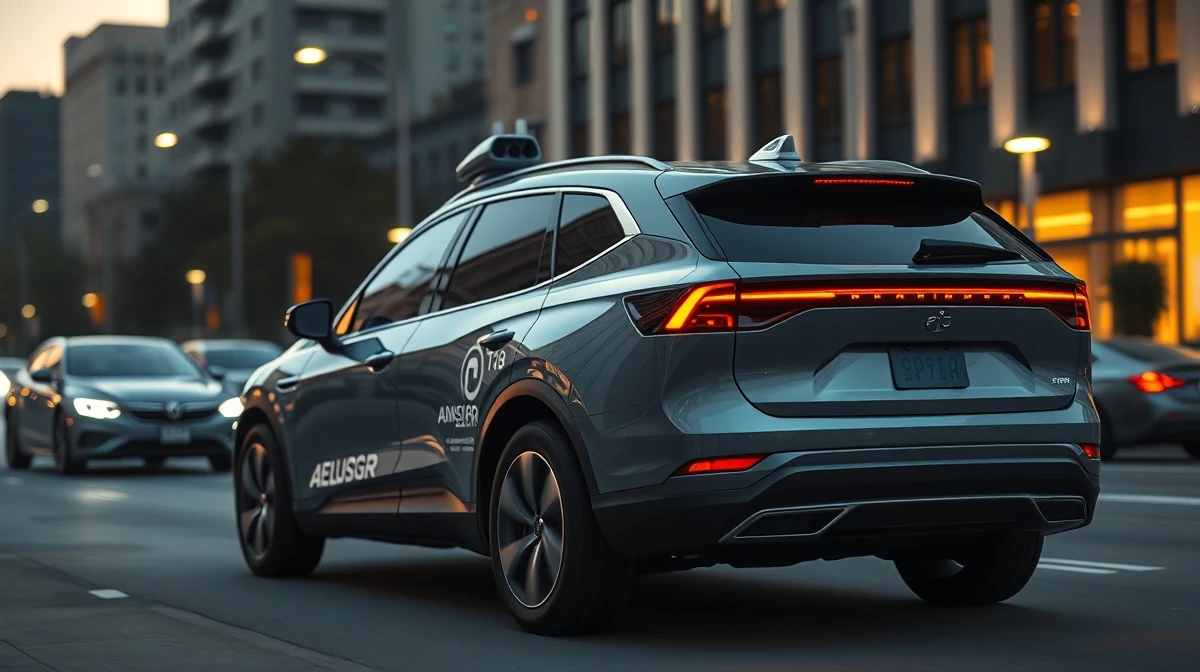
March 22, 2026 — Uber has made a significant move to secure its future in autonomous ride-hailing, announcing a major investment and vehicle order with electric vehicle maker Rivian. The deal centers on Rivian’s forthcoming R2 SUV platform, which the companies plan to develop into a fully autonomous robotaxi.
The Core of the Partnership
Under the agreement, Uber will make an initial $300 million investment in Rivian. The ride-hailing giant has also committed to purchasing 10,000 fully autonomous R2 robotaxis. These vehicles are slated for an exclusive rollout on Uber’s network, with initial deployments planned for San Francisco and Miami.
Uber holds an option to purchase up to 40,000 additional vehicles starting in 2030. The total potential value of the fleet order could reach $1.25 billion. This partnership represents a strategic shift for Uber, which sold its internal self-driving unit, Uber ATG, in 2020 but has since pursued a broad network of partnerships with autonomous vehicle technology firms.
Rivian’s Ambitious Timeline and Challenges
The deal places considerable execution risk on Rivian. The EV manufacturer has not yet begun production of the R2 SUV. Furthermore, it has not publicly tested or deployed a self-driving system designed for commercial robotaxi operations.
Adding complexity, the robotaxis are intended to be built at Rivian’s factory in Georgia, a facility that remains under construction. The company has already signaled the financial weight of its autonomy push. Rivian stated it no longer expects to meet its profitability goal for 2027 due to increased spending on its self-driving technology efforts.
A source familiar with both companies suggested negotiations for the robotaxi deal had been lengthy. The source, who requested anonymity to discuss private talks, indicated the partnership was the result of long-term strategic planning.
Uber’s Broader Autonomous Strategy
This agreement is the first where Uber’s partner is both the developer of the self-driving system and the vehicle manufacturer. Over the past two years, Uber has established partnerships with dozens of AV technology companies across delivery, drones, trucking, and robotaxis.
Its strategy includes agreements with Chinese firms to launch robotaxi services in Europe and the Middle East, as well as partnerships with startups like U.K.-based Wayve. The Rivian deal deepens Uber’s portfolio as it seeks to integrate autonomous technology across its global platform without bearing the full cost and risk of in-house development.
Nvidia Expands Its Automotive Footprint
In related industry news, chipmaker Nvidia continues to solidify its role in autonomous driving. During its recent GTC conference, CEO Jensen Huang announced new or expanded deals with several major automakers for its Nvidia Drive Hyperion autonomous vehicle development platform.
The companies include BYD, Geely, Hyundai, and Nissan. They join existing partners General Motors, Mercedes-Benz, and Toyota. Huang described a significant milestone, stating, “The ChatGPT moment of self-driving cars has arrived. We now know we could successfully autonomously drive cars.” He noted that the four newly announced automakers collectively produce approximately 18 million vehicles annually.
Other Mobility Sector Developments
Several other significant deals and events were reported in the transportation technology sector. Advanced Navigation, an Australian startup developing navigation and autonomous systems, raised $110 million in a Series C round.
Amazon acquired Rivr, a Zurich-based startup known for its stair-climbing delivery robot. Terms were not disclosed. In regulatory news, the National Highway Traffic Safety Administration escalated its investigation into Tesla’s Full Self-Driving (Supervised) software performance in low-visibility conditions to an engineering analysis, a step that precedes a potential recall.
What Comes Next
The success of the Uber-Rivian partnership hinges on Rivian’s ability to execute on multiple ambitious fronts simultaneously: bringing the R2 to production, constructing its Georgia plant, and developing a reliable, certified autonomous driving system. For Uber, the deal is a calculated bet that could provide it with a proprietary, purpose-built robotaxi at a lower capital risk. The industry will watch closely for progress on the planned San Francisco and Miami deployments as a key test for this high-stakes collaboration.
This article was produced with AI assistance and reviewed by our editorial team for accuracy and quality.