
March 17, 2026 — Cocoa futures declined in trading as reports of improved growing conditions in West Africa eased supply concerns that have dominated the market. May ICE NY cocoa contracts fell approximately 1.7%, while London cocoa futures dropped over 2%.
Rainfall Boosts Supply Outlook
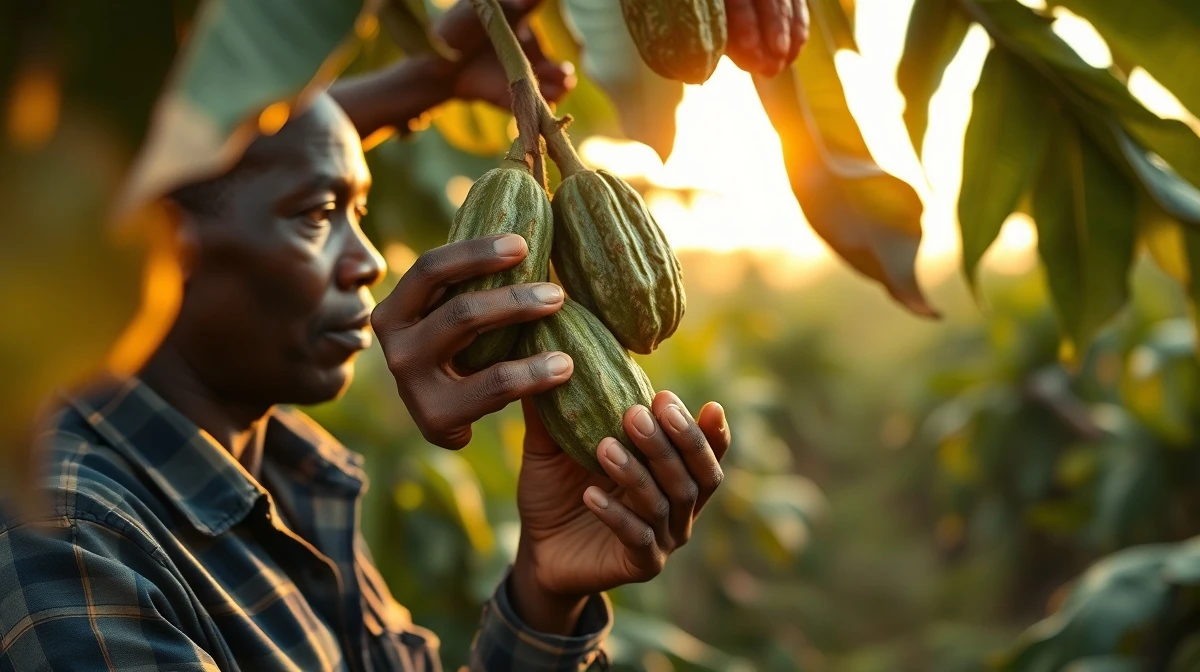
Farmers in Ivory Coast and Ghana reported that recent rainfall has enhanced pod development in cocoa trees. These two nations collectively produce more than half of the world’s cocoa. The improved weather pattern comes after a period of significant market volatility driven by supply constraints.
Market pressure also stemmed from rising inventory levels. ICE cocoa inventories reached a 7.25-month high of 2,273,550 bags earlier this week, according to exchange data. This buildup indicates ample available supplies despite ongoing production challenges.
Price Cuts and Regional Dynamics
Government pricing decisions have further influenced market conditions. Last month, Ghana reduced the official price paid to its cocoa farmers by nearly 30% for the 2025/26 growing season. Ivory Coast announced a 57% cut for farmer payments that took effect with the mid-crop harvest beginning in March.
These price reductions followed a brief rally in New York cocoa futures last week. That movement occurred after Reuters reported that local grinders purchased over 400,000 metric tons of Ivory Coast cocoa export contracts in a ten-day period after purchases resumed for the mid-year crop.
Conflicting Supply Signals
The market received mixed production forecasts from key regions. Ivory Coast projected its 2025/26 cocoa production would fall 10.8% year-over-year to 1.65 million metric tons. Nigeria’s Cocoa Association forecasted an 11% decline to 305,000 metric tons for the same period.
However, Nigerian December cocoa exports increased 17% year-over-year to 54,799 metric tons, according to a Bloomberg report from February. Nigeria ranks as the world’s fifth-largest cocoa producer.
Analyst assessments reflect this uncertainty. Rabobank reduced its 2025/26 global cocoa surplus estimate to 250,000 metric tons in February, down from a November forecast of 328,000 metric tons. Conversely, the International Cocoa Organization raised its 2024/25 global surplus estimate to 75,000 metric tons in early March.
Demand Concerns Persist
Chocolate manufacturers continue to report weak demand as consumers resist higher prices. Barry Callebaut AG, the world’s largest bulk chocolate maker, reported a 22% sales volume decline in its cocoa division for the quarter ending November 30. The company cited “negative market demand” in its January announcement.
Regional grinding data confirms this trend. The European Cocoa Association reported that fourth-quarter European cocoa grindings fell 8.3% year-over-year to 304,470 metric tons, the lowest Q4 figure in twelve years. Asian grindings declined 4.8% during the same period, while North American processing rose a marginal 0.3%.
Logistical Factors Provide Support
Some factors limited price declines. The closure of the Strait of Hormuz has increased global shipping rates, insurance costs, and fuel prices, raising costs for cocoa importers. Additionally, cocoa deliveries to ports in Ivory Coast have slowed.
Cumulative data through March 15 showed Ivory Coast farmers shipped 1.37 million metric tons of cocoa to ports in the current marketing year. This represents a 2.8% decrease from the same period a year earlier.
Market Outlook
Analysts project continued market surpluses in coming seasons. StoneX forecasted in January a global cocoa surplus of 287,000 metric tons for the 2025/26 season. The firm anticipates a 267,000 metric ton surplus for 2026/27.
The International Cocoa Organization estimated global cocoa production increased 8.4% year-over-year to 4.7 million metric tons for the 2024/25 season. This marked the first production surplus in four years, according to the organization’s March report.
For current market data, refer to the ICE Cocoa Futures page. Production statistics are available from the International Cocoa Organization.
This article was produced with AI assistance and reviewed by our editorial team for accuracy and quality.



