
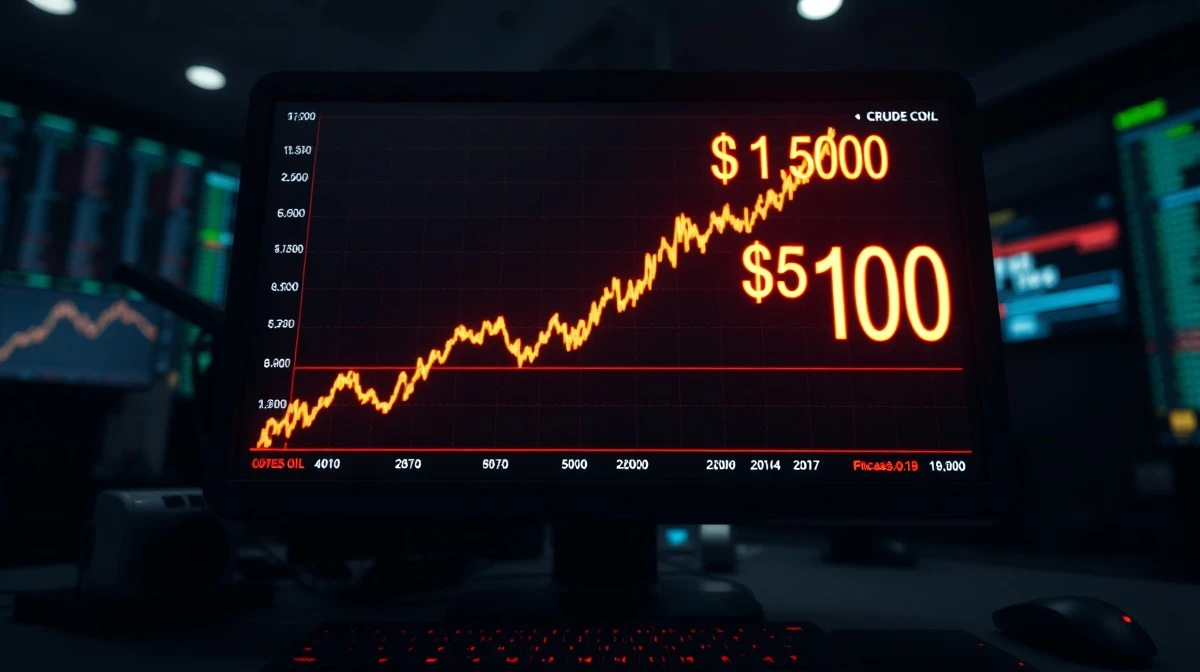
West Texas Intermediate crude oil futures breached the $100 per barrel mark on March 30, 2026, extending a powerful rally driven by escalating conflict in the Middle East and tightening global supplies. The benchmark has gained for five consecutive weeks, marking its longest winning streak in over a year.
Price Action and Market Drivers
WTI for May delivery traded as high as $100.48 during the session. Data from the CME Group shows the contract settled near session highs. This move represents a gain of more than 25% since the rally began in mid-February. Brent crude, the international benchmark, also traded above $104.
Also read: Pound Falls vs Dollar on US Military Reports
Analysts point to a confluence of factors. “The market is pricing in a significant risk premium,” said one energy strategist at a major investment bank, who requested anonymity due to firm policy. “Every headline from the region adds another layer of uncertainty.” The primary driver is the expanding conflict between Israel and Hezbollah, which has raised fears of a broader regional war that could directly threaten oil transit routes.
Supply Disruptions and Inventory Data
Beyond geopolitics, tangible supply issues are supporting prices. Recent data from the U.S. Energy Information Administration showed a larger-than-expected drawdown in domestic crude inventories. Stockpiles fell by 6.4 million barrels last week, far exceeding analyst forecasts.
Also read: Israeli Forces Shoot Down Two Drones From Yemen
Production discipline from OPEC+ members continues. The group has maintained output cuts first implemented in late 2023. According to a recent Reuters survey, OPEC output in March remained near its lowest level in years. This suggests the cartel is committed to supporting prices despite the rally.
Market data also indicates strong physical demand. Refining margins, particularly for diesel, have remained strong. This encourages refiners to process more crude, tightening the market further.
What This Means for the Global Economy
Sustained oil prices above $100 pose a clear threat to the global inflation fight. Central banks, including the Federal Reserve, have been cautiously signaling potential rate cuts later in the year. A persistent energy price shock could delay or derail those plans.
“The Fed’s calculus just got more complicated,” noted a market strategist at Janus Henderson Investors in a client note reviewed for this article. “Energy is a core input for everything. This will feed through to consumer prices with a lag.” The implication is that businesses and consumers should brace for higher costs for transportation, shipping, and manufactured goods.
Historical Context and Trader Positioning
The last time WTI consistently traded above $100 was in the summer of 2022, following Russia’s invasion of Ukraine. The current rally, while sharp, has not yet reached those extreme levels in inflation-adjusted terms. However, trader positioning is becoming increasingly bullish.
Commitments of Traders reports from the U.S. Commodity Futures Trading Commission show money managers have built their largest net-long position in WTI in over two years. This suggests professional investors see further room for prices to run. The risk, analysts warn, is a sudden de-escalation of tensions or a surprise increase in supply that could trigger a sharp reversal.
Looking Ahead
All eyes are on diplomatic efforts in the Middle East and the next OPEC+ meeting, scheduled for early April. The group will review its production policy. Most observers expect the cuts to remain in place. For now, the path of least resistance for oil appears higher. The market is sending a clear signal: geopolitical risk is back, and it has a price tag well above $100 per barrel.
For real-time price data, refer to the CME Group’s official WTI crude oil futures page. Broader energy market analysis is available from the U.S. Energy Information Administration.

This article was produced with AI assistance and reviewed by our editorial team for accuracy and quality.



