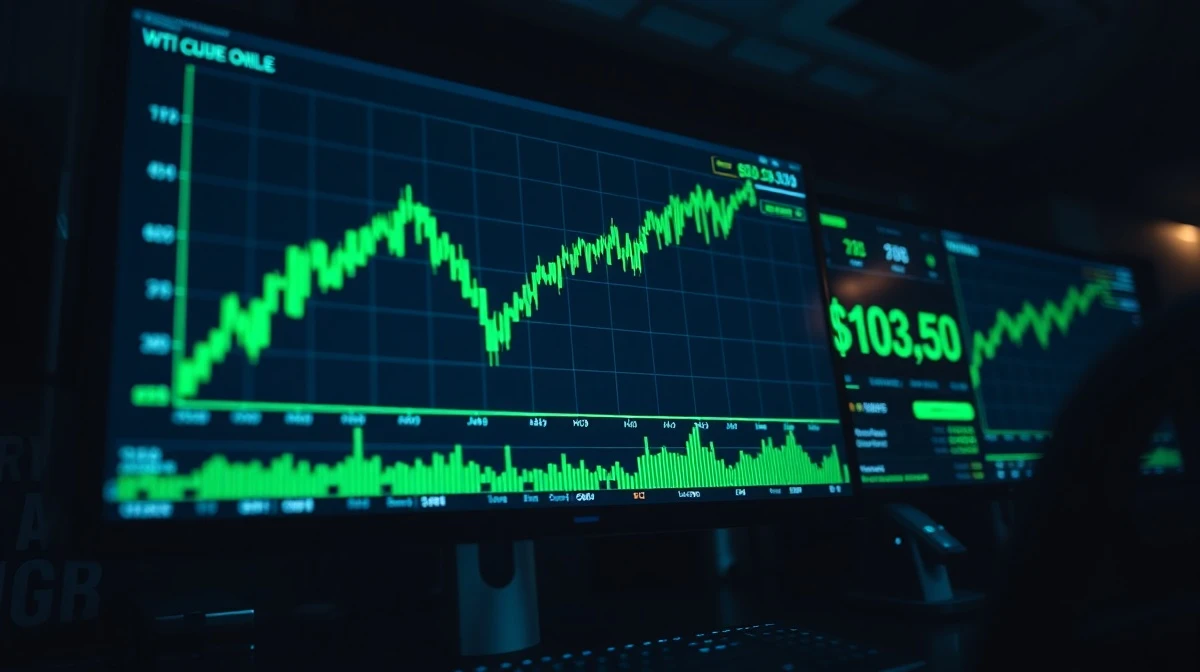
West Texas Intermediate crude oil futures climbed above $103.50 a barrel on April 7, 2026, as renewed geopolitical threats from former President Donald Trump against Iran’s energy infrastructure rattled markets.
The price move reflects heightened anxiety over potential disruptions to Middle Eastern oil flows. Trump’s comments, delivered during a campaign rally, specifically targeted Iran’s oil production and export capabilities.
Also read: China Inflation Rises on Higher Energy Costs
Geopolitical Spark for a Volatile Market
Trump’s rhetoric marks an escalation in long-standing tensions. He vowed to take “swift and decisive” action against Iranian refineries and ports if re-elected, framing it as a matter of national security. Market data from the CME Group shows trading volume for front-month WTI contracts spiked following the news.
This suggests traders are quickly pricing in a renewed risk premium. The global oil market has been tight for months, constrained by OPEC+ production limits and steady demand. Any threat to supply from a major producer like Iran immediately moves prices.
Also read: China CPI, PPI Data Set to Influence AUD/USD
“The market is hypersensitive to supply-side rhetoric right now,” an analyst from a major commodities brokerage noted, requesting anonymity due to firm policy. “Trump’s comments are a direct challenge to a key source of global supply. Traders have to factor that in.”
Iran’s Position and Global Ramifications
Iran is a significant player in global oil. According to the latest monthly report from the International Energy Agency, Iran was producing approximately 3.2 million barrels per day as of March 2026. Most of this oil flows to Asian markets, notably China.
A direct confrontation threatening this supply would have immediate consequences. Brent crude, the global benchmark, also rose sharply in tandem with WTI. The price spread between the two benchmarks remained stable, indicating a broad-based market reaction rather than a localized North American event.
What this means for consumers is more pain at the pump. The U.S. national average for gasoline has been climbing. Data from the American Automobile Association shows prices are up nearly 15% year-to-date. A sustained oil price spike would push those numbers higher.
Historical Context and Market Memory
This is not the first time political rhetoric has moved oil markets. The Trump administration’s withdrawal from the Iran nuclear deal in 2018 and the subsequent sanctions triggered major volatility. Prices soared above $85 a barrel that year before later retreating.
Market watchers note that the current situation is different. Spare production capacity among other major producers is limited. Strategic petroleum reserves in the U.S. and other nations are depleted relative to historical levels after coordinated releases in recent years.
The market has fewer shock absorbers. This could signal more dramatic price swings ahead. The implication is clear: geopolitical stability in the Middle East remains a foundational pillar for global energy prices.
What Comes Next
All eyes will be on official responses from Tehran and from the current U.S. administration. Any military mobilization or escalation in rhetoric would likely send prices higher. Conversely, if the threats are dismissed as campaign talk without immediate action, some of the risk premium could evaporate.
For now, the charts show a market on edge. The technical breakout above the $103 level is a key signal for many algorithmic traders. The next major resistance level sits near $108, a price not seen since mid-2022. Whether oil reaches that point depends heavily on the next headlines from the Persian Gulf.

This article was produced with AI assistance and reviewed by our editorial team for accuracy and quality.