
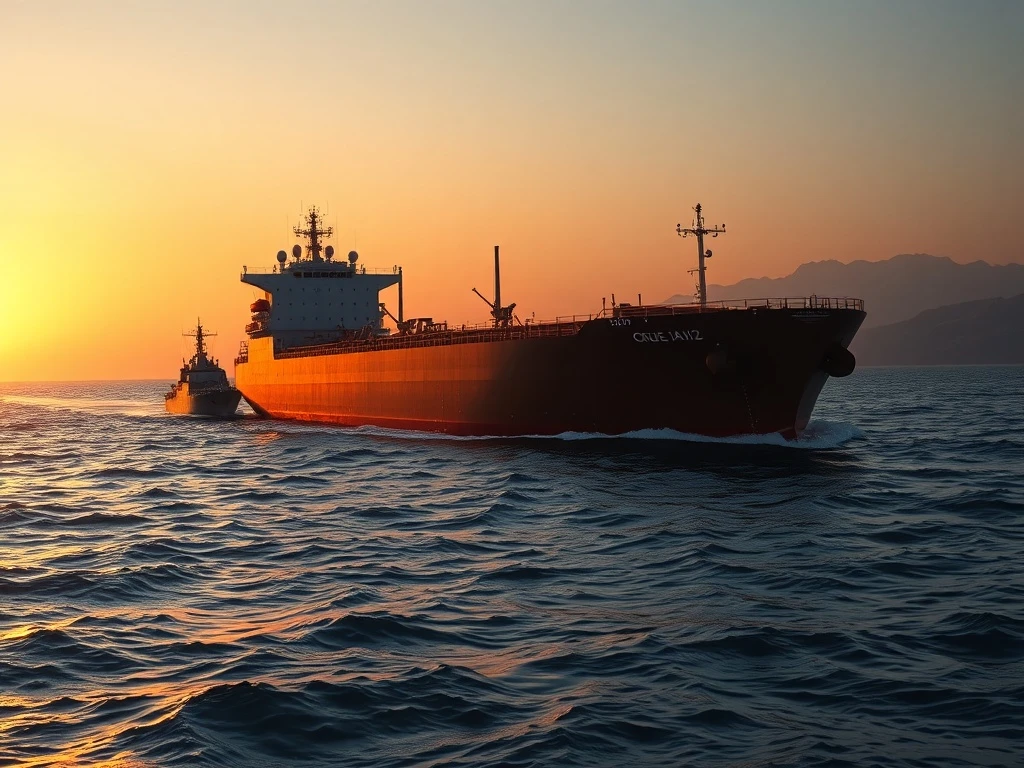
NEW YORK/LONDON, March 15, 2026 — WTI crude oil futures swung violently in early trading today, with prices whipsawing between $84.50 and $88.75 per barrel within a two-hour window. The dramatic WTI swings followed multiple reports of escalating U.S.-Iran naval confrontations in the Strait of Hormuz and unconfirmed intelligence about American military escorts for commercial tankers. Market participants described trading conditions as chaotic, with the CME Group reporting volume spikes exceeding 300% above the 30-day average during the most volatile period. The uncertainty stems directly from what energy analysts now characterize as the most dangerous phase of Persian Gulf tensions since 2019.
WTI Price Action and Immediate Market Reaction
Trading screens flashed red then green repeatedly as conflicting reports hit terminals. The initial price surge began at 8:32 AM EST when Reuters cited two unnamed U.S. defense officials confirming that the USS Dwight D. Eisenhower carrier group had altered course toward the Strait of Hormuz. WTI jumped $2.15 within seven minutes. “We saw algorithmic trading systems react to keyword triggers before human traders could process the information,” said Maya Rodriguez, head of commodities strategy at Citigroup. “The algorithms detected ‘carrier group’ and ‘Strait of Hormuz’ in the news feed and executed buy orders based on historical correlation patterns.”
By 9:15 AM, Bloomberg reported contradictory information from Pentagon sources denying any change in naval deployment orders. Prices retreated $1.80 before another surge occurred at 9:42 AM when The Wall Street Journal published details about proposed tanker escort protocols being circulated among NATO allies. This pattern of conflicting information created what Rodriguez calls “a perfect storm for volatility.” The CBOE Crude Oil Volatility Index (OVX) spiked to 42.8, its highest level since the 2022 Russia-Ukraine energy crisis.
Geopolitical Context: Escalating US-Iran Tensions
The current confrontation represents the third major escalation cycle since 2024. Iranian Revolutionary Guard Corps naval units have conducted seventeen intercepts of commercial shipping in the past ninety days, according to data from the International Maritime Security Construct. This represents a 140% increase over the same period last year. The U.S. Fifth Fleet based in Bahrain has responded with increased patrols, creating what Admiral James Waters described in February as “a congested battlespace with too many actors and unclear rules of engagement.”
- Military Posturing: Iran deployed additional Ghadir-class submarines to the Persian Gulf last week, while the U.S. moved F-35 squadrons to Al Dhafra Air Base in the UAE.
- Diplomatic Channels: Backchannel communications through Oman have reportedly stalled over Iranian demands for sanctions relief.
- Regional Alliances: Saudi Arabia and the UAE have quietly increased their coordination with U.S. naval operations while maintaining public neutrality.
Expert Analysis: Energy Market Implications
“The market is pricing in a 15-20% probability of a supply disruption exceeding one million barrels per day,” said Dr. Kenneth Park, senior fellow at the Center for Strategic and International Studies and former Department of Energy official. “That probability has doubled since January. What makes this situation particularly dangerous is the convergence of military, economic, and domestic political pressures in both Washington and Tehran.” Park notes that Iran’s oil exports have climbed to 1.8 million barrels per day despite sanctions, creating what he calls “a perverse incentive for escalation” as both sides have more to lose from actual conflict.
The U.S. Energy Information Administration’s Short-Term Energy Outlook, published yesterday, already incorporated a $5-8 per barrel “geopolitical risk premium” for 2026. Today’s movements suggest that premium may need upward revision. Goldman Sachs commodities research team, led by Samantha Chen, published a note this afternoon estimating that sustained tensions could add $12-15 to benchmark prices if the Strait of Hormuz experiences even temporary disruptions.
Historical Comparisons and Market Psychology
Today’s volatility pattern bears striking resemblance to three previous episodes: the 2019 tanker attacks (maximum daily swing: $4.20), the 2020 U.S.-Iran confrontation following General Soleimani’s death ($3.80 swing), and the 2022 Houthi attacks on UAE facilities ($3.10 swing). However, the speed of today’s movements exceeded all three, with algorithms amplifying both directions. “The market structure has changed fundamentally since 2022,” explained Rodriguez. “Algorithmic trading now accounts for 68% of crude oil futures volume, up from 52% in 2022. These systems create reflexive feedback loops where price movements generate more price movements.”
| Event | Date | Maximum Daily WTI Swing | Primary Trigger |
|---|---|---|---|
| Current Tensions | March 15, 2026 | $4.25 (as of 2 PM EST) | Conflicting naval deployment reports |
| 2019 Tanker Attacks | June 13, 2019 | $4.20 | Explosions on two tankers |
| Soleimani Strike | January 3, 2020 | $3.80 | U.S. drone strike in Baghdad |
| 2022 UAE Attacks | January 17, 2022 | $3.10 | Houthi drone strikes on Abu Dhabi |
Forward-Looking Analysis: What Happens Next
The immediate catalyst for market stabilization will be official clarification from the Pentagon and Iranian Foreign Ministry, both expected within the next 24-48 hours. Defense Department spokesperson Rebecca Carter scheduled a briefing for 5 PM EST today, where she is expected to address the deployment rumors directly. Meanwhile, the Joint Comprehensive Plan of Action (JCPOA) negotiation track remains frozen, with European mediators acknowledging privately that no breakthrough appears likely before the U.S. presidential election in November.
Industry and Consumer Impact Assessment
Downstream effects are already materializing. American Airlines fuel hedging desk increased their second-quarter coverage by 15% this afternoon, according to sources familiar with the matter. Trucking industry representatives expressed concern about diesel price impacts during the spring freight season. “Every ten-cent increase in diesel translates to approximately $700 million in additional annual costs for the trucking industry,” said Bob Costello, chief economist at the American Trucking Associations. “We’re watching this situation very closely.” Retail gasoline prices, which had been declining for six consecutive weeks, may see that trend reverse if crude sustains gains above $87.
Conclusion
The WTI swings observed today reflect more than routine market volatility—they signal deteriorating geopolitical stability in the world’s most important oil transit chokepoint. Three key takeaways emerge: First, algorithmic trading amplifies geopolitical risks in ways that human traders struggle to manage. Second, the U.S.-Iran confrontation has entered a new phase where military and economic pressures are converging dangerously. Third, energy markets now price in sustained uncertainty rather than temporary disruptions. Market participants should prepare for continued volatility as the situation develops, with particular attention to official statements from the Pentagon and Iranian naval movements confirmed through satellite imagery. The coming 72 hours will determine whether today’s price action represents a temporary spike or the beginning of a new, higher trading range for crude oil.
Frequently Asked Questions
Q1: What caused the extreme WTI crude oil price swings on March 15, 2026?
Conflicting reports about U.S. naval movements toward the Strait of Hormuz and potential military escorts for commercial tankers triggered the volatility. Algorithmic trading systems amplified price movements in both directions as contradictory information reached markets.
Q2: How significant is the Strait of Hormuz for global oil supplies?
The Strait of Hormuz handles approximately 21 million barrels of oil per day, representing about 21% of global petroleum consumption. Closure or significant disruption would immediately impact prices worldwide, with estimates suggesting potential spikes of $20-40 per barrel.
Q3: What are the immediate next steps for monitoring this situation?
Market participants should watch for the Pentagon briefing scheduled for 5 PM EST today and monitor Iranian state media for official responses. Satellite imagery from firms like Maxar Technologies will provide visual confirmation of naval deployments in the coming hours.
Q4: How might this affect gasoline prices for consumers?
Every $10 increase in crude oil prices typically translates to approximately $0.24-$0.30 per gallon at the pump. If WTI sustains gains above $87, consumers could see gasoline prices reverse their recent six-week decline within 7-10 days.
Q5: What historical events compare to today’s market movements?
The closest comparisons are the 2019 tanker attacks ($4.20 daily swing), the 2020 U.S.-Iran confrontation following General Soleimani’s death ($3.80 swing), and the 2022 Houthi attacks on UAE facilities ($3.10 swing). Today’s movements were faster due to increased algorithmic trading.
Q6: How are major airlines and shipping companies responding?
Several major carriers have increased their fuel hedging positions today. American Airlines reportedly expanded second-quarter coverage by 15%, while container shipping lines are evaluating surcharge mechanisms should bunker fuel costs increase substantially.



