
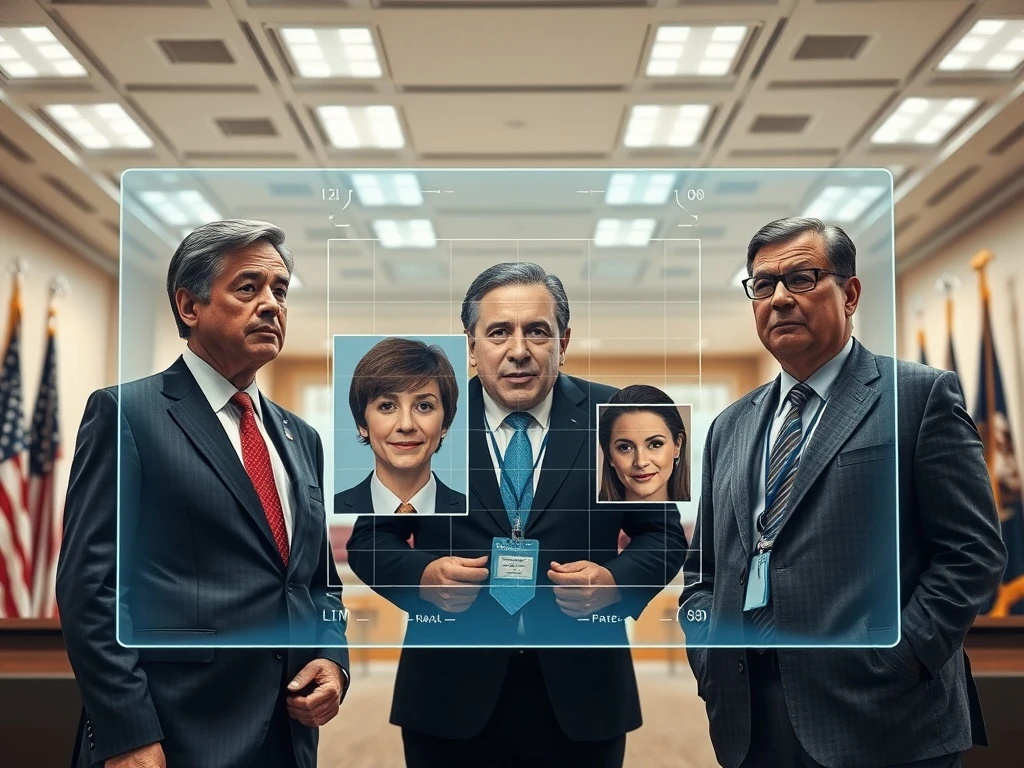
YouTube launched a critical expansion of its AI deepfake detection technology on Tuesday, June 9, targeting a specific pilot group of government officials, political candidates, and journalists. The move, announced from the company’s offices, directly addresses escalating concerns about synthetic media’s power to distort public discourse ahead of major global elections. This new pilot program grants eligible individuals a tool to detect unauthorized AI-generated content featuring their likeness and request its removal under YouTube’s existing policies. The expansion follows the technology’s initial rollout last year to approximately 4 million creators in the YouTube Partner Program, marking a strategic shift toward protecting civic figures from digital impersonation.
YouTube’s Likeness Detection Technology Explained
The newly expanded system operates on principles similar to YouTube’s longstanding Content ID system for copyright protection. Instead of scanning for copyrighted audio or video, the likeness detection feature uses advanced algorithms to identify simulated human faces generated by AI tools. These synthetic personas, often of notable public figures, can be weaponized to spread misinformation by making individuals appear to say or do things they never did in reality. The technology itself represents years of development, beginning with internal tests before the 2024 creator rollout. YouTube’s Vice President of Government Affairs and Public Policy, Leslie Miller, framed the expansion as a necessary defense for democratic integrity during a press briefing in Boston. “This expansion is really about the integrity of the public conversation,” Miller stated. “We know that the risks of AI impersonation are particularly high for those in the civic space.”
However, the company emphasizes a balanced approach. Not every detected match will result in automatic removal. YouTube will evaluate each removal request against its existing privacy policy, carefully considering whether the content constitutes protected political satire, parody, or critique. This evaluation process is designed to safeguard free expression while mitigating harm. The tool’s access requires rigorous identity verification. Eligible pilot participants must upload a government-issued ID and a selfie to create a profile. Once verified, they can view detected matches and submit removal requests. YouTube plans to eventually offer proactive blocking, preventing violating uploads before they go live, and is exploring monetization pathways for authorized synthetic content, mirroring the flexibility of Content ID.
The High-Stakes Impact on Political and Media Landscapes
The pilot program’s focus on politicians, officials, and journalists signals YouTube’s recognition of the unique threats synthetic media poses to information ecosystems. Deepfakes targeting these groups carry disproportionate risks for manipulating public opinion, interfering with elections, and eroding trust in institutions. While YouTube noted the volume of removals from creators has been “very small,” the civic space presents a different challenge. Amjad Hanif, YouTube’s Vice President of Creator Products, observed that for most creators, awareness has been the primary outcome, with few removal requests because much AI content is benign. This dynamic is unlikely to hold for deepfakes designed to impersonate a senator during an election or a journalist during a crisis.
- Election Security: The 2026 midterm cycle is a clear backdrop. Proactive detection tools for candidates can help prevent last-minute deepfake surges designed to suppress turnout or mislead voters.
- Journalistic Integrity: Fake videos of reporters delivering false news could cripple public trust in media overnight. This tool provides a direct line for news organizations to protect their personnel’s digital likenesses.
- Policy Precedent: YouTube’s move occurs alongside its support for federal legislation like the NO FAKES Act, which seeks to establish a national framework for regulating unauthorized digital recreations of a person’s voice and likeness.
Expert Analysis on Synthetic Media Defense
Digital forensics experts view layered detection as essential. Dr. Hany Farid, a professor at the University of California, Berkeley, and a leading authority on digital misinformation, has long advocated for platform-level interventions. “Reactive policies are insufficient against scalable AI threats,” Farid noted in a recent paper on media integrity. “Proactive detection, especially when deployed for high-risk individuals, creates a necessary speed bump for bad actors.” YouTube’s approach—combining automated detection with human-led policy review—aligns with expert recommendations for balancing scale and nuance. The company’s external advocacy for the NO FAKES Act also demonstrates an understanding that platform policies alone cannot solve a societal challenge; legal frameworks must evolve in parallel.
Broader Context: The AI Labeling and Detection Ecosystem
YouTube’s pilot is one component of a fragmented but growing industry effort to manage synthetic content. The company’s labeling policy for AI-generated content remains inconsistent by design. Labels may appear in a video’s description or, for “sensitive” topics, directly on the video player. Hanif explained this judgment-based system, noting that not all AI-generated content carries the same risk—an AI-generated cartoon differs from a hyper-realistic deepfake of a world leader. This inconsistency, however, has drawn criticism from transparency advocates who argue for uniform, prominent labeling. Comparatively, Meta’s approach on Facebook and Instagram relies heavily on user disclosure, while startups like Reality Defender offer enterprise-grade detection APIs. The table below contrasts key platform strategies.
| Platform/Company | Primary Method | High-Risk Group Protection |
|---|---|---|
| YouTube | Automated detection + user requests | Pilot program for officials/journalists |
| Meta (FB/IG) | User disclosure mandates + detection | General policies, no specific high-risk tool |
| TikTok | Synthetic media labels + removal | Focus on election-related misinformation |
| Reality Defender | Enterprise API for detection | Commercial service for media/companies |
What Happens Next: Scaling and Future Developments
YouTube confirmed the goal is to make the likeness detection technology “broadly available over time,” though it declined to name initial testers or provide a specific public rollout timeline. The immediate next phase involves monitoring the pilot’s efficacy and adjudicating the first wave of removal requests. These decisions will set crucial precedents for how the platform distinguishes between malicious impersonation and protected expression. Technologically, YouTube intends to expand detection capabilities to recognizable voices and other intellectual property like popular fictional characters. This suggests the underlying system is built for modular expansion beyond visual likenesses. The long-term vision appears to be a comprehensive synthetic media management suite integrated directly into the upload and monetization pipeline.
Stakeholder Reactions and Industry Response
Initial reactions from political and media circles have been cautiously optimistic. A spokesperson for a national journalists’ association, who requested anonymity ahead of a formal statement, called the tool “a welcome step” but emphasized that prevention is more effective than removal. Some digital rights organizations have expressed concern about potential over-removal of legitimate parody. The effectiveness of the verification process for public figures, who often have complex media presences, will also be tested. The success of this pilot will likely influence whether other major platforms like X and TikTok develop similar dedicated tools for civic actors, potentially establishing a new standard of care for protecting high-risk individuals from synthetic media harm.
Conclusion
YouTube’s expansion of AI deepfake detection to politicians, government officials, and journalists represents a pivotal moment in the platform’s approach to synthetic media. By creating a dedicated tool for those most vulnerable to digital impersonation, YouTube is attempting to fortify the integrity of public conversation against AI-powered manipulation. The pilot program’s careful balance—offering a removal mechanism while respecting parody and critique—will be its ultimate test. As the technology scales and evolves to include voices and other IP, its development will be closely watched by policymakers, journalists, and civil society. The key takeaway is clear: platforms are moving from general warnings about AI content to targeted defenses for democracy’s key voices. The effectiveness of these defenses will shape the truthfulness of the next election cycle and beyond.
Frequently Asked Questions
Q1: Who exactly is eligible for YouTube’s new deepfake detection pilot?
The initial pilot group includes verified government officials, declared political candidates, and professional journalists. Eligible individuals must complete a strict identity verification process by submitting a government ID and a selfie to YouTube to gain access to the detection tool.
Q2: Does YouTube automatically remove videos flagged by the detection tool?
No. The tool alerts the eligible individual to potential unauthorized uses of their AI-generated likeness. That person can then choose to submit a removal request. YouTube evaluates each request against its existing privacy and harassment policies, considering factors like whether the content is parody or political satire, which are protected.
Q3: How does this technology differ from YouTube’s existing Content ID system?
Content ID detects copyrighted music and video owned by rights-holders. The new likeness detection technology is designed to identify AI-generated synthetic media that replicates a person’s face and likeness, which is a privacy and impersonation issue, not primarily a copyright one.
Q4: What is the NO FAKES Act, and why is YouTube supporting it?
The NO FAKES Act is proposed federal legislation in the United States that would create a national right for individuals to control the use of their voice and visual likeness in AI-generated recreations. YouTube’s support indicates the company believes platform policies must be backed by coherent legal frameworks to effectively manage synthetic media.
Q5: Will all AI-generated content on YouTube be labeled?
Not uniformly. YouTube uses a judgment-based system. AI labels may appear in the video description or, for content deemed “sensitive,” directly on the video player. The company states that the mere use of AI is not always material to the content’s intent or risk.
Q6: How could this affect ordinary YouTube creators?
For now, the advanced detection and request tool is only for the pilot group. However, the underlying detection technology already runs on the platform. All creators remain subject to YouTube’s broader policies against deceptive practices and misinformation, which cover harmful deepfakes regardless of the target.



