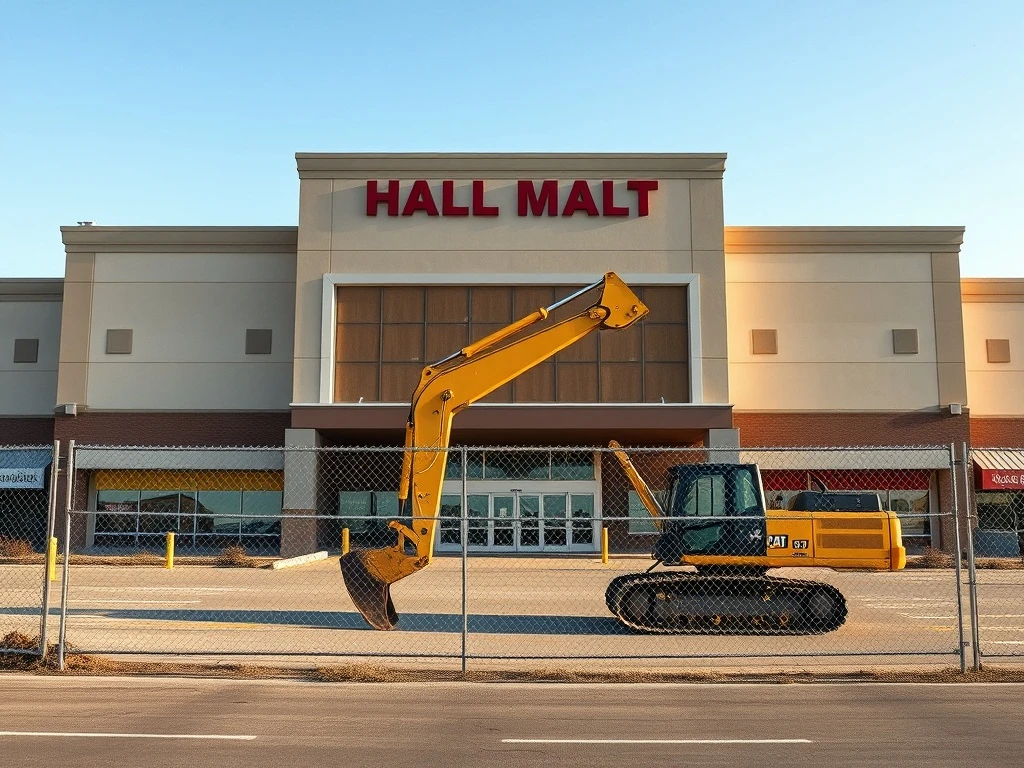
COLUMBUS, Ohio — March 13, 2026. City officials in Columbus, Ohio, have approved the final demolition permit for the long-vacant Northland Mall, a so-called zombie mall, clearing the way for a $120 million redevelopment into 450 mixed-income apartments. This decision, finalized this morning, represents one of the largest single-site conversions of dead retail space into residential housing this year. Consequently, it underscores the persistent decline of traditional brick-and-mortar retail—a trend often termed the retail apocalypse—and a accelerating pivot toward solving housing shortages through adaptive reuse. The project, led by developer UrbanCore Properties, received its last zoning variance on March 10 and will see excavation begin next week.
Zombie Mall Demolition Marks a Pivotal Urban Redevelopment
Crews will begin site preparation at the 35-acre Northland Mall property on March 20, 2026. The demolition phase alone is projected to take four months. UrbanCore Properties acquired the moribund mall out of receivership in late 2025 for $18.5 million. “This isn’t just about tearing down a blighted building,” said project lead and UrbanCore VP of Development, Maria Chen, in a statement released to the press. “It’s a strategic response to two critical market failures: obsolete retail infrastructure and a severe lack of housing supply, particularly near transit corridors.” The original mall opened in 1964 and closed its last anchor store, a Sears, in 2022. Since then, it has been completely vacant, a classic zombie mall draining local property values and requiring constant municipal security.
Data from the National Council of Real Estate Investment Fiduciaries (NCREIF) shows that the retail sector’s share of commercial property values has shrunk by nearly 35% since its 2017 peak. Meanwhile, a 2025 report from the Urban Land Institute identified over 250 similar dead or dying mall properties across the United States as prime candidates for residential conversion. The Columbus project follows a clear national pattern. For instance, similar large-scale conversions are underway at the former Arcadia Mall in Raleigh and the Valley View Center in Dallas.
Retail Apocalypse Drags On, Forcing a Reckoning for Commercial Real Estate
The ongoing retail apocalypse is not a sudden event but a protracted transformation. E-commerce growth, accelerated by the pandemic, permanently altered consumer habits. Furthermore, high leverage and changing demographics left many suburban malls stranded. The impact is quantifiable and severe. According to CoStar Group, the national retail vacancy rate hovered at 10.2% at the end of 2025, with vacancy in Class-B and Class-C malls exceeding 25%. This glut of empty space creates significant financial and social consequences.
- Municipal Tax Base Erosion: Vacant malls like Northland can see assessed property values plummet by 60-80%, starving local governments of essential revenue for schools and infrastructure.
- Environmental Liabilities: Demolition often reveals legacy contamination from dry cleaners, photo labs, and food courts, adding millions in unforeseen remediation costs.
- Community Blight: Empty parking lots and decaying buildings become hotspots for vandalism and crime, negatively impacting surrounding neighborhoods and businesses.
Expert Perspective on the Structural Shift in Real Estate
Dr. Lionel Hayes, a professor of urban planning at Ohio State University and author of “The Post-Retail City,” contextualizes the trend. “The mall-to-apartment conversion is the most visible symptom of a deeper structural correction,” Hayes explained in a phone interview. “We overbuilt retail space by nearly 40% per capita compared to Western Europe. The market is now ruthlessly correcting that imbalance. The capital is flowing away from sustaining these retail white elephants and toward solving the housing crisis.” Hayes points to a key catalyst: the 2022 changes to the federal Opportunity Zone program, which now offers enhanced tax benefits for projects that include affordable housing components, a feature of the Northland redevelopment. This policy shift is documented in the Congressional Research Service report RL45687.
Broader Context: The National Wave of Dead Mall Conversions
The Northland Mall project is part of a nationwide movement. While each project is unique, common drivers include favorable zoning changes, public-private partnerships, and the urgent need for housing. The following table compares several prominent mall-to-residential conversions announced or underway in early 2026.
| Project Location | Former Mall Name | New Residential Units | Project Status (Q1 2026) |
|---|---|---|---|
| Columbus, OH | Northland Mall | 450 | Demolition Permitted |
| Raleigh, NC | Arcadia Mall | 320 | Site Remediation |
| Dallas, TX | Valley View Center | 600 | Foundation Work |
| St. Louis, MO | Jamestown Mall | 275 | Final Design Phase |
What Happens Next for the Columbus Site and Its Community
The immediate next step is the physical demolition, scheduled from March 20 through July 2026. Construction of the apartment complex, which will include a 15% set-aside for affordable units as per the city agreement, is slated to begin in August 2026. UrbanCore projects the first residential move-ins for late 2027. The development agreement also mandates the creation of two acres of new public park space and improved pedestrian access to the nearby bus rapid transit line. City planners are monitoring this project closely as a potential template for two other struggling retail centers within city limits.
Stakeholder Reactions: Relief, Nostalgia, and Economic Hope
Local reactions are mixed but lean toward support. The Northland Area Commission, a community advisory group, voted 8-2 to endorse the project last month. “The blight has been a nightmare for a decade,” said commission chairperson David Park. “We’re trading a decaying monument to the past for homes for our future.” However, some longtime residents express nostalgia. “I had my first job there, my first date there,” shared local historian Eleanor Briggs, 72. “It’s sad to see it go, but the city has to move forward.” The local building trades council has welcomed the project, estimating it will create over 300 construction jobs at its peak.
Conclusion
The demolition of the Northland zombie mall for apartments is a definitive case study in 2026’s urban adaptation. It directly addresses the lingering effects of the retail apocalypse by repurposing obsolete commercial assets into critically needed housing. This project highlights a permanent shift in real estate priorities, driven by e-commerce, housing shortages, and new fiscal policies. As similar projects break ground nationwide, the transformation of dead malls will remain a key indicator of how American suburbs and cities physically reshape themselves in the post-retail era. Observers should watch for the final construction bids and any supply chain challenges that could affect the ambitious 2027 completion timeline.
Frequently Asked Questions
Q1: What exactly is a ‘zombie mall’?
A zombie mall is a large, mostly vacant shopping center that remains physically standing but is economically dead. It often has a vacancy rate above 40%, generates minimal revenue, and requires costly maintenance while providing little tax value or community benefit.
Q2: How does converting a mall to apartments help the local economy?
It replaces a blighted, non-productive property with a residential asset that generates consistent property tax revenue. It also creates construction jobs, increases local consumer spending from new residents, and can raise property values in the surrounding area by eliminating a nuisance.
Q3: What is the timeline for the Northland Mall apartments project?
Demolition runs from March to July 2026. Construction begins August 2026. The first apartments are projected to be ready for occupancy in the fourth quarter of 2027, with the entire 450-unit project completed by mid-2028.
Q4: Why can’t these dead malls just be renovated for new stores?
The fundamental demand for vast amounts of in-person retail space has permanently declined due to e-commerce. The physical layout of many malls—deep, windowless interior spaces—is also ill-suited for most modern uses besides storage or residential conversion, making retail renovation economically unviable.
Q5: Is the ‘retail apocalypse’ affecting all stores or just malls?
The trend is most severe for large, enclosed suburban malls and lower-tier shopping centers. However, certain retail formats are thriving, including open-air lifestyle centers, grocery-anchored neighborhood plazas, and experiential retail that combines shopping with dining or entertainment.
Q6: How will this project affect housing affordability in Columbus?
The developer’s agreement with the city mandates that 15% of the 450 units (68 apartments) be priced as affordable for households earning 80% or less of the Area Median Income. This injects new affordable stock into a tight market, though housing advocates argue the percentage should be higher.