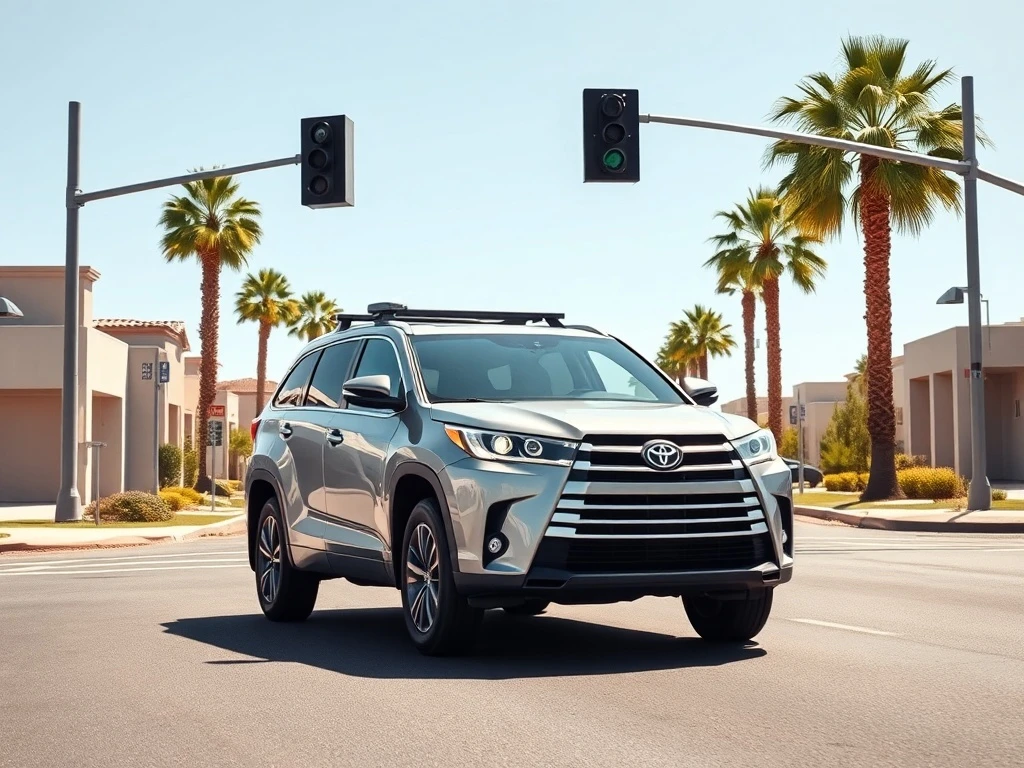
June 9, 2026 — DALLAS, TX — Zoox, the Amazon-owned autonomous vehicle company, has launched street mapping operations in Dallas, Texas, and Phoenix, Arizona this week, marking a strategic expansion into Sun Belt markets with different terrain than its current urban operations. The company deployed a small fleet of Toyota Highlander SUVs equipped with sensor arrays to both cities on Monday, initiating the critical data collection phase before autonomous testing begins. This expansion represents Zoox’s first entry into Arizona and a significant step toward its goal of operating in ten U.S. cities, positioning the company against rivals like Waymo in increasingly competitive robotaxi markets.
Zoox’s Strategic Sun Belt Expansion for Robotaxi Testing
Zoox confirmed the mapping initiative through official channels on Monday, detailing how workers will drive the sensor-equipped Toyota Highlanders to help the company’s autonomous software understand the unique characteristics of Dallas and Phoenix roadways. According to company statements, these Sun Belt cities present different challenges and opportunities compared to the dense metropolitan areas where Zoox currently operates. The mapping phase typically lasts several weeks before the company transitions to testing its self-driving system using the same SUVs, followed eventually by deployment of its purpose-built robotaxi vehicles.
Industry analysts note this expansion timing coincides with increasing regulatory openness in both states. Arizona has maintained permissive autonomous vehicle regulations since Waymo’s 2020 Phoenix launch, while Texas has emerged as a favorable testing ground with its varied road infrastructure. Zoox’s move represents a calculated geographic diversification strategy, targeting markets with warmer climates that enable year-round testing and different traffic patterns than coastal cities.
Infrastructure and Job Creation for New Markets
The expansion involves significant physical infrastructure investment beyond just vehicles on roads. Zoox announced it will open dedicated depots in both Dallas and Phoenix, plus a new command center in Scottsdale, Arizona. Company officials claim these facilities will create hundreds of new jobs across technical, operational, and support roles. The Scottsdale command center represents what Zoox calls a “fusion center,” housing fleet operations teams responsible for remote guidance and rider support.
- Real-time coordination: Fusion centers provide continuous monitoring and assistance for vehicles navigating complex scenarios
- Mission completion support: Teams help ensure vehicles complete passenger trips efficiently and safely
- Rider assistance: Dedicated support staff available for passenger questions and issues during rides
Regulatory Hurdles and Federal Approval Process
Despite the mapping expansion, Zoox faces significant regulatory barriers before launching commercial robotaxi services in these new markets. The company continues waiting for federal approval of its purpose-built autonomous vehicle, which lacks traditional controls like steering wheels and pedals. The National Highway Traffic Safety Administration granted Zoox an exemption from Federal Motor Vehicle Safety Standards last August, permitting demonstration on public roads, but further exemptions remain necessary for commercial operations.
“The regulatory pathway for vehicles without manual controls remains complex,” confirmed transportation attorney Michael Fleming of the Center for Automotive Research. “NHTSA’s exemption process requires demonstrating equivalent safety through alternative means, which involves extensive validation testing.” Zoox must also secure permissions from local agencies overseeing ride-hailing operations, similar to California’s Public Utilities Commission requirements the company navigated in San Francisco and Las Vegas.
Competitive Landscape in Autonomous Vehicle Markets
Zoox’s expansion places it in direct competition with established players in both markets. Waymo has operated commercial robotaxi services in Phoenix since 2020 and recently expanded to Austin, while Cruise (before its 2025 operational pause) had tested in multiple Sun Belt cities. The Dallas-Phoenix corridor represents a strategic battleground where different autonomous vehicle approaches will compete on reliability, passenger experience, and operational efficiency.
| Company | Current Markets | Vehicle Type | Commercial Status |
|---|---|---|---|
| Zoox | Las Vegas, SF, +8 testing | Purpose-built bidirectional | Early rider program |
| Waymo | Phoenix, SF, LA, Austin | Modified Jaguar/Pacifica | Fully commercial |
| Cruise | Limited testing only | Modified Chevrolet Bolt | Paused operations |
Operational Timeline and Commercial Launch Prospects
Based on Zoox’s established deployment patterns, industry observers anticipate a multi-phase rollout in Dallas and Phoenix. The mapping phase typically lasts 4-8 weeks, followed by supervised autonomous testing with safety drivers for 3-6 months. Early rider programs with the purpose-built vehicles could begin by late 2026 or early 2027, pending regulatory approvals. The company’s track record shows measured expansion: Zoox launched its Las Vegas early rider program in 2024 after two years of testing, suggesting a similar cautious approach for new markets.
Local Government and Community Response
Initial reactions from Dallas and Phoenix officials have been cautiously optimistic. Phoenix transportation director James Adams noted, “We’ve developed robust autonomous vehicle protocols through our experience with other companies. Our priority remains safety while encouraging innovation that can improve mobility options.” Dallas officials emphasized the job creation potential, with economic development director Maria Rodriguez stating, “These high-tech positions align with our strategy to attract technology companies beyond traditional energy sectors.” Community groups in both cities have requested public forums to address safety and accessibility concerns before commercial deployment.
Conclusion
Zoox’s Dallas and Phoenix mapping initiative represents a strategic expansion into Sun Belt markets with favorable regulatory environments and year-round testing conditions. The company’s methodical approach—beginning with sensor data collection, followed by supervised testing, then early rider programs—demonstrates the careful scaling required in autonomous vehicle deployment. With significant infrastructure investment and job creation announced alongside the mapping operations, Zoox signals long-term commitment to these markets. The coming months will reveal how quickly the company can navigate remaining regulatory hurdles and begin competing with established players in America’s evolving robotaxi landscape. Success in these new markets could position Zoox for broader national expansion as autonomous vehicle technology approaches mainstream adoption.
Frequently Asked Questions
Q1: When will Zoox robotaxis be available to the public in Dallas and Phoenix?
Based on Zoox’s established deployment patterns, early rider programs could begin by late 2026 or early 2027, with broader public availability depending on regulatory approvals and successful testing phases. The company must complete mapping, supervised testing, and secure necessary permits before commercial launch.
Q2: How does Zoox’s purpose-built vehicle differ from modified cars used by competitors?
Zoox’s custom-designed vehicle is bidirectional with four-wheel steering, lacking traditional controls like steering wheels and pedals. This design allows symmetrical operation in either direction and optimized passenger space, unlike competitors who typically retrofit existing vehicle models with autonomous technology.
Q3: What safety measures accompany Zoox’s expansion into new cities?
The company implements multiple safety layers including remote monitoring from fusion centers, extensive pre-deployment mapping, supervised testing with safety drivers, and rigorous validation of autonomous systems in diverse conditions before removing human oversight.
Q4: How many autonomous miles has Zoox driven to date?
Zoox reports driving more than one million autonomous miles in Las Vegas and San Francisco combined, while ferrying over 300,000 passengers through its early rider programs in those cities. These figures continue growing as operations expand.
Q5: Why are Dallas and Phoenix attractive markets for autonomous vehicle testing?
Both cities offer favorable conditions including permissive regulations (especially Arizona’s established AV framework), varied road infrastructure, generally predictable weather patterns, and different traffic dynamics than dense coastal cities where Zoox currently operates.
Q6: What job opportunities is Zoox creating in these new markets?
The company announced hundreds of new positions across technical roles (software, systems engineering), operational positions (fleet management, remote assistance), and support functions. Specific openings will be posted locally as facilities become operational.